

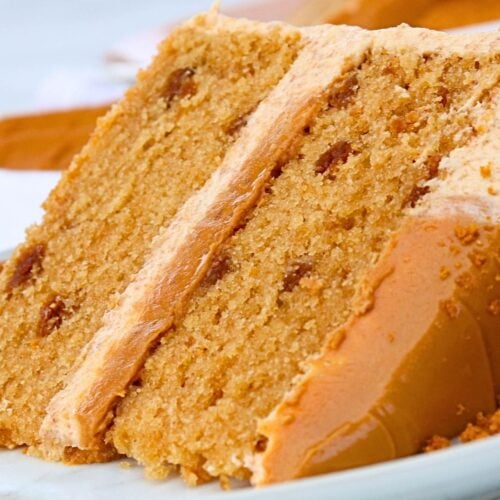
This Lotus Biscoff cake (also known as a cookie butter cake) is made up of super moist, lightly spiced Biscoff cake layers, creamy (not-too-sweet) Biscoff buttercream and is filled with smooth Biscoff cookie butter. It is so so good!

What is a Lotus Biscoff Cake?
A Lotus Biscoff cake is a dessert that incorporates Lotus Biscoff cookies and spread as key ingredients. Lotus Biscoff cookies, which originate from Belguim (and are also known as speculoos cookies) are caramelized biscuits with a distinct flavor profile that combines cinnamon, caramel, and a hint of spice.
Why You’ll Love This Biscoff Cake
When developing this recipe, I really wanted to make sure the Biscoff flavor shined without it being too overpowering or too sweet. After a few trials, I came up with my version of a Biscoff cake that I think you’re going to absolutely LOVE! 🙂
To balance the flavors, I decided to use my 5 star rated vanilla cake recipe as a starting point to ensure the cake layers were super soft and moist. I amended the recipe by swapping out white granulated sugar with brown sugar to add a more caramel flavor to the batter and added a touch of cinnamon as well. To stay true to the Biscoff name and ensure the flavors came through, I also used both Biscoff cookie butter and Biscoff biscuits in the cake batter too!
The buttercream also has Biscoff cookies and Biscoff cookie butter in it. I was careful in making sure the frosting wasn’t too sweet as well.
With the cake filled with pure Biscoff spread and topped with Biscoff cookies to add some texture, you’re left with an incredibly soft and flavorful Biscoff cake that I think you’re going to love!
How to Make Biscoff Cake
Biscoff Cake
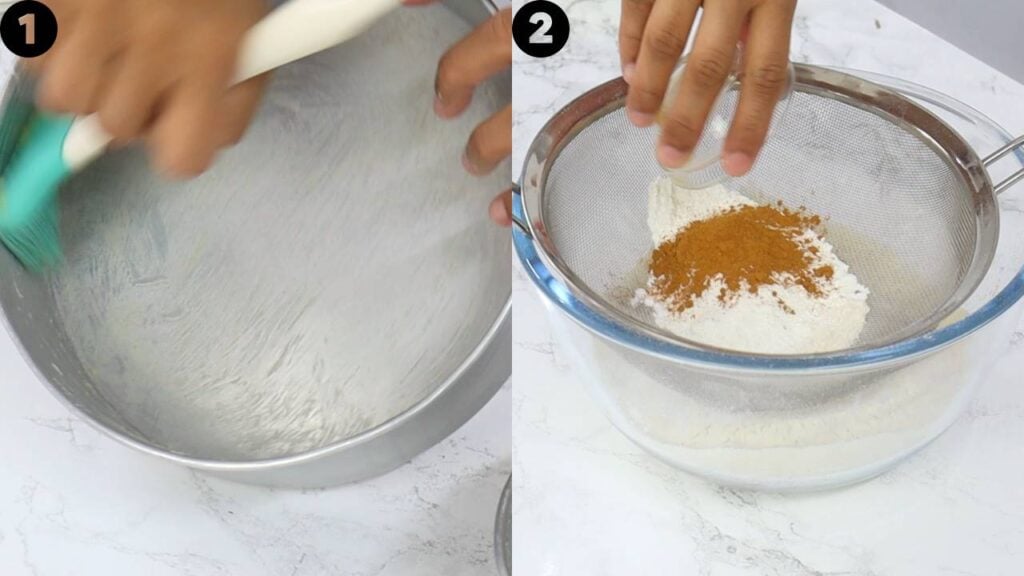
Preheat oven to 180°C (350°F) conventional and grease two 8-inch cake tins (I use my homemade cake release). I do recommend lining the bottoms of the pans with parchment paper as well for this recipe.
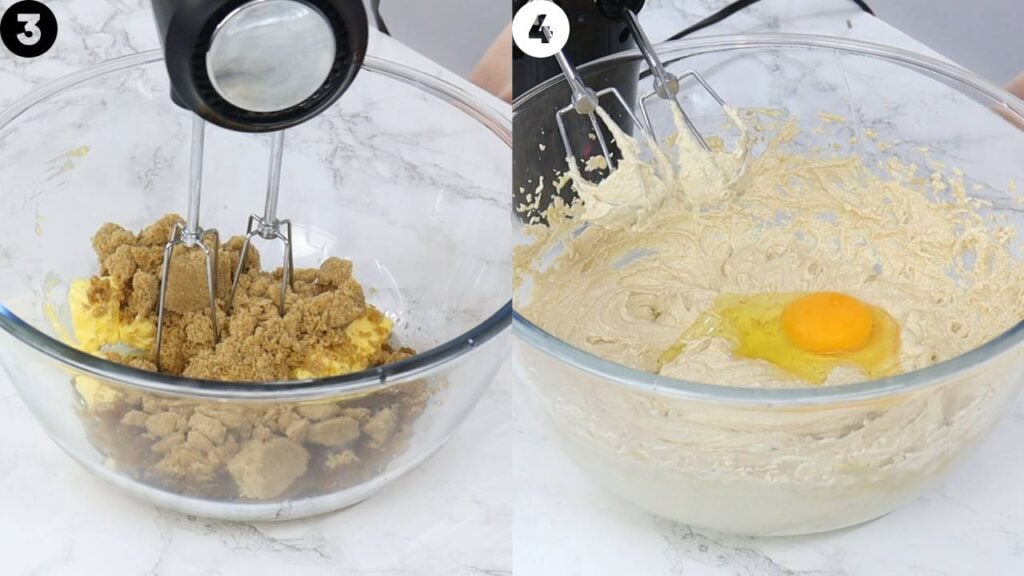
In a bowl, sift together flour, cornstarch, baking soda, baking powder, salt and ground cinnamon. Using a whisk or fork, mix until well combined. Set aside.
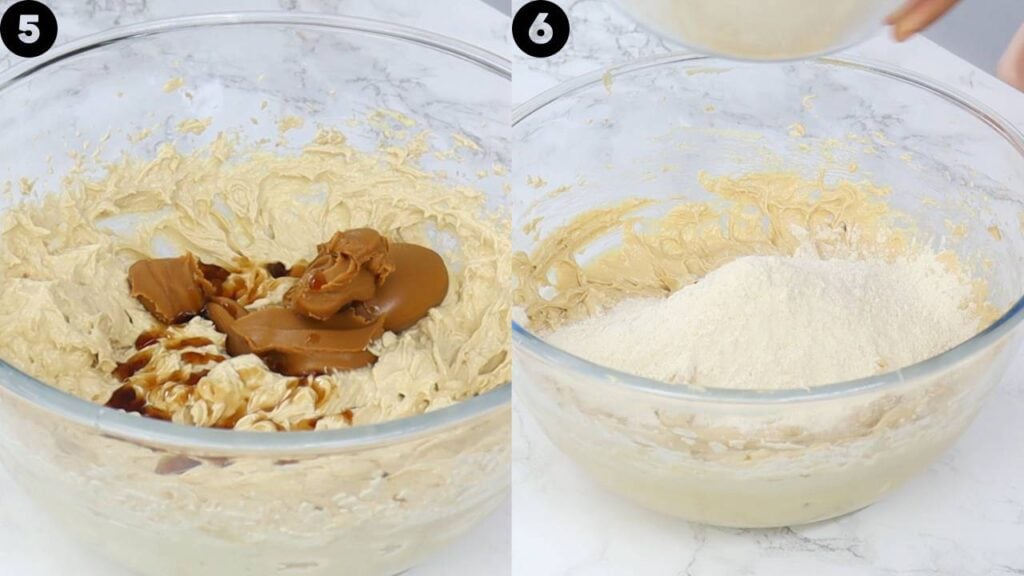
In a large bowl, add in butter, vegetable oil and light brown sugar. Using an electric mixer (hand or stand mixer are both fine), cream together for 2 minutes until light and creamy.
Add in eggs one by one, mixing well in between each addition (about 10-15 seconds between eggs).
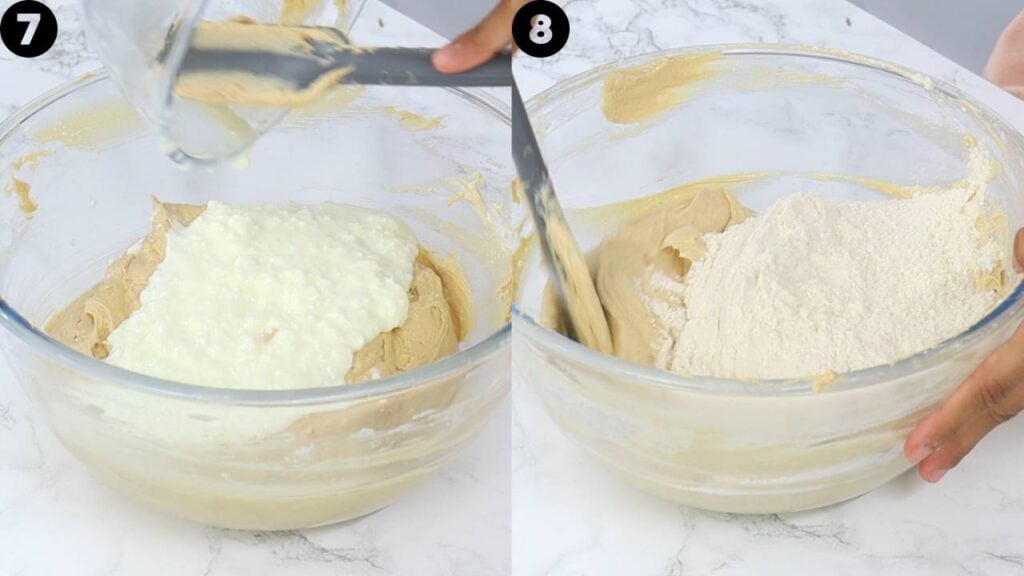
Add in Biscoff spread and vanilla and mix until well combined. Now set your mixer aside as the remainder of the batter will be finished by hand.
Add in half of your premixed dry ingredients to your wet mixture, and gently fold it in with a spatula until just combined. Then add in buttermilk and fold until just combined. Lastly, add in the remaining dry ingredients and gently fold until just combined. Do not overmix.
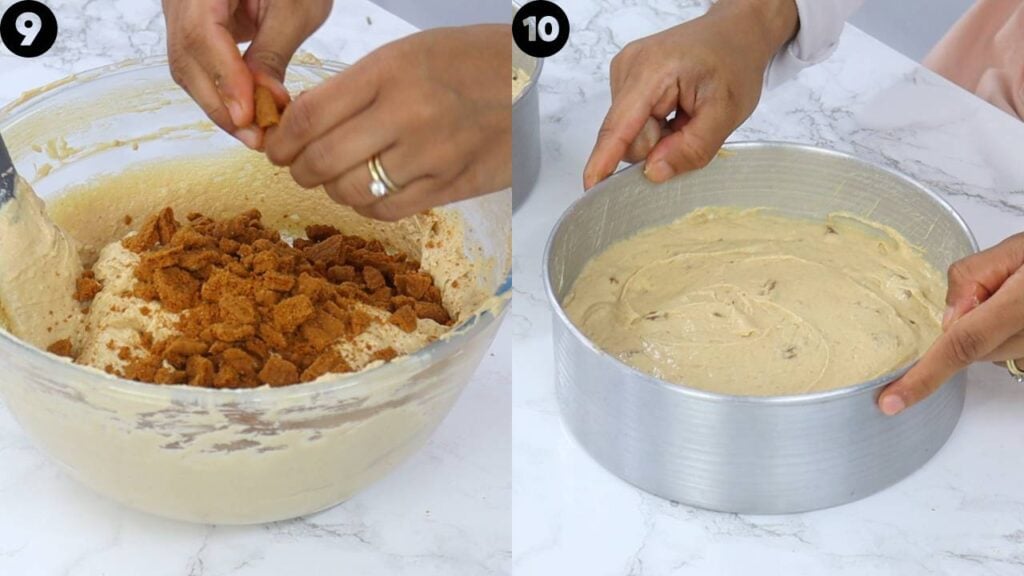
Break Biscoff cookies into small chunks (I just use my hands) and add them to the batter. Fold them in until just combined. Do not overmix.
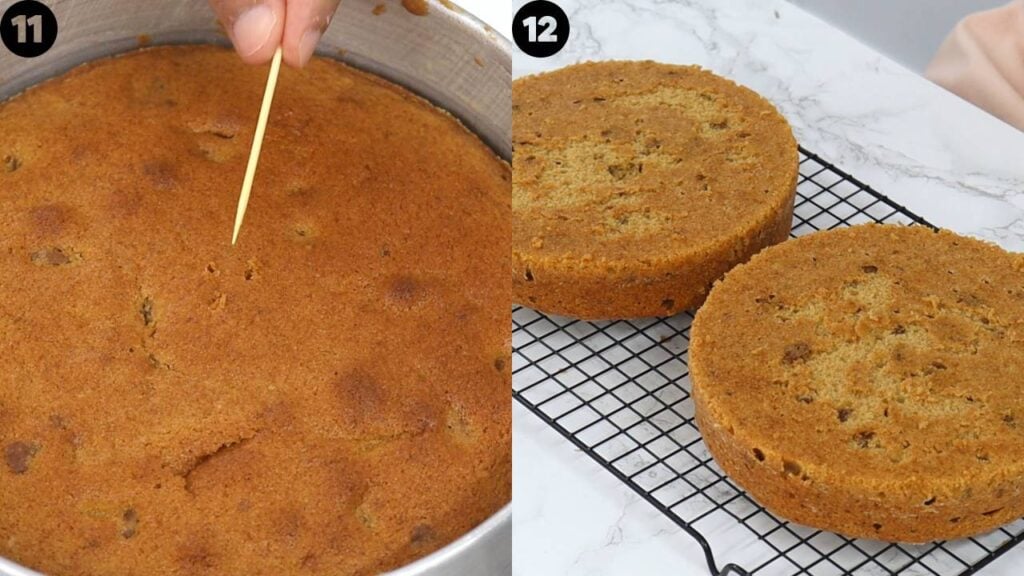
Distribute the batter evenly into the two 8 inch cake pans Level out the tops, drop the cake tins lightly on the counter to remove any large air bubbles and bake for 37-40 minutes or until a toothpick comes out clean or with a few moist crumbs on it.
Once baked, allow the cake layers to cool in the cake tins for 20 minutes, then run a thin knife around the edges to release the cakes from the cake tins and turn them out onto a cooling rack to completely cool.
Biscoff Buttercream Frosting
In a food processor (or blender), place in 15 Biscoff cookies and blend until they resemble fine crumbs. Set aside for now.
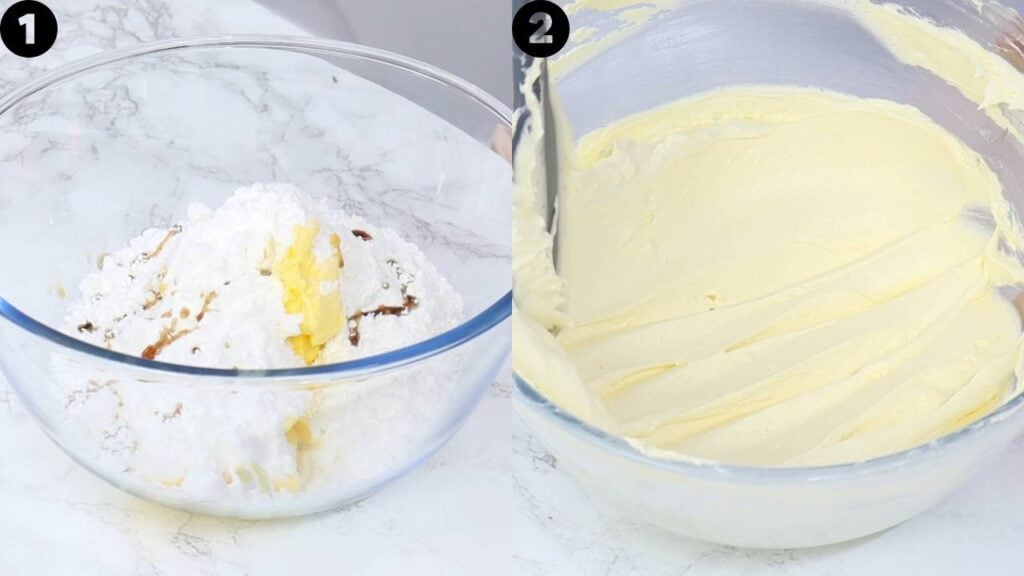
To a large bowl (or bowl of a stand mixer if using one), add in powdered sugar, butter, vanilla, salt and milk.
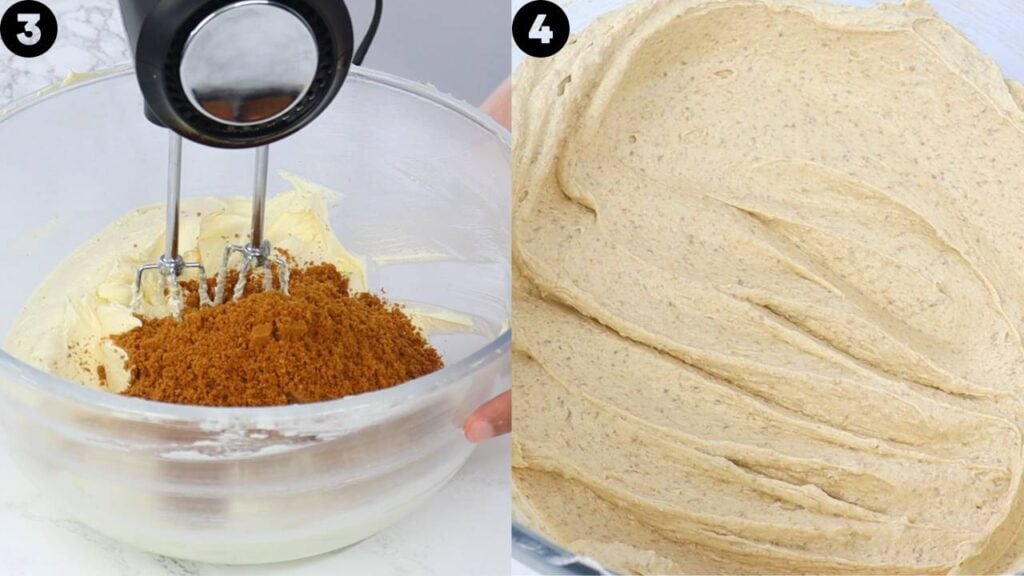
Using an electric mixer, mix on the lowest speed until the ingredients are combined, and then turn up the speed to a medium-high and mix for a full 10 minutes. Scrape the bowl down half way through. Once done, the frosting should be light, fluffy and smooth.
Finish off by adding in the Biscoff spread and crumbed Biscoff cookies from earlier and mix on a medium speed until well combined.
Assembly (demonstrated in video)
Begin by slightly heating Biscoff spread so that its a more spreadable consistency. Set it aside to cool.
Using a serrated knife, level out the tops of the cake layers. I also like to trim off the caramelised edges, however this is optional.
Place the first cake layer onto your cake stand and place a generous amount of Biscoff buttercream on top and smooth it out with an offset spatula or knife.
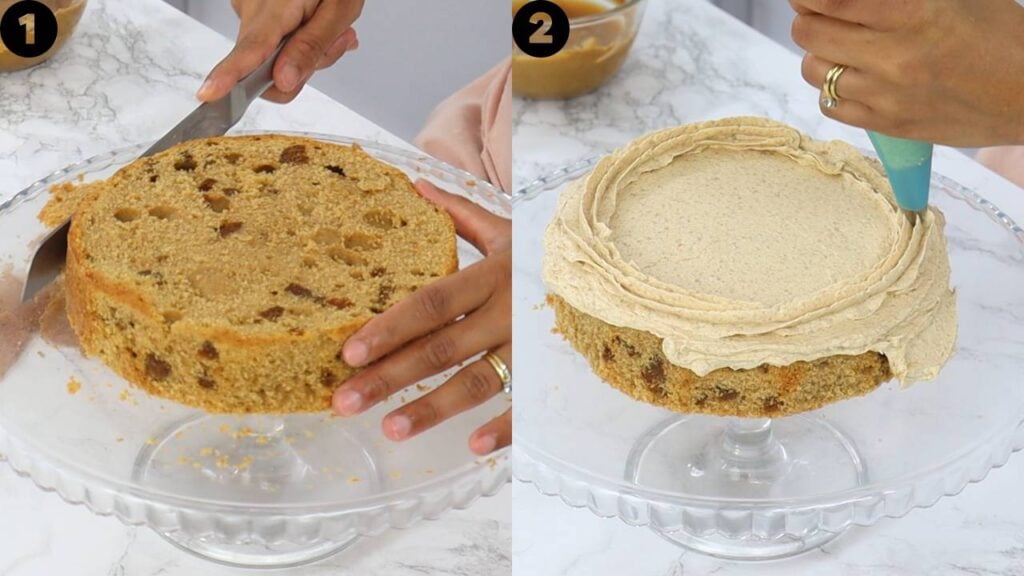
Using a 1M piping tip, pipe a dam of frosting around the edges of the cake layer. Fill the middle with half of the Biscoff spread, but make sure the Biscoff spread isn’t warm otherwise it will melt the buttercream.
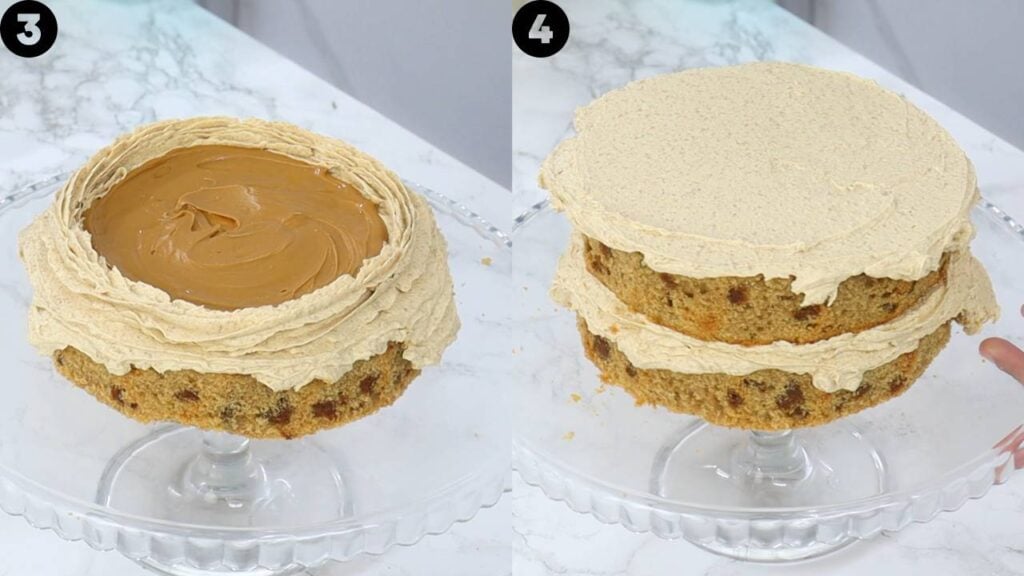
Place your next cake layer on top and cover the top and sides with more buttercream, leaving a little aside for piping on the top. I like to use a cake scraper to smooth out the sides.
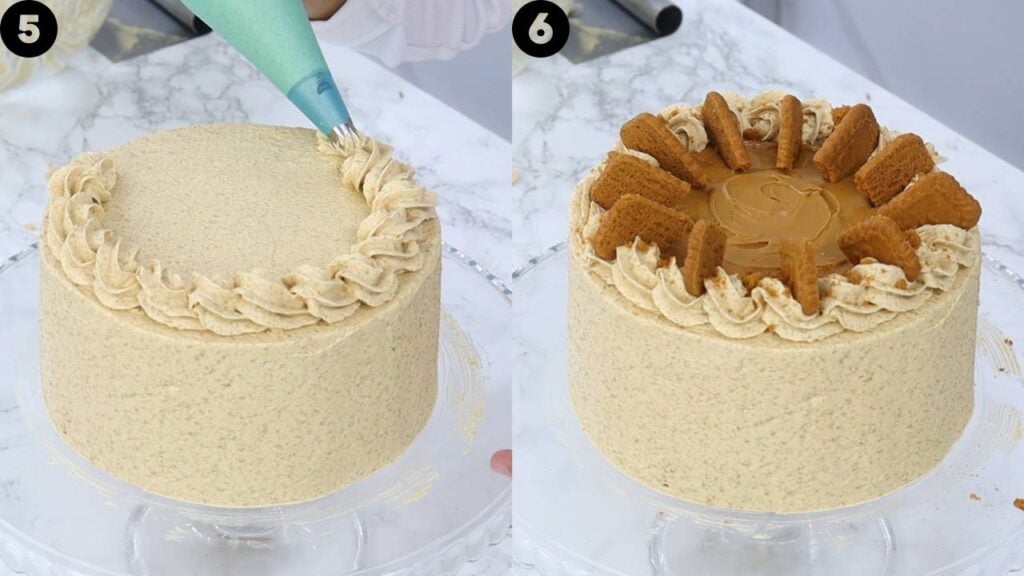
Use the same 1M piping tip to pipe a border around the top of the cake. Fill the middle with the remaining Biscoff spread (make sure it isn’t warm) and decorate with Biscoff cookies. Enjoy!
How to Store Biscoff Cake
This Biscoff cake can be left at room temperature for about 3 days (place in an airtight container to prevent it from drying out). After this, it’s best to place the cake into the fridge for up to a week.
Moist Biscoff Cake (Cookie Butter Cake)
Print Pin VideoIMPORTANT: For accuracy, I would recommend using the gram measurements provided, as those are the exact quantities I use. Cup measurements are given as estimates (based on US cup measurements) to make it easier for those who do not have a scale.
Ingredients
Biscoff Cake
- 2⅓ cups (300 g) all purpose flour
- ¼ cup (30 g) cornstarch
- ½ tsp baking soda
- 2 tsp baking powder
- ½ tsp salt - omit if using salted butter
- 1 tsp ground cinnamon
- ½ cup (113 g) unsalted butter - room temperature
- ½ cup (105 g) unflavored vegetable oil - I use canola oil
- 1¼ cups (250 g) soft light brown sugar - firmly packed (see note 1)
- 3 large eggs - room temperature
- ½ cup (130 g) Biscoff spread (smooth) - also called cookie butter
- 2 tsps vanilla extract/essence
- 1¼ cups (280 g) buttermilk - room temperature
- 15 individual Biscoff cookies - plain cookies (not the ones with cream)
Biscoff Buttercream
- 15 individual Biscoff cookies - plain cookies (not the ones with cream). Blended to fine crumbs.
- 1½ cups (340 g) unsalted butter - room temperature
- 2¾ cups (350 g) powdered sugar - also known as icing/confectioners sugar
- 1½ tsps vanilla extract/essence
- ¼ tsp salt - omit if using salted butter (though I do not recommend using salted butter especially for frosting)
- 1½ tbsp milk or heavy cream
- ¼ cup (70 g) Biscoff spread (smooth) - also called cookie butter
Extra
- ⅔ cup Biscoff spread (smooth) - 1/3 for filling in between the cake layers and 1/3 for the top of the cake. Heat slightly to make the Biscoff spread more spreadable.
- Extra Biscoff cookies - for decorating (I use about 8 cookies, but you can use more or less).
Instructions
Biscoff Cake
- Preheat oven to 180°C (350°F) conventional (see note 2 if using a convection oven with a fan) and grease two 8 inch cake tins (I use my homemade cake release). I do recommend lining the bottoms of the pans as well for this recipe.
- In a bowl, sift together flour, cornstarch, baking soda, baking powder, salt and ground cinnamon. Using a whisk or fork, mix until well combined. Set aside.
- In a large bowl, add in butter, vegetable oil and light brown sugar. Using an electric mixer (hand or stand mixer are both fine - see note 3), cream together for 2 minutes until light and creamy.
- Add in eggs one by one, mixing well in between each addition (about 10-15 seconds between eggs).
- Add in Biscoff spread and vanilla and mix until well combined. Now set your mixer aside as the remainder of the batter will be finished by hand.
- Add in half of your premixed dry ingredients to your wet mixture, and gently fold it in with a spatula until just combined. Then add in the buttermilk and fold until just combined. Lastly, add in the remaining dry ingredients and gently fold until just combined. Do not overmix (see note 4).
- Break the Biscoff cookies into small chunks (I just use my hands) and add them to the batter. Fold them in until just combined. Do not overmix.
- Distribute the batter evenly into the two 8 inch cake tins. Level out the tops, drop the cake tins lightly on the counter to remove any large air bubbles and bake for 37-40 minutes or until a toothpick comes out clean or with a few moist crumbs on it.
- Once baked, allow the cake layers to cool in the cake tins for 20 minutes, then run a thin knife around the edges to release the cakes from the cake tins and turn them out onto a wire rack to completely cool.
Biscoff Buttercream Frosting
- In a food processor (or blender), place in the 15 Biscoff cookies and blend until they resemble fine crumbs. Set aside for now.
- To a large bowl (or stand mixer if using - see note 5), add in powdered sugar, butter, vanilla, salt and milk.
- Using an electric mixer, mix on the lowest speed until the ingredients are combined, and then turn up the speed to a medium-high and mix for a full 10 minutes. Scrape the bowl down half way through. Once done, the frosting should be light, fluffy and smooth (see note 6 if its not).
- Finish off by adding in the Biscoff spread and crumbed Biscoff cookies from earlier and mix on a medium speed until well combined.
Assembly (demonstrated in video)
- Begin by slightly heating the Biscoff spread so that its a more spreadable consistency. Set it aside to cool.
- Using a serrated knife, level out the tops of the cake layers. I also like to trim off the caramelised edges, however this is optional.
- Place the first cake layer onto your cake stand and place a generous amount of Biscoff buttercream on top and smooth it out with an offset spatula or knife.
- Using a 1M piping tip, pipe a dam of frosting around the edges of the cake layer. Fill the middle with half of the Biscoff spread (1/3 cup), but make sure the Biscoff spread isn't warm otherwise it will melt the buttercream.
- Place your next cake layer on top and cover the top and sides with more buttercream, leaving a little aside for piping on the top. I like to use a cake scraper to smooth out the sides.
- Use the same 1M piping tip to pipe a border around the top of the cake. Fill the middle with the remaining Biscoff spread (make sure it isn't warm) and decorate with Biscoff cookies. Enjoy!
Video
Notes
Nutrition
Nutritional information are estimates only as they are automatically calculated by a third party application. Actual values may differ based on brands and types of products used.













66 Comments
Hi MK. Thank you for the lovely recipe. Made it for my son’s birthday and it was so good. I ommitted Biscoff spread in netween layers to avoid to much sweetness for my ageing parents and used SMBC instead. I will definitely make this again.
Thanks so much for the wonderful feedback Jeya! So glad to hear you all enjoyed the recipe and that you were able to adapt it successfully to meet your needs 🙂
Hope your son had a wonderful birthday!
Hi,
How long will the cake stay fresh for once baked and how is best to store it?
Can’t wait to make it, it’s looks delicious! I am from the UK 🇬🇧
Thank you
Sophie
Hi Sophie! 🙂 The cake is best eaten on the day or day after it’s made, but will stay fresh in an airtight container for up to a week 🙂
If making the cake layers ahead of time (say the day before), just be sure to wrap them in clingwrap and place into an airtight container so they don’t lose moisture. Hope you enjoy the recipe Sophie, much love from NZ to the UK 😀
I made this cake but used mini loaf pans put 8 grams of cake baked 18 minutes they were delicious! I want to make a bundt cake do you know how long I would bake it for? It’s a 10″ bundt pan.
Awesome! So glad you enjoyed the recipe Karen and that they worked well as mini loafs! I haven’t tried this recipe in a bundt pan myself so I am not too sure on the cook time sorry! I also am not sure if it would bake as well in a bundt pan as the cake layers are on the softer side. Would love to hear how it goes if you decide to try it in the bundt pan 🙂
Hi
I have only one cake tin. Can I pour one half of the batter and then bake the other half later?
Until the first half gets baked how do I store my remaining batter?
Hi Gayathiri! 🙂 Though not ideal, this can work in a pickle – just be sure to place the next cake in as soon as the first is done 🙂
Simply store the batter on the counter at room temperature. Hope that helps and hope you enjoy the recipe 😀
I LOVE your bakes! Thank you so much for sharing them (and especially thank you for creating recipes that aren’t overly sweet!)
Aww thank you so much Arusab! 😀 So glad to hear you’re enjoying the recipes 🙂
Hii dear! Can I use your sponge cake recipe with lotus and the buttercream?
Hi Samia! 🙂 Do you mean my light and airy sponge cake recipe?
If so, then the buttercream in this recipe may be a little heavy for the sponge cake (it may weigh it down too much). I would recommend maybe adding some of the lotus biscoff spread into the whipped cream (my stabilized whipped cream will work well with add-ins), and then using more of the biscoff spread as a filling/topping 🙂
Hope that helps!
Hello ! Would this recipe work as cupcakes ? If so, how long would I need to bake the cupcakes for ?
Btw, love all your recipes. I tried your pistachio cake and it was delicious!!
Hi Cam! 🙂 Yes this recipe should work great as cupcakes, you would just need to reduce the cooking time to around the 18 min mark 🙂
So so happy to hear you’re loving the recipes and that the pistachio cake turned out awesome 😀 really appreciate the feedback Cam!
could i make a blondie with this recipe
Hi Ubaydah! 🙂 Hmmm I have never tried that myself but I imagine it may turn out a little more cakey as opposed to a slightly more dense blondie texture. I do have a blondie recipe on my blog and I would recommend maybe folding in some crushed biscoff cookies in there and adding a little cinnamon to the batter 🙂 you can find the recipe here: https://cakesbymk.com/recipe/easy-blondies-recipe/
Hope that helps!
Hi,
Can I use the crunchy Bischoff spread instead of smooth one?
Thanks
Hi Samina! 🙂 I haven’t tried this recipe with the crunchy version myself, but I think it should work fine! Just bear in mind the elements that use the biscoff spread will not be as smooth (which is not a bad thing – just different texture!). Enjoy 😀
Hi
Can I use this recipe to make muffins?
Hi Maggie! 🙂 Muffins I am not too sure (I don’t think it would rise tall like a muffin), but you can certainly turn the recipe into cupcakes! Just reduce the cook time and check them around the 18 min mark 🙂
Hope you enjoy the recipe Maggie!