

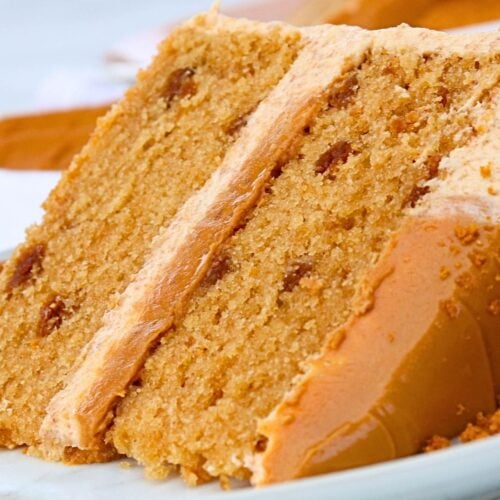
This Lotus Biscoff cake (also known as a cookie butter cake) is made up of super moist, lightly spiced Biscoff cake layers, creamy (not-too-sweet) Biscoff buttercream and is filled with smooth Biscoff cookie butter. It is so so good!

What is a Lotus Biscoff Cake?
A Lotus Biscoff cake is a dessert that incorporates Lotus Biscoff cookies and spread as key ingredients. Lotus Biscoff cookies, which originate from Belguim (and are also known as speculoos cookies) are caramelized biscuits with a distinct flavor profile that combines cinnamon, caramel, and a hint of spice.
Why You’ll Love This Biscoff Cake
When developing this recipe, I really wanted to make sure the Biscoff flavor shined without it being too overpowering or too sweet. After a few trials, I came up with my version of a Biscoff cake that I think you’re going to absolutely LOVE! 🙂
To balance the flavors, I decided to use my 5 star rated vanilla cake recipe as a starting point to ensure the cake layers were super soft and moist. I amended the recipe by swapping out white granulated sugar with brown sugar to add a more caramel flavor to the batter and added a touch of cinnamon as well. To stay true to the Biscoff name and ensure the flavors came through, I also used both Biscoff cookie butter and Biscoff biscuits in the cake batter too!
The buttercream also has Biscoff cookies and Biscoff cookie butter in it. I was careful in making sure the frosting wasn’t too sweet as well.
With the cake filled with pure Biscoff spread and topped with Biscoff cookies to add some texture, you’re left with an incredibly soft and flavorful Biscoff cake that I think you’re going to love!
How to Make Biscoff Cake
Biscoff Cake
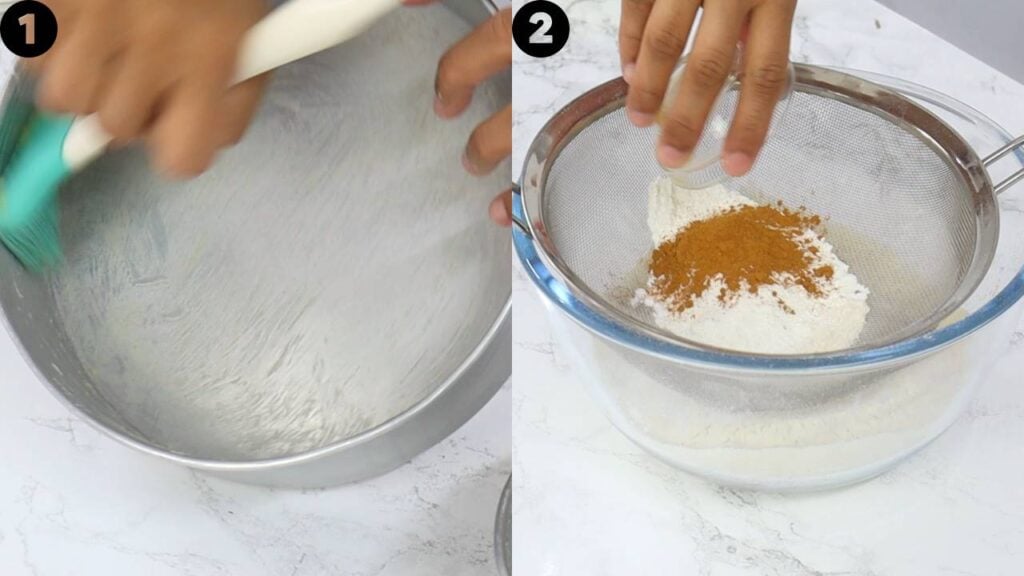
Preheat oven to 180°C (350°F) conventional and grease two 8-inch cake tins (I use my homemade cake release). I do recommend lining the bottoms of the pans with parchment paper as well for this recipe.
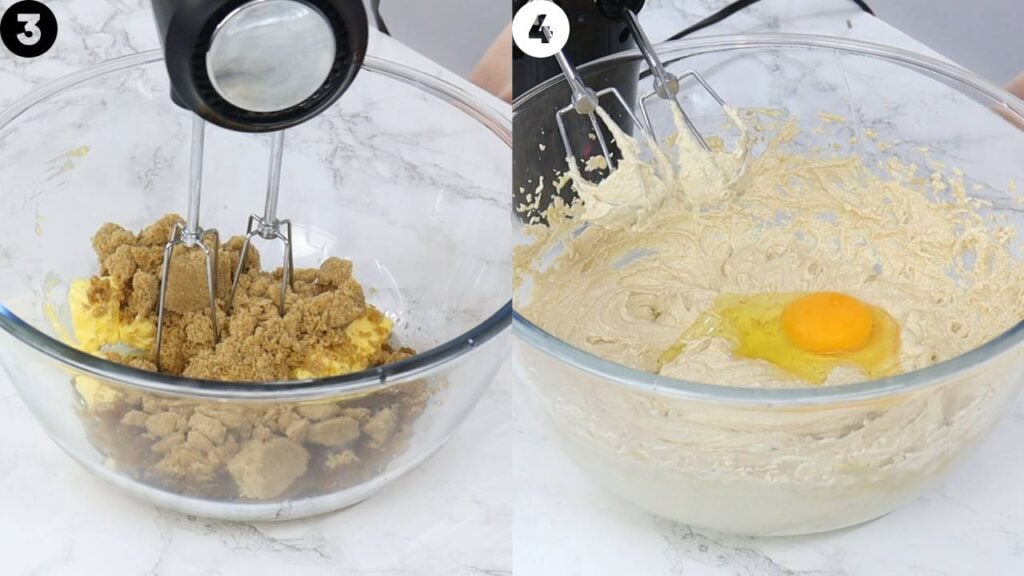
In a bowl, sift together flour, cornstarch, baking soda, baking powder, salt and ground cinnamon. Using a whisk or fork, mix until well combined. Set aside.
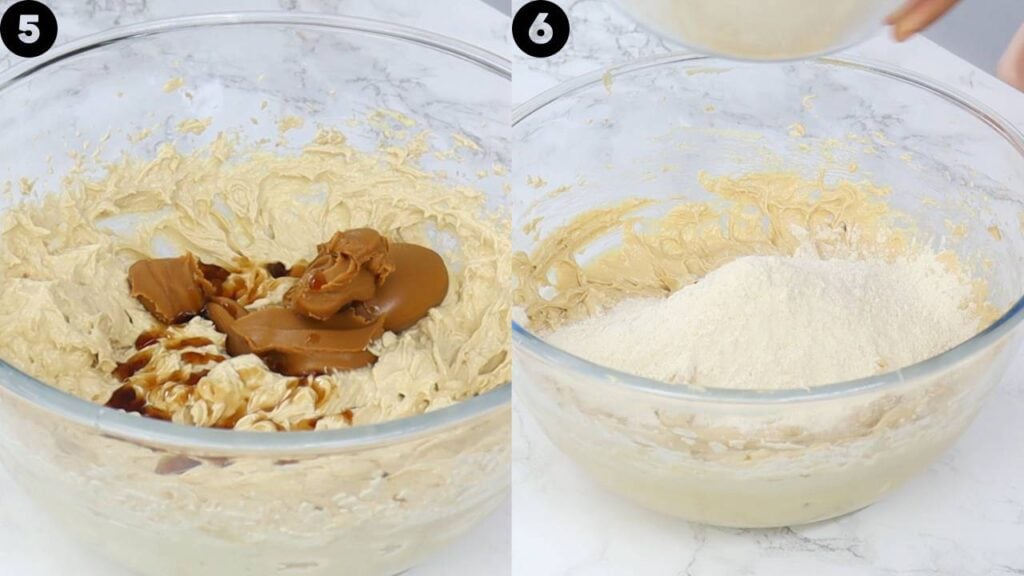
In a large bowl, add in butter, vegetable oil and light brown sugar. Using an electric mixer (hand or stand mixer are both fine), cream together for 2 minutes until light and creamy.
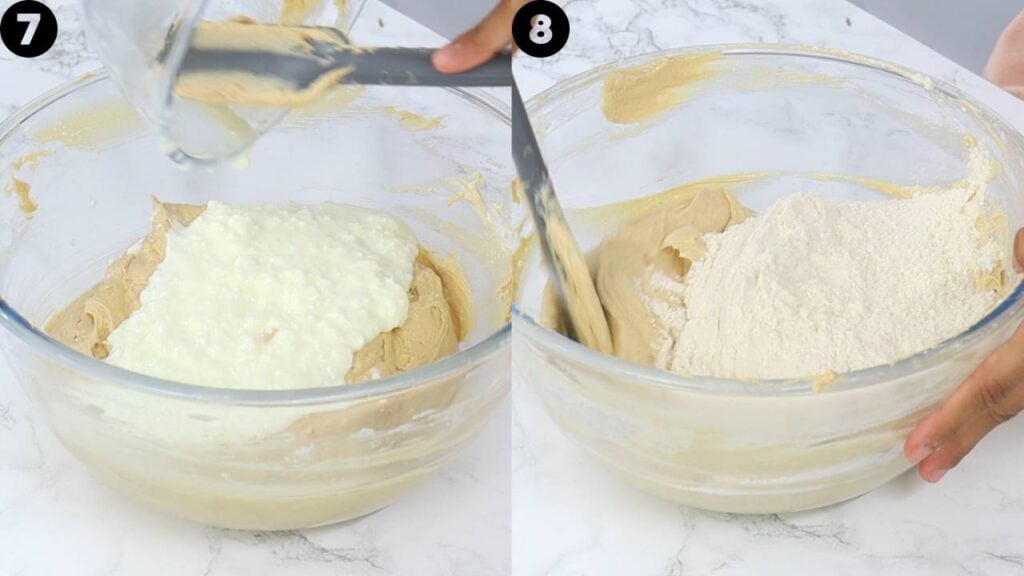
Add in eggs one by one, mixing well in between each addition (about 10-15 seconds between eggs).
Add in Biscoff spread and vanilla and mix until well combined. Now set your mixer aside as the remainder of the batter will be finished by hand.
Add in half of your premixed dry ingredients to your wet mixture, and gently fold it in with a spatula until just combined. Then add in buttermilk and fold until just combined. Lastly, add in the remaining dry ingredients and gently fold until just combined. Do not overmix.
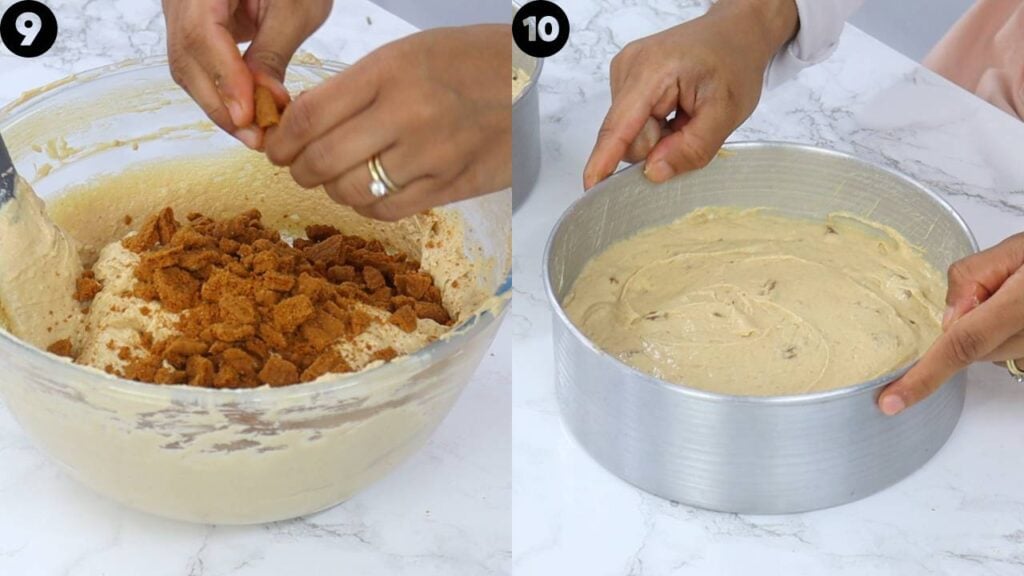
Break Biscoff cookies into small chunks (I just use my hands) and add them to the batter. Fold them in until just combined. Do not overmix.
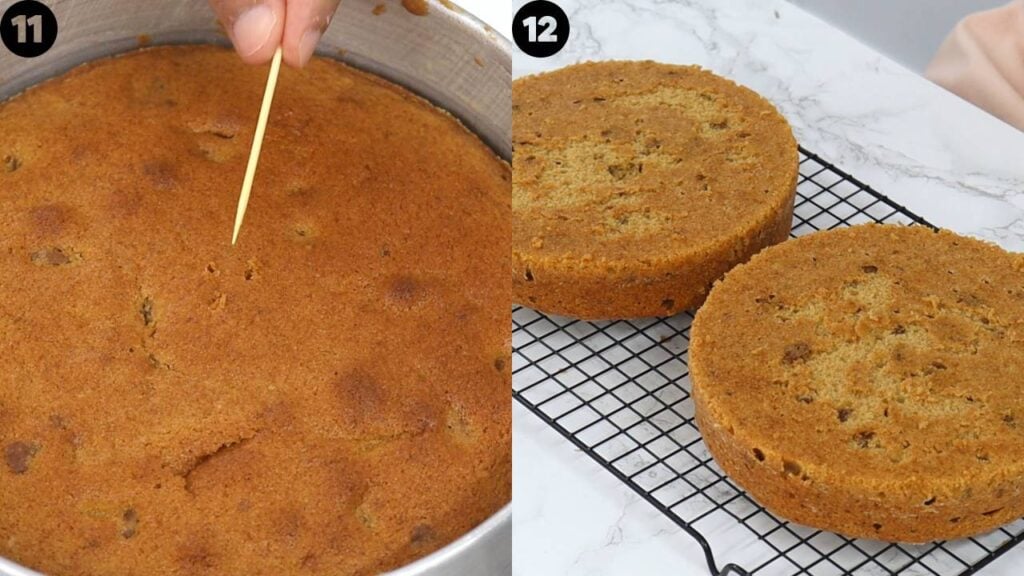
Distribute the batter evenly into the two 8 inch cake pans Level out the tops, drop the cake tins lightly on the counter to remove any large air bubbles and bake for 37-40 minutes or until a toothpick comes out clean or with a few moist crumbs on it.
Once baked, allow the cake layers to cool in the cake tins for 20 minutes, then run a thin knife around the edges to release the cakes from the cake tins and turn them out onto a cooling rack to completely cool.
Biscoff Buttercream Frosting
In a food processor (or blender), place in 15 Biscoff cookies and blend until they resemble fine crumbs. Set aside for now.
To a large bowl (or bowl of a stand mixer if using one), add in powdered sugar, butter, vanilla, salt and milk.
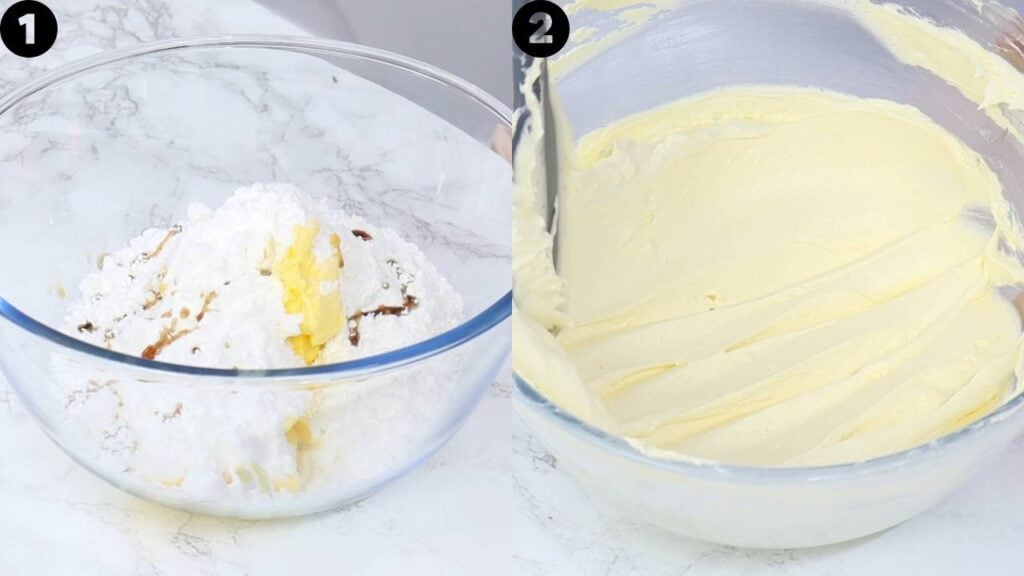
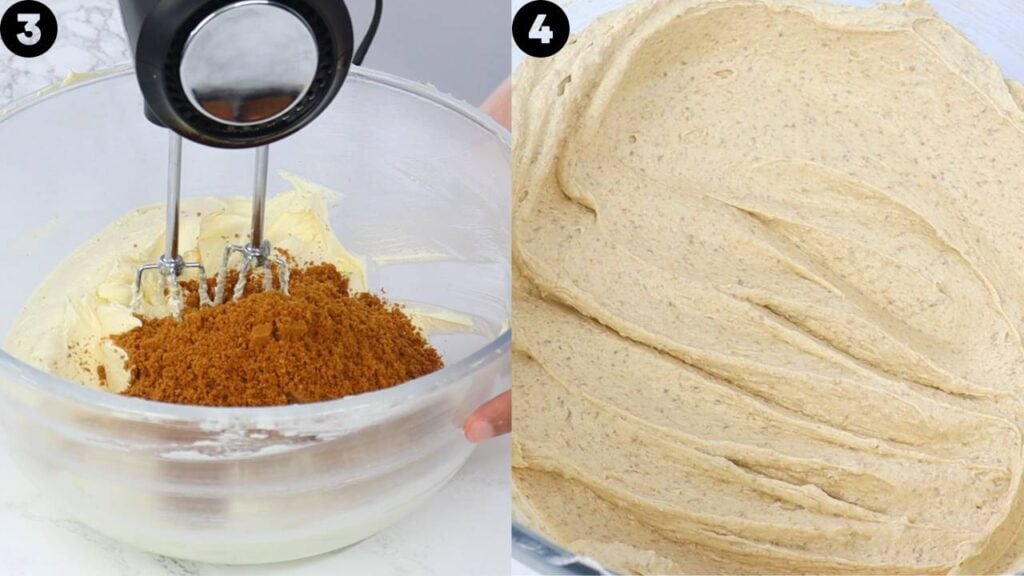
Using an electric mixer, mix on the lowest speed until the ingredients are combined, and then turn up the speed to a medium-high and mix for a full 10 minutes. Scrape the bowl down half way through. Once done, the frosting should be light, fluffy and smooth.
Finish off by adding in the Biscoff spread and crumbed Biscoff cookies from earlier and mix on a medium speed until well combined.
Assembly (demonstrated in video)
Begin by slightly heating Biscoff spread so that its a more spreadable consistency. Set it aside to cool.
Using a serrated knife, level out the tops of the cake layers. I also like to trim off the caramelised edges, however this is optional.
Place the first cake layer onto your cake stand and place a generous amount of Biscoff buttercream on top and smooth it out with an offset spatula or knife.
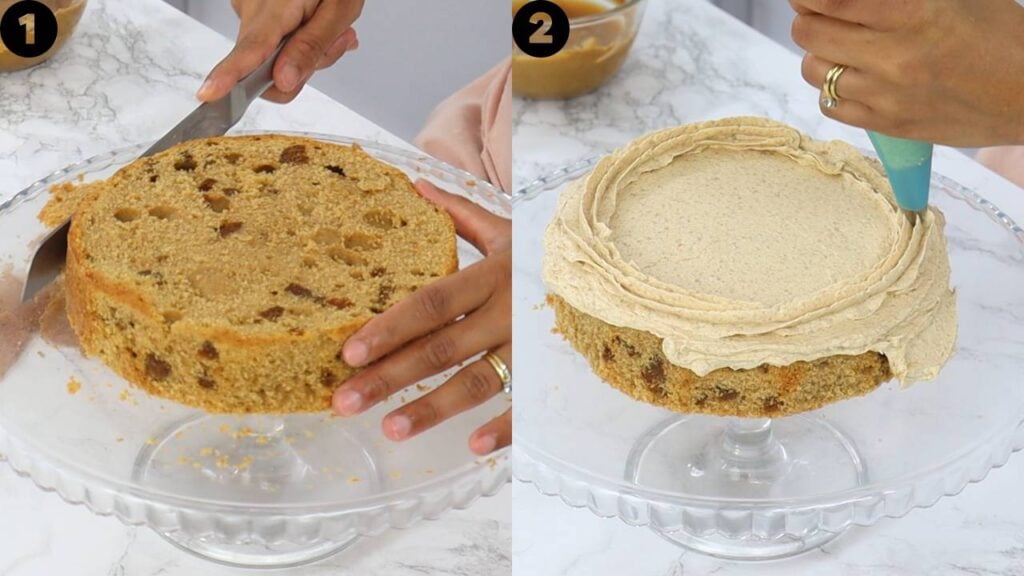
Using a 1M piping tip, pipe a dam of frosting around the edges of the cake layer. Fill the middle with half of the Biscoff spread, but make sure the Biscoff spread isn’t warm otherwise it will melt the buttercream.
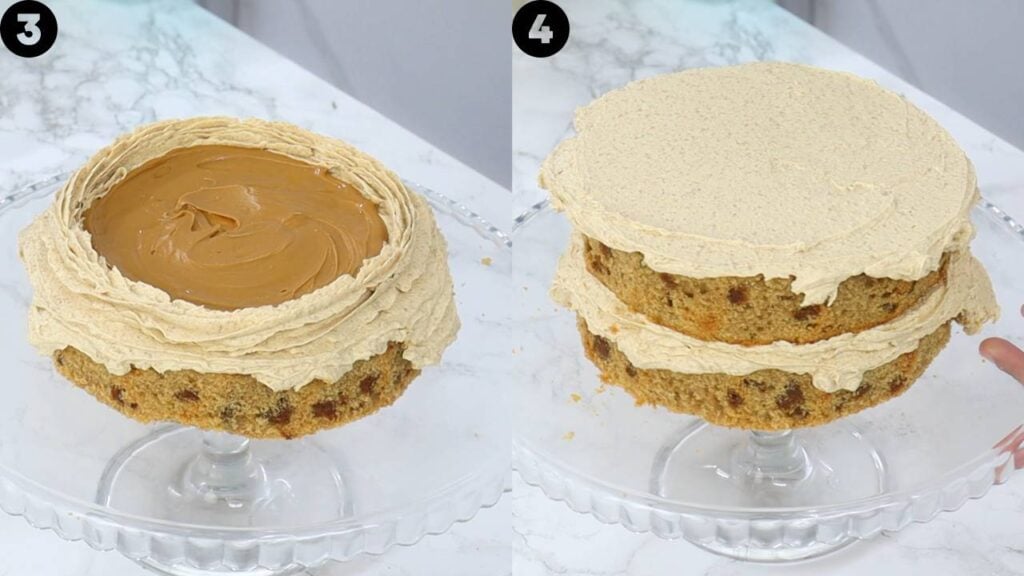
Place your next cake layer on top and cover the top and sides with more buttercream, leaving a little aside for piping on the top. I like to use a cake scraper to smooth out the sides.
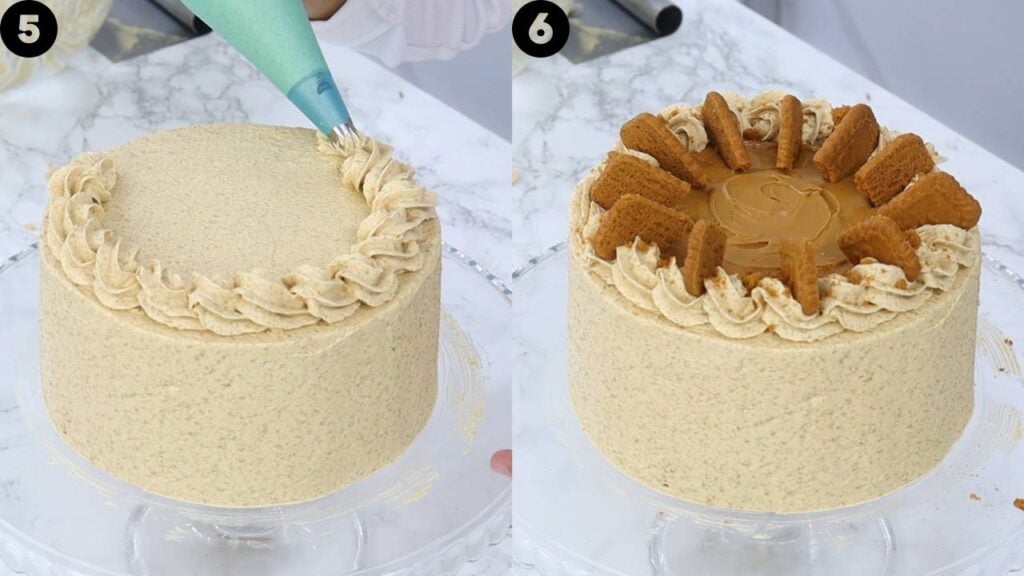
Use the same 1M piping tip to pipe a border around the top of the cake. Fill the middle with the remaining Biscoff spread (make sure it isn’t warm) and decorate with Biscoff cookies. Enjoy!
How to Store Biscoff Cake
This Biscoff cake can be left at room temperature for about 3 days (place in an airtight container to prevent it from drying out). After this, it’s best to place the cake into the fridge for up to a week.
Moist Biscoff Cake (Cookie Butter Cake)
Print Pin VideoIMPORTANT: For accuracy, I would recommend using the gram measurements provided, as those are the exact quantities I use. Cup measurements are given as estimates (based on US cup measurements) to make it easier for those who do not have a scale.
Ingredients
Biscoff Cake
- 2⅓ cups (300 g) all purpose flour
- ¼ cup (30 g) cornstarch
- ½ tsp baking soda
- 2 tsp baking powder
- ½ tsp salt - omit if using salted butter
- 1 tsp ground cinnamon
- ½ cup (113 g) unsalted butter - room temperature
- ½ cup (105 g) unflavored vegetable oil - I use canola oil
- 1¼ cups (250 g) soft light brown sugar - firmly packed (see note 1)
- 3 large eggs - room temperature
- ½ cup (130 g) Biscoff spread (smooth) - also called cookie butter
- 2 tsps vanilla extract/essence
- 1¼ cups (280 g) buttermilk - room temperature
- 15 individual Biscoff cookies - plain cookies (not the ones with cream)
Biscoff Buttercream
- 15 individual Biscoff cookies - plain cookies (not the ones with cream). Blended to fine crumbs.
- 1½ cups (340 g) unsalted butter - room temperature
- 2¾ cups (350 g) powdered sugar - also known as icing/confectioners sugar
- 1½ tsps vanilla extract/essence
- ¼ tsp salt - omit if using salted butter (though I do not recommend using salted butter especially for frosting)
- 1½ tbsp milk or heavy cream
- ¼ cup (70 g) Biscoff spread (smooth) - also called cookie butter
Extra
- ⅔ cup Biscoff spread (smooth) - 1/3 for filling in between the cake layers and 1/3 for the top of the cake. Heat slightly to make the Biscoff spread more spreadable.
- Extra Biscoff cookies - for decorating (I use about 8 cookies, but you can use more or less).
Instructions
Biscoff Cake
- Preheat oven to 180°C (350°F) conventional (see note 2 if using a convection oven with a fan) and grease two 8 inch cake tins (I use my homemade cake release). I do recommend lining the bottoms of the pans as well for this recipe.
- In a bowl, sift together flour, cornstarch, baking soda, baking powder, salt and ground cinnamon. Using a whisk or fork, mix until well combined. Set aside.
- In a large bowl, add in butter, vegetable oil and light brown sugar. Using an electric mixer (hand or stand mixer are both fine - see note 3), cream together for 2 minutes until light and creamy.
- Add in eggs one by one, mixing well in between each addition (about 10-15 seconds between eggs).
- Add in Biscoff spread and vanilla and mix until well combined. Now set your mixer aside as the remainder of the batter will be finished by hand.
- Add in half of your premixed dry ingredients to your wet mixture, and gently fold it in with a spatula until just combined. Then add in the buttermilk and fold until just combined. Lastly, add in the remaining dry ingredients and gently fold until just combined. Do not overmix (see note 4).
- Break the Biscoff cookies into small chunks (I just use my hands) and add them to the batter. Fold them in until just combined. Do not overmix.
- Distribute the batter evenly into the two 8 inch cake tins. Level out the tops, drop the cake tins lightly on the counter to remove any large air bubbles and bake for 37-40 minutes or until a toothpick comes out clean or with a few moist crumbs on it.
- Once baked, allow the cake layers to cool in the cake tins for 20 minutes, then run a thin knife around the edges to release the cakes from the cake tins and turn them out onto a wire rack to completely cool.
Biscoff Buttercream Frosting
- In a food processor (or blender), place in the 15 Biscoff cookies and blend until they resemble fine crumbs. Set aside for now.
- To a large bowl (or stand mixer if using - see note 5), add in powdered sugar, butter, vanilla, salt and milk.
- Using an electric mixer, mix on the lowest speed until the ingredients are combined, and then turn up the speed to a medium-high and mix for a full 10 minutes. Scrape the bowl down half way through. Once done, the frosting should be light, fluffy and smooth (see note 6 if its not).
- Finish off by adding in the Biscoff spread and crumbed Biscoff cookies from earlier and mix on a medium speed until well combined.
Assembly (demonstrated in video)
- Begin by slightly heating the Biscoff spread so that its a more spreadable consistency. Set it aside to cool.
- Using a serrated knife, level out the tops of the cake layers. I also like to trim off the caramelised edges, however this is optional.
- Place the first cake layer onto your cake stand and place a generous amount of Biscoff buttercream on top and smooth it out with an offset spatula or knife.
- Using a 1M piping tip, pipe a dam of frosting around the edges of the cake layer. Fill the middle with half of the Biscoff spread (1/3 cup), but make sure the Biscoff spread isn't warm otherwise it will melt the buttercream.
- Place your next cake layer on top and cover the top and sides with more buttercream, leaving a little aside for piping on the top. I like to use a cake scraper to smooth out the sides.
- Use the same 1M piping tip to pipe a border around the top of the cake. Fill the middle with the remaining Biscoff spread (make sure it isn't warm) and decorate with Biscoff cookies. Enjoy!
Video
Notes
Nutrition
Nutritional information are estimates only as they are automatically calculated by a third party application. Actual values may differ based on brands and types of products used.











66 Comments
Hi! I am a home baker, but not amateur. I baked the cake with exact same measurements , but it turned out pretty dry. M wondering where it went wrong. I measured out the ingredients n baked at 350 for 37mins. I have previously tried it other recipes which turned out great.
Hi Anindita! 🙂 So sorry to hear your cake came out dry – that can be frustrating!
This cake should come out soft and moist, so it could be due to overbaking (particularly if a different pan size was used to the original recipe), not enough liquid in the batter or too much flour. If you used the gram measurements then there shouldn’t be an issue with the ingredient quantities – perhaps a liquid ingredient was accidentally missed??
So sorry I couldn’t be of more help Anindita, but I hope the tips above help 🙂
Hi. Can you suggest how I can make an eggless version of this recipe.
Thank you
Hi Dipti! 🙂
I haven’t tried an eggless version of this recipe myself so I’m not too sure what would work well sorrry! You could try using my eggless vanilla cake recipe and fold in the biscoff biscuits at the end like in this recipe. You could also perhaps substitute one of the liquid/fat ingredients in the eggless vanilla cake recipe with some biscoff spread. So sorry I couldn’t be of more help but would love to hear how it goes if you decide to experiment with the eggless vanilla cake recipe 🙂
Hi! Can this be made as a square cake? I can’t wait to try this!
Hi Teresa! 🙂
Yes it should be fine as a square cake! I would use two square 8 inch cake tins and just reduce the cook time slightly to ensure they don’t overbake. You could even bake it as a single 9×13 inch sheet cake. Hope that helps and hope you enjoy the recipe!
Can the cake be made ahead and frozen?
Hi Ivy!
I haven’t tried freezing these cake layers myself, but I think if wrapped well in cling wrap and placed into an airtight container before freezing they should be fine 🙂
Hope you enjoy the recipe!
I would like to add strawberry to the biscoff filling
But I’ll be traveling with the cake to another city in an ac car
Will the cake be good with the strawberries in it?
Hi Gayathiri! 🙂
I think it depends how liquidy the strawberry is, in that if it’s a jam for example, you’d just want to make sure it’s thick enough that it stays in place. If it’s fresh strawberries then I think it should be fine 🙂
Hii, what’s the weight of biscoff cake as per 1x recipe?
I would like to make 1 and a half kg biscoff cake
Can I do the same recipe in 8*8 square tin?
And can I take this cake in an a.c. car because I’ll be traveling to another city
Hi Gayathiri! 🙂
I don’t weigh my cakes sorry so I’m not too sure how heavy they are unfortunately!
You could do the recipe in two 8x8inch square tins, the cake layers will just be slightly thinner so you’ll likely need to reduce the cook time.
I think if the AC is on and the cake is kept out of direct sunlight it should be okay 🙂
Hope that helps and hope you enjoy the recipe!
Hi everyone! I just made this cake for my son and it was such a hit!!! The instructions were so easy to follow and both the cake and icing came out fantastic! The cake was moist and you could taste the Biscopff !! The buttercream came out fluffy and was easily pipeable My only critique is that the recipe uses American buttercream which is a bit too sweet for my palate . Would you by any chance have a Swiss meringue variation for your buttercream?
Hi Salma! So so happy to hear eveyone loved the recipe 😀
Totally understand re the American buttercream – I do try and make my buttercreams a little less sweet, but American buttercream in general is on the sweeter side 🙂
I do have a Swiss meringue buttercream recipe you can find here: https://cakesbymk.com/recipe/swiss-meringue-buttercream/
You could make the vanilla version above, and then add the biscoff spread and crushed cookies in at the end 🙂
Hope that helps and thanks so much again for the wonderful feedback!
Used this recipe for mini loaf cakes. When I tell you everyone raved about these cakes! The texture was perfect and I loved the variety of textures from adding the cookie crumbs. Not overly sweet. The cookie butter flavor was just the right amount. The buttercream turned out amazing! The recipe was well written and easy to follow to yield the perfect cake! This one is definitely a winner! Thank you!
Aww yay! So happy you loved the biscoff cake Britt and found the instructions easy to follow 😀
Really appreciate the wonderful feedback 🙂
How thick are each of the cake layers in this recipe? Contemplating doubling up the recipe to make a 4 layer 8 inch cake to feed 16 people.
Hi Nuby! 🙂 The cake layers are relatively thick (about 1.5inches high each), and I think for 16 people 1x the recipe should be enough (the 12 serves stated in the recipe card is for 12 big slices, but I think this cake could easily feed more with slightly thinner slices) 🙂
Hope you enjoy the recipe!
Hi
My family is not a big fan buttercream frosting. Can I use biscoff whipped cream instead.
Thanks for all your amazing recipes
Hi Suchithra! Yes you could totally do that, the biscoff should help to stabilize the whipped cream a little too so it doesn’t start to weep after some time 🙂
Hope you enjoy the recipe!
Do you have a recipe for biscoff whipped cream?
I don’t yet sorry! Will pop it on my to-do list 🙂
Hi! Very interested to try this cake for the weekend, do you know if you can sub the flour for gluten free and how this would turn out? Thank you 😌
Hi Imogen! 🙂
I haven’t tried this recipe as a gluten free cake myself, though I have had many readers say they’ve used a 1:1 gluten free flour for many of my recipes and it seems to work great so may be worth a try! Would love to hear how it goes if you decide to try it out 🙂