

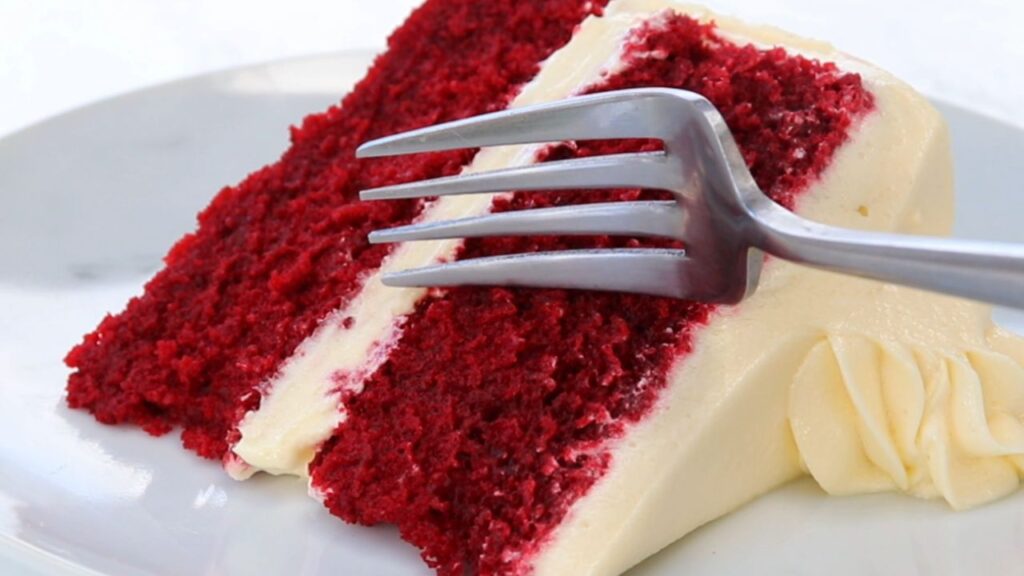
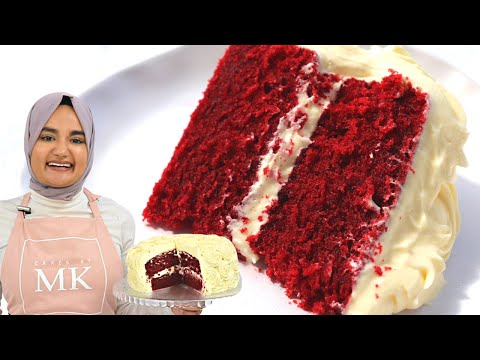
When I first shared this red velvet cake recipe a few years ago, I remember being SO excited because it was genuinely one of the softest cakes I had ever made. Now, with over 300 5-star reviews, I’m so glad you are all loving it as much as I do! It’s incredibly moist with that classic velvety texture, full of flavor, and topped with the most delicious, slightly tangy cream cheese buttercream.

What Exactly Is a Red Velvet Cake?!
So, what exactly makes a red velvet cake a red velvet cake?! Think of it as a delicious middle ground between a vanilla and chocolate cake, with a subtle chocolate flavor, a hint of tanginess, and that signature soft, velvety texture.
The tangy flavor comes from ingredients like buttermilk and vinegar, which are classic in red velvet cake recipes. These days, red velvet cake is usually made with red food coloring for that gorgeous deep red color and is most commonly paired with cream cheese frosting or ermine frosting.
For this recipe, I’m going with my favorite pairing: a rich, creamy, and slightly tangy cream cheese buttercream! If you prefer ermine frosting, you can also check out my traditional red velvet cake recipe, which uses the same soft red velvet cake base but is topped with classic ermine frosting instead. Some people prefer it, as it’s less sweet and a bit more subtle in flavor. I also have an eggless red velvet cake recipe that I promise is just as soft and moist!
Why You’ll Love This Recipe
SO soft and velvety: This cake has the most incredibly soft, tender texture that practically melts in your mouth.
Perfectly balanced flavor: It has just the right amount of chocolate flavor, sweetness, and tanginess without any one flavor being overpowering.
Cream cheese buttercream: The slightly tangy, creamy frosting pairs SO well with the soft red velvet cake.
Easy to make: You don’t need any fancy equipment or complicated techniques to make this cake.
A total crowd-pleaser: With over 300 5-star reviews, I think it’s safe to say this one is a reader favorite! 💗
A Note on the Updated Measurements
You may notice that some of the cup and tablespoon measurements in this recipe have changed slightly from the original recipe. When I first developed this recipe, I wanted to keep the measurements as accurate as possible, so I would measure an ingredient using a cup or tablespoon, weigh that amount, and use the resulting gram weight as my exact measurement. I did this because I often found that ingredient conversions don’t always translate perfectly, and weighing the amount I naturally measured could sometimes give a more accurate result.
Over time, though, I realized this could be confusing, so I’ve moved toward using standard US cup and spoon measurements. I have not changed any of the gram measurements, so the recipe itself has not changed.
I still highly recommend using the gram measurements whenever possible. For example, 1 cup of all-purpose flour is generally considered 120 g, but depending on how you measure that cup, you can easily end up with a different weight. Using a scale gives you a much more consistent and accurate measurement every time.
The following measurements have been updated from the original recipe:
– Cornstarch: 3 tbsp (18 g) → 2½ tbsp (18 g)
– Cocoa powder: 3 tbsp (14 g) → 2½ tbsp (14 g)
– Vegetable oil: ¾ cup (141 g) → ⅔ cup (141 g)
– Buttermilk: ¾ cup (158 g) → ⅔ cup (158 g)
Again, the gram measurements have remained exactly the same, so these updates do not change the recipe or the final cake.
How to Make Red Velvet Cake
You can find the full list of ingredients for this red velvet cake recipe in the recipe card at the end of the blog post. For easy navigation, just hit the “jump to recipe” button at the top of the page. Here’s a quick visual breakdown of how to make it, and you’ll also find the recipe video in the recipe card below.
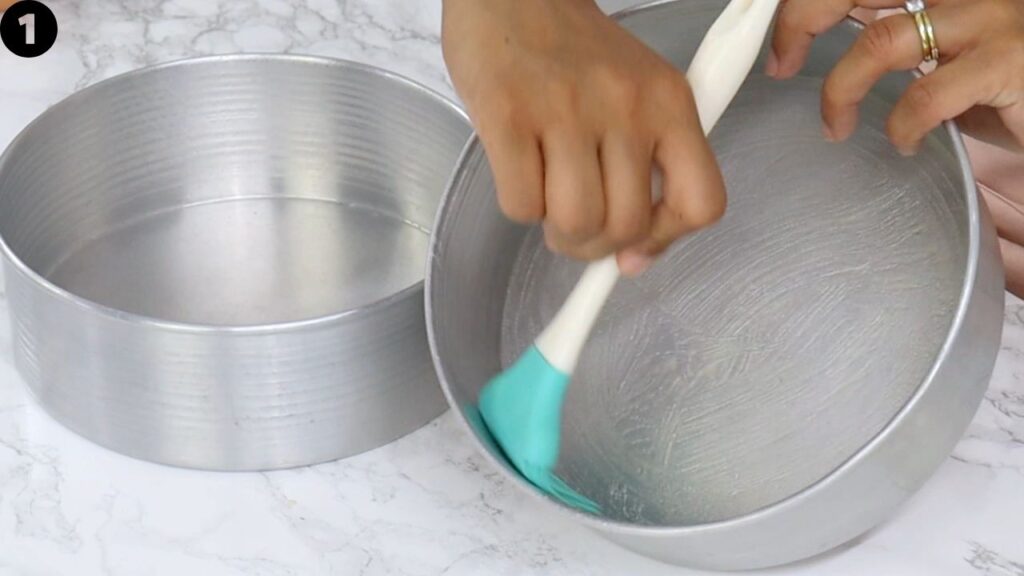
Preheat oven to 350°F (180°C) conventional and grease and/or line two 8×3-inch cake pans (I use my homemade cake release).
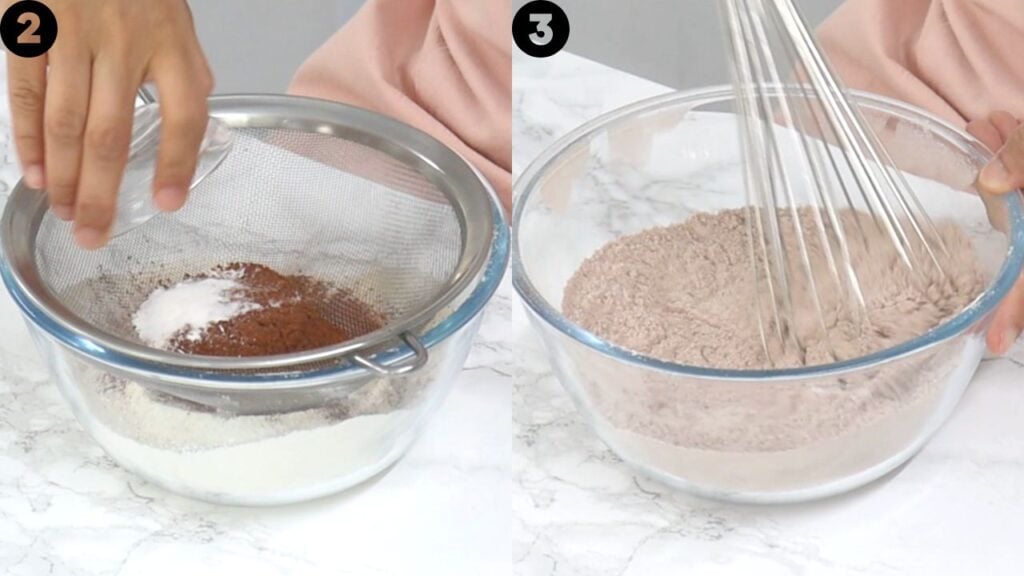
In a medium bowl, sift together flour, cornstarch, unsweetened cocoa powder, baking soda, baking powder and salt. Using a whisk, mix until well combined. Set aside for now.
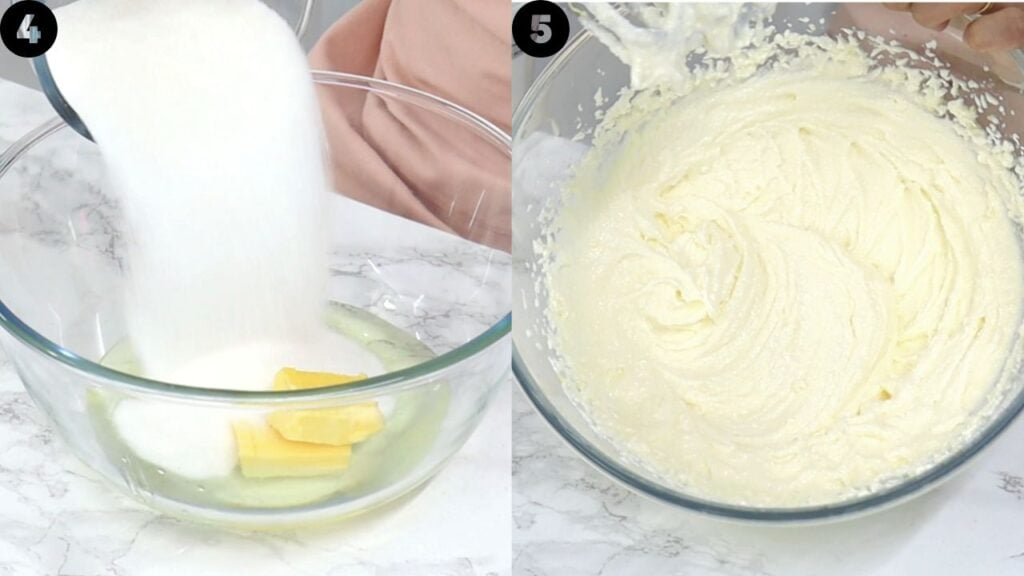
In a large bowl, add the butter, vegetable oil and sugar. Using an electric mixer, cream together for 2-3 minutes until light and creamy.
Add the eggs one at a time, mixing well between each addition.
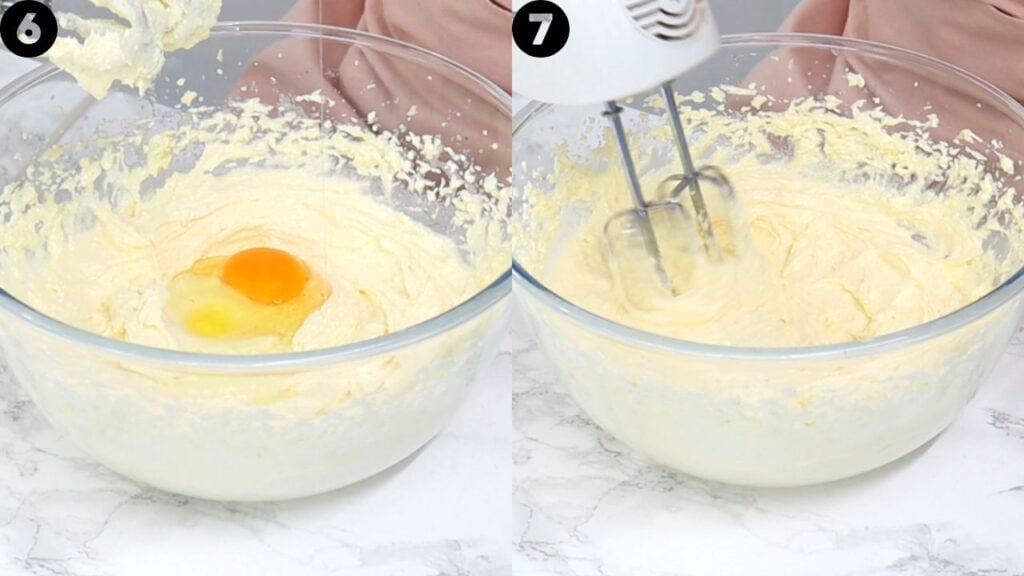
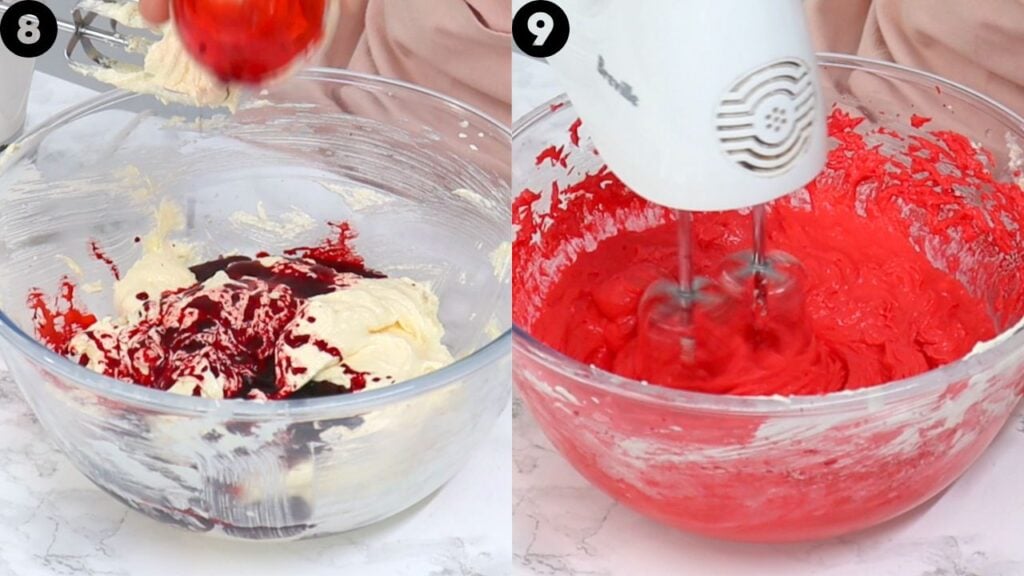
Add the vanilla, white vinegar and red liquid food coloring, and mix until well combined. Set the mixer aside as the remainder of the batter will be finished by hand.
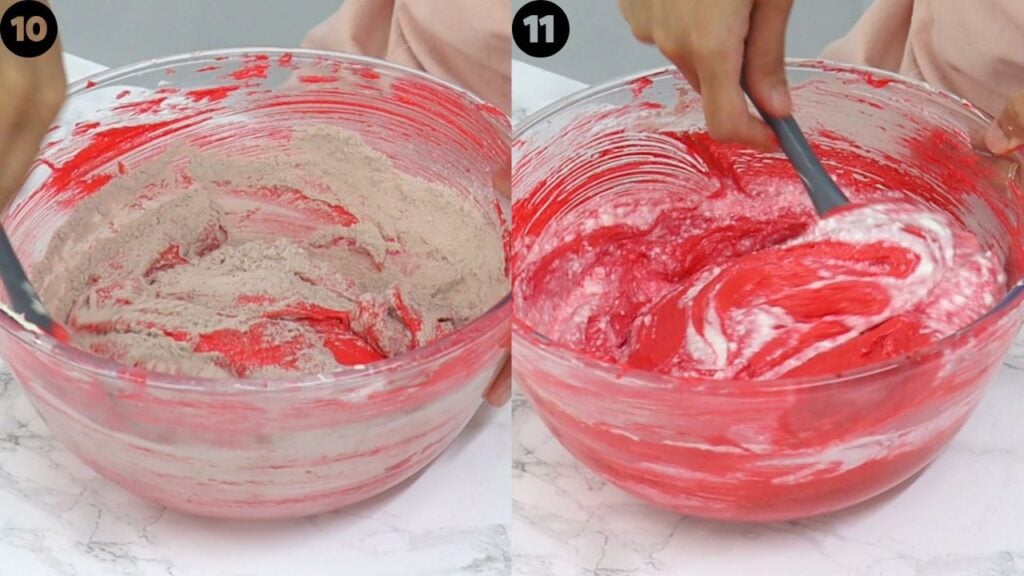
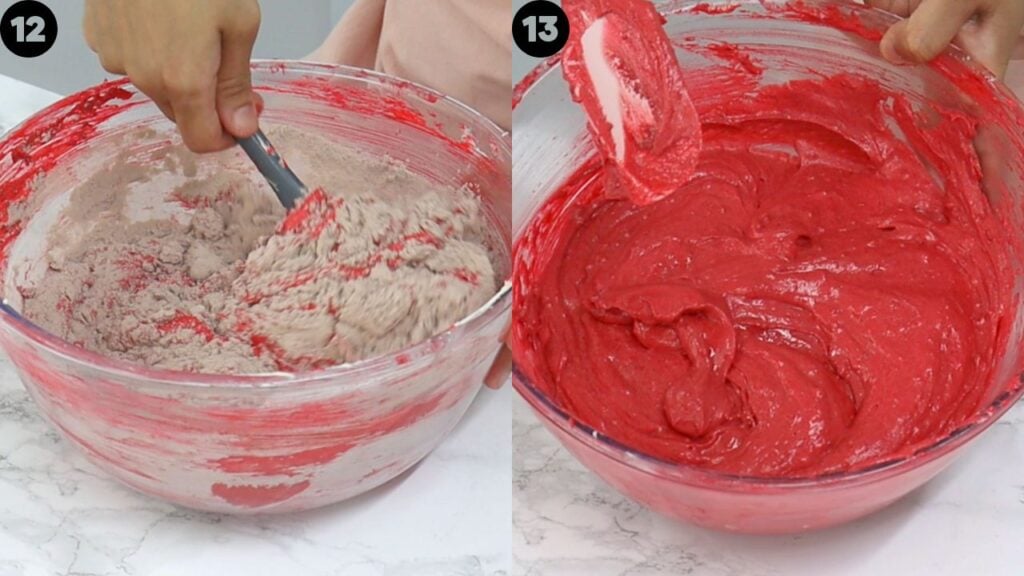
Add half of the dry ingredients to the wet ingredients and gently fold together with a spatula until just combined. Add all of the buttermilk and gently fold until just combined. Lastly, add the remaining dry ingredients and gently fold until just combined. Do not overmix.
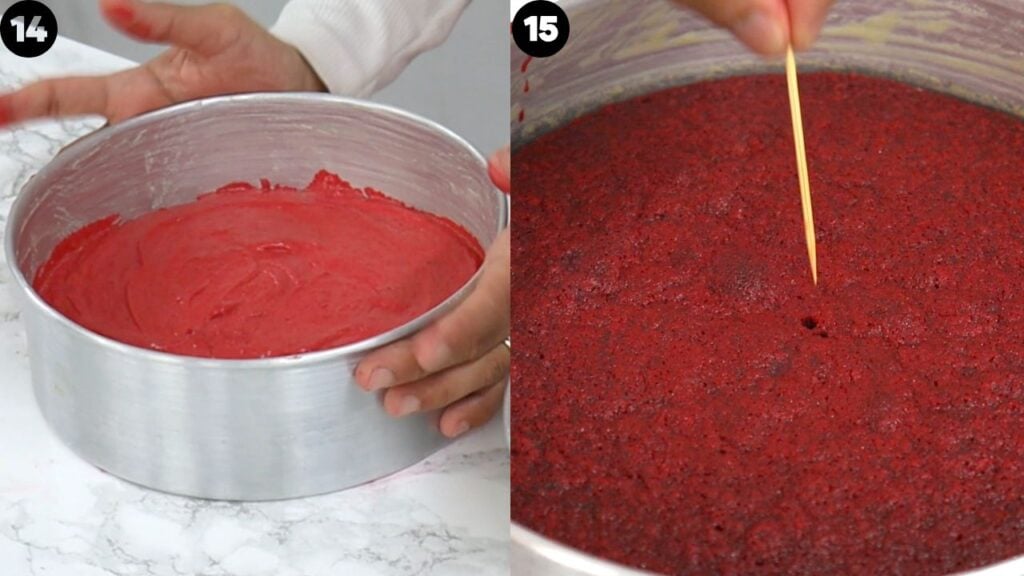
Divide the batter evenly between the prepared cake pans and bake for 30 minutes, or until a toothpick inserted into the center comes out clean or with a few moist crumbs. Be careful not to open the oven door too early, as this can cause the cake layers to sink. Also, avoid overbaking the cake layers, as this can cause them to dry out.
Allow the cakes to cool in the cake pans for 15-20 minutes before carefully turning them out onto a wire rack to completely cool. Once cooled, frost with my cream cheese buttercream frosting.
How to Decorate Your Cake
There’s no particular way to decorate a red velvet cake, but here’s how I decorated mine using my cream cheese frosting recipe. 🙂
Usually, I would trim (or torte) the tops of the cakes with a serrated knife to make them flat, but these red velvet layers bake up really nice and flat, so no trimming was required. I went ahead and added a generous amount of frosting to my first cake layer and smoothed it out with my offset spatula before placing the next cake layer on top.
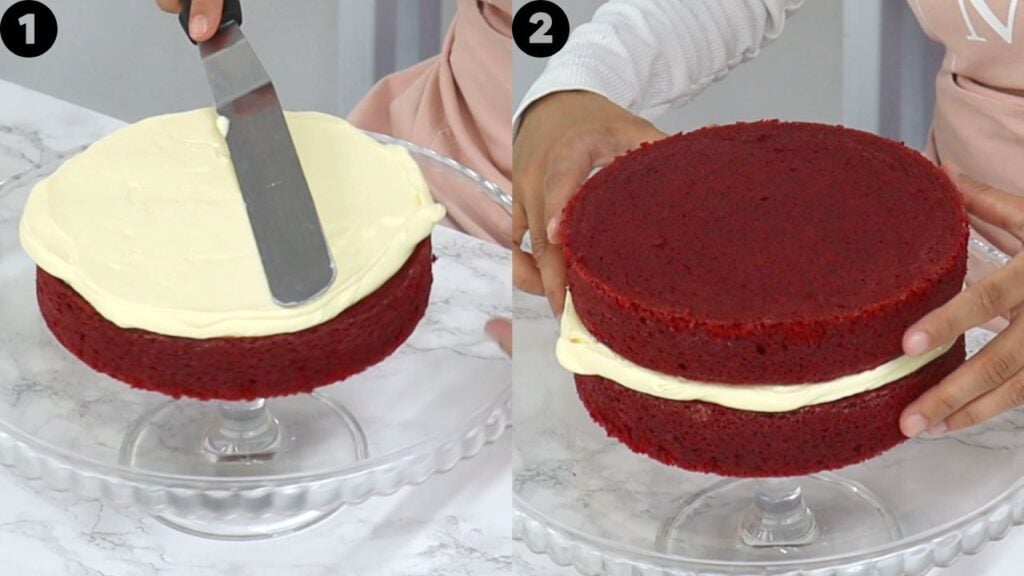
Next, I added some frosting to the top cake layer and spread it out with my offset spatula. I then used the excess frosting on the sides to cover the entire cake. I only did a thin layer of frosting and didn’t worry about doing a crumb coat because I was piping rosettes all around the cake. If you also want to pipe rosettes, you’ll need to make 1.5x my cream cheese frosting recipe to ensure you have enough frosting.
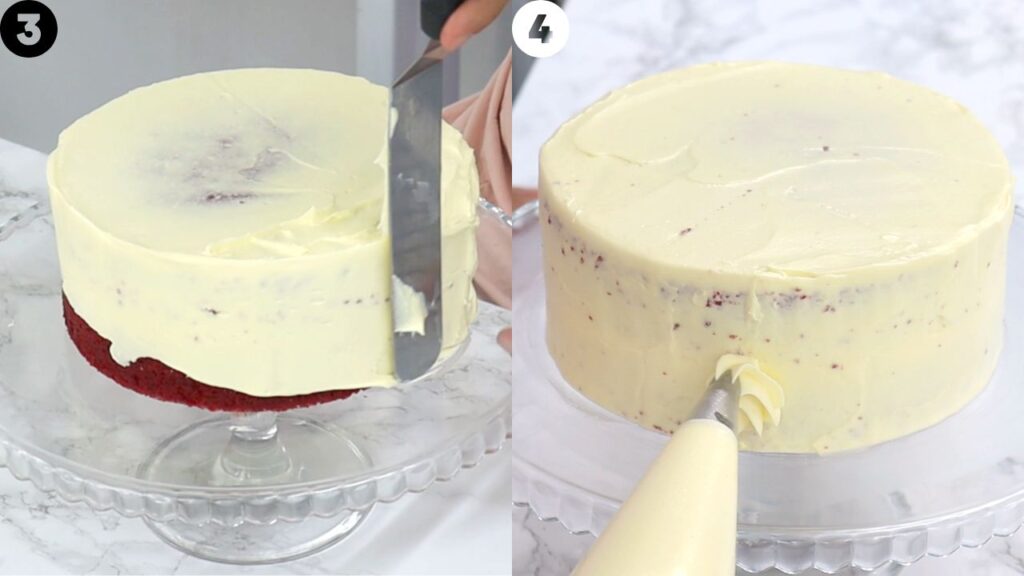
I used a 1M piping tip to pipe rosettes all around the cake! If you’re new to piping, check out my beginner’s piping tutorial or my 1M piping tip tutorial.
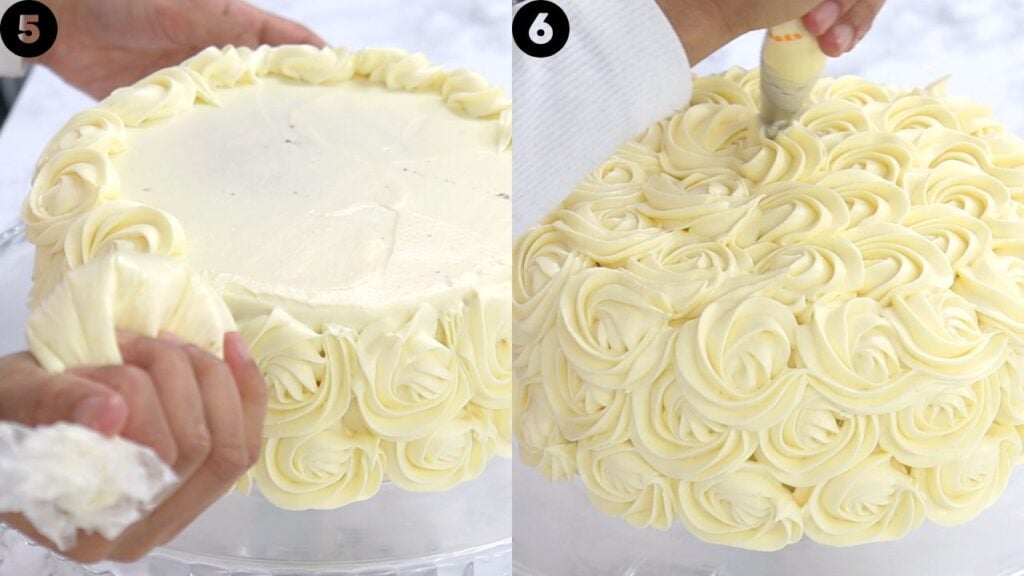
Once your cake is decorated, pop it into the fridge to allow everything to firm up. This will make it easier to cut. We don’t want the cake to be cold, though, so bring it out of the fridge about an hour or so before cutting. If it’s still cold when you cut into it, let it come to room temperature before eating. Trust me, it’s worth the wait! 😀
How to Store Red Velvet Cake
Because this cake is topped with cream cheese buttercream, I recommend storing it in the fridge. If you have leftover cake, make sure slices are covered well or stored in an airtight container, as the fridge can dry out the cake.
Can I Freeze Red Velvet Cake?
I haven’t personally tried freezing this red velvet cake, so I can’t say for certain how it will turn out, but I think it would be fine based on other similar recipes that I have frozen. If you’d like to freeze it, I recommend only freezing the cake layers and not the cream cheese buttercream, as it may split or become grainy when thawed. Wrap the unfrosted cake layers really well in plastic wrap and placing them in an airtight container or freezer-safe bag to help protect them from freezer burn. Allow them to thaw completely before decorating or serving.
Commonly Asked Questions
Why did my red velvet cake sink in the middle?
There are a few reasons why a cake can sink in the middle, including opening the oven door too early, overmixing the batter, inaccurate ingredient measurements, underbaking the cake or putting too much batter in one cake pan. If you’re having trouble with your cake sinking, I’ve put together a whole post on why cakes sink in the middle where I go through the most common causes and how to prevent them.
Can I use gel food coloring instead of liquid food coloring for this recipe?
Yes, you can use gel food coloring instead of liquid food coloring. However, because gel coloring is much more concentrated, you won’t need as much. Dilute your gel coloring with just under 3½ tablespoons of water or milk to make up for the liquid lost when using gel coloring.
This recipe uses 3½ tablespoons of liquid food coloring, but using that much gel coloring would be far too concentrated. The additional liquid also helps thin out the batter, resulting in a fluffier, more velvety cake.
Can I use a different size pan?
Yes, you can use a different size cake pan, but you’ll need to adjust the amount of batter you use depending on the size of your pan. This recipe is designed to be divided between two 8-inch cake pans, and I don’t recommend putting all of the batter into one 8-inch pan. Because this is a soft cake, too much batter in one pan can cause the center to sink as it bakes, while the edges can overbake before the center is fully cooked.
For example, 1x this recipe can also be baked as one 10-inch cake, as the larger pan provides enough surface area for the batter to bake properly. The important thing is to avoid baking a very tall cake and then torting it into layers. This red velvet cake is best baked as individual layers, which helps the cake bake more evenly and prevents the edges from becoming overbaked before the center is fully cooked.
Can I use this recipe to make red velvet cupcakes?
For a cupcake version of this recipe, check out my red velvet cupcake recipe. It’s essentially a smaller quantity of this recipe, making just enough for 12 cupcakes!
Can I use a buttermilk substitute?
Yes, a buttermilk substitute will work perfectly fine in this recipe. If you don’t have buttermilk on hand, you can learn how to make your own buttermilk substitute here.

Soft Red Velvet Cake
Print Pin VideoIMPORTANT: For accuracy, I would recommend using the gram measurements provided, as those are the exact quantities I use. Cup measurements are given as estimates (based on US cup measurements) to make it easier for those who do not have a scale.
Ingredients
Red Velvet Cake
- 2¼ cups (275 g) all-purpose flour - regular all purpose (see note 1 if you want to use cake flour)
- 2½ tbsps (18 g) cornstarch
- 2½ tbsps (14 g) cocoa powder - unsweetened. Natural cocoa powder preferred (see note 2)
- ½ tsp baking soda
- 1 tsp baking powder
- ½ tsp salt - see note 3
- 6 tbsps (86 g) unsalted butter - room temperature
- ⅔ cup (141 g) unflavoured vegetable oil - I use canola
- 1¾ cups (344 g) white granulated sugar
- 3 large eggs - room temperature
- 1 tbsp (12 g) vanilla extract/essence
- 1½ tsps white vinegar
- 3½ tbsps (38 g) red liquid food colouring
- ⅔ cup (158 g) buttermilk - room temperature
Cream Cheese Buttercream
- 1 batch of my cream cheese buttercream frosting recipe - see note 4 if piping rosettes around the cake like I have
Instructions
- Preheat oven to 350°F (180°C) conventional (see note 5 if using a convection oven with a fan) and grease and/or line two 8x3-inch cake pans (I use my homemade cake release).
- In a medium bowl, sift together flour, cornstarch, cocoa powder, baking soda, baking powder and salt. Using a whisk, mix until well combined. Set aside for now.
- In a large bowl, add the butter, vegetable oil and sugar. Using an electric mixer (see note 6), cream together for 2-3 minutes until light and creamy.
- Add the eggs one at a time, mixing well between each addition.
- Add the vanilla, vinegar and red liquid food coloring, and mix until well combined. Set the mixer aside as the remainder of the batter will be finished by hand.
- Add half of the dry ingredients to the wet mixture and gently fold together with a spatula until just combined. Add all of the buttermilk and gently fold until just combined. Lastly, add the remaining dry ingredients and gently fold until just combined. Do not overmix (see note 7).
- Divide the batter evenly between the prepared cake pans and bake for 30 minutes, or until a toothpick inserted into the center comes out clean or with a few moist crumbs. Be careful not to open the oven door too early, as this can cause the cake layers to sink (see note 8). Also, avoid overbaking the cake layers, as this can cause them to dry out.
- Allow the cakes to cool in the cake pans for 15-20 minutes before carefully turning them out onto a wire rack to completely cool. Once cooled, frost with my cream cheese frosting (see blog post above for decorating ideas). Once your cake is decorated, pop it into the fridge for 30 minutes to allow everything to firm up (see note 9).
Video
Notes
Nutrition
Nutritional information are estimates only as they are automatically calculated by a third party application. Actual values may differ based on brands and types of products used.









715 Comments
Hi there, just tried this recipe and it was a flop – totally sank in the middle, overcooked and not a lot of flavor. When you say “an oven with a fan” are you talking about a convection oven? I used convection at 320 and then at 340 which I normally use, took out after 25 minutes – neither worked. Mixed by hand, was a bit lumpy? I’m also at a higher elevation here in Canada. Other than that I followed the recipe as exactly as I could. The batter tasted great so I’m not sure what went wrong??
Hi Leanne 🙂 So sorry to hear the cake didn’t quite turn out how you’d hoped! That can be frustrating. Yes when I refer to a fan oven I mean a convection oven, so if using a convection oven you want to bake at 320F otherwise the cake will overcook. My first thought is to check whether you used one 8 inch cake tin or two? If you happened to only use one cake tin, then this is likely the cause of the cake sinking in the middle and overcooking as there would have been too much batter in one cake tin. Another common reason for cakes sinking is when the cake is checked too early and the batter in the middle hasn’t set enough yet. For more tips check out this blog post: https://cakesbymk.com/recipe/why-did-my-cake-sink-in-the-middle/
I would also recommend using the gram measurements if you didn’t already for best results. A bit too much flour or not enough sugar can impact the final taste and texture of the cake. With the batter being lumpy, thats fine as long as there aren’t big lumps of unmixed flour.
Lastly, with the higher elevation, I am not too sure about that. I do know there are some adjustments that may need to be made if baking at a higher elevation, though I am not too familiar with what these adjustments are myself. Sorry I couldn’t be of more help in that regard!
Hope that helps for next time 🙂
Hi MK! May I know how long can I keep this cake in the fridge and how long can it be left out in room temperature? Thank you!
Hi Joan! 🙂 You can keep this cake at room temp for the day, but overnight it will need to be refrigerated (pop it in an airtight container to prevent it from drying out) due to the cream cheese in the frosting 🙂
Hi! I’ve tried this recipe twice and in both times mine comes with a hole in the middle of the cake, should I adjust the buttermilk?? I live in Mexico so there is no buttermilk in bottle as in US, so I make mine.
Hi Valeria! 🙂 So sorry to hear the cake seems to be sinking in – cakes can sink in due to a few reasons, with the most common reason being that the cake is checked too early. I would recommend checking out this blog post for tips on how to prevent cakes from sinking in: https://cakesbymk.com/recipe/why-did-my-cake-sink-in-the-middle/
In terms of the buttermilk, for this recipe a homemade substitute should work fine. For best results, I would also recommend using the gram measurements provided if possible. Hope that helps for next time! 🙂
Can this recipe be made without the food coloring? If omitting the food coloring will it change its flavor?
Hi Val! 🙂 You can certainly omit the food coloring, the flavor will stay the same you just won’t have the red colour (the cake will be more brown). Hope that helps! 🙂
Hello MK,
I am very excited to try your recipes, they all look amazing! Do I need to modify this recipe for high altitude? I live at an elevation of 4500′.
Hi Laurie! 😀 So happy to hear you’re wanting to try out my recipes 😀
I am so so sorry but I am not too familiar with high altitude cooking so can’t really suggest anything at this stage! I will have to do some research into it – it is certainly an interesting topic that I would love to learn more about 🙂
Hello, I love all your recipes. Can you say how many cups of cake batter this recipe gives please?
Hi Corrie! So happy to hear you’re enjoying the recipes 😀
Hmmm good question – maybe about 4-5 cups? I am not exactly sure sorry but it would be somewhere around that mark 🙂
What can i use instead of egg, as i am allergic to them.
Hi Uppu! 🙂 Unfortunately I haven’t tried an egg substitute for this recipe myself so I’m not too sure what would work well sorry! Will keep an eggless red velvet cake in mind for future recipes 🙂
I would love to try this recipe, but I live at 4500′ elavation. Are there any modifications I need to make to the recipe?
Hi Laurie 🙂 So happy to hear you’re wanting to give the recipe a go! Unfortunately I am not too knowledgeable around cooking at different elevations so am not too sure of any modifications that may be required. So sorry about that!
this recipe is definitely worth the 5 star rating! made it twice and me and my husband loved it!! will do it again for sure xx
Thanks so much for the feedback Ino! 😀 So happy to hear you and your husband enjoyed the recipe!
Hi there! I can’t wait to try this! Just wondering if I should avoid using dutch cocoa….
Hi Natasha! 🙂 Yes avoid using dutch cocoa otherwise your red velvet cake may become more brown looking as opposed to red :). Hope you enjoy the recipe!