

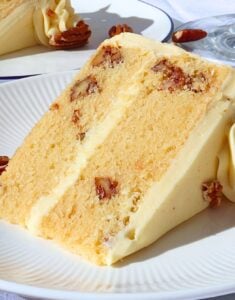
This white cake has the most soft, tender crumb and is so easy to put together! Bursting with vanilla flavour and a slight touch of almond flavour to provide a more complex flavour, this will be your new go to white cake! Perfect for birthday and wedding cakes.

What is a White Cake?
A white cake is basically a vanilla cake that has no egg yolks in it. This gives the cake a white colour, making it great for weddings, or for cakes that need to be coloured.
Some white cakes also have a bit of almond essence or extract in them to provide a more complex, mature flavour. I love the flavour the almond brings – it’s not overpowering but just subtle enough to notice a difference, so I add it in mine 🙂
If you don’t necessarily need a ‘white’ cake and would prefer to use whole eggs instead, check out my vanilla cake recipe.
How to Make White Cake
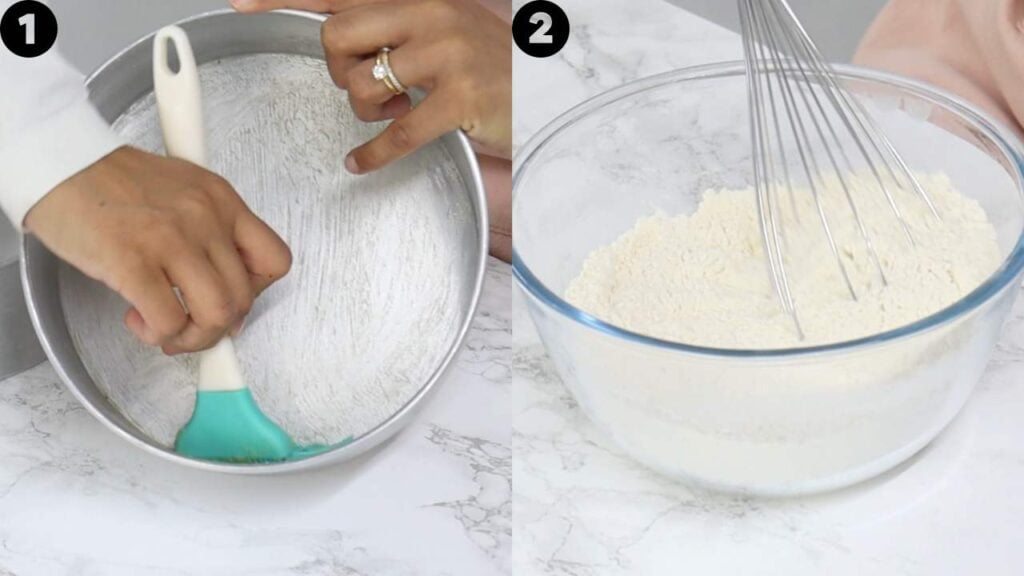
Begin by preheating oven to 160 °C (320°F) with the fan on (see note 4 on recipe below if you don’t have a fan function) and grease and/or line two 8 inch cake tins (I use my homemade cake release).
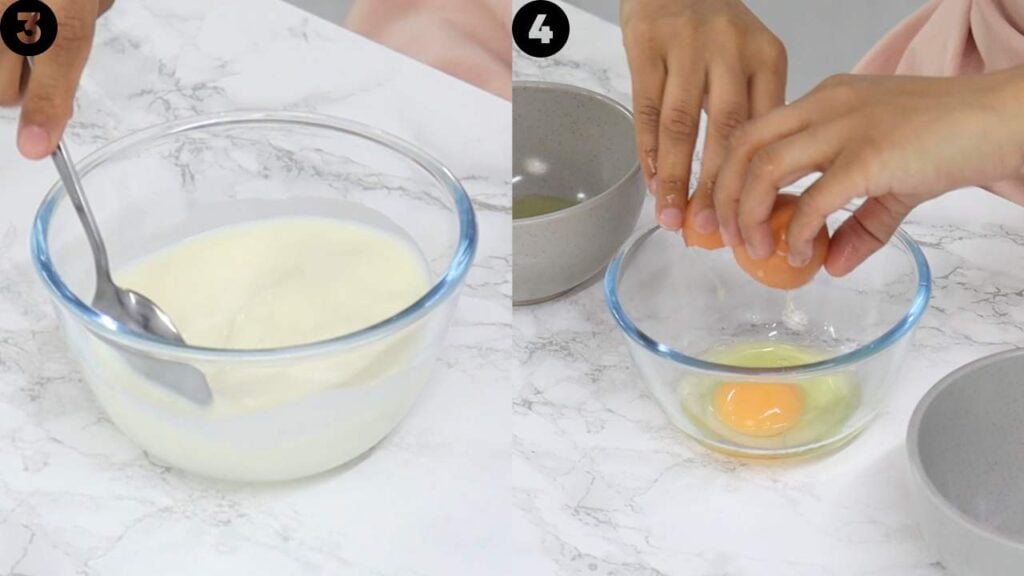
In a bowl, sift together your flour, cornflour, baking powder and salt. Using a whisk or fork, mix until well combined. Set aside.
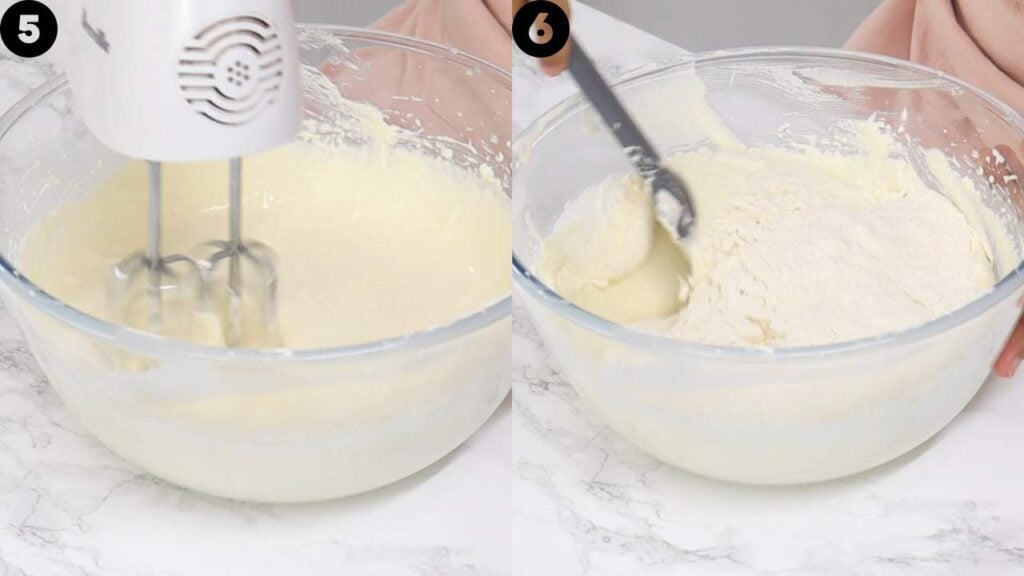
Combine milk and vinegar in a small bowl. Mix and set aside.
Separate the yolks and whites from 6 large egg whites. You should end up with 225g of egg whites. Set aside for now.
In another bowl, add in your butter, vegetable oil and sugar. Using an electric mixer (hand or stand mixer are both fine – see note 2 on recipe card below), cream together for 3 minutes until light and creamy.
Add in egg whites in 3 batches on a low-medium speed, mixing well in between each addition (about 10-15 seconds between each batch.
Add in your vanilla flavouring, almond flavouring, and half of the milk/vinegar mixture and mix until well combined. Now set your mixer aside as the remainder of the batter will be finished by hand.
Finish off by adding in half of your premixed dry ingredients to your wet mixture, and gently fold it in with a spatula until just combined. Then add in the remaining milk/vinegar mixture, and fold it in until just combined. Lastly, add in the remaining dry ingredients and gently fold it into the mixture until just combined. Do not overmix (see note 3 on recipe card below).

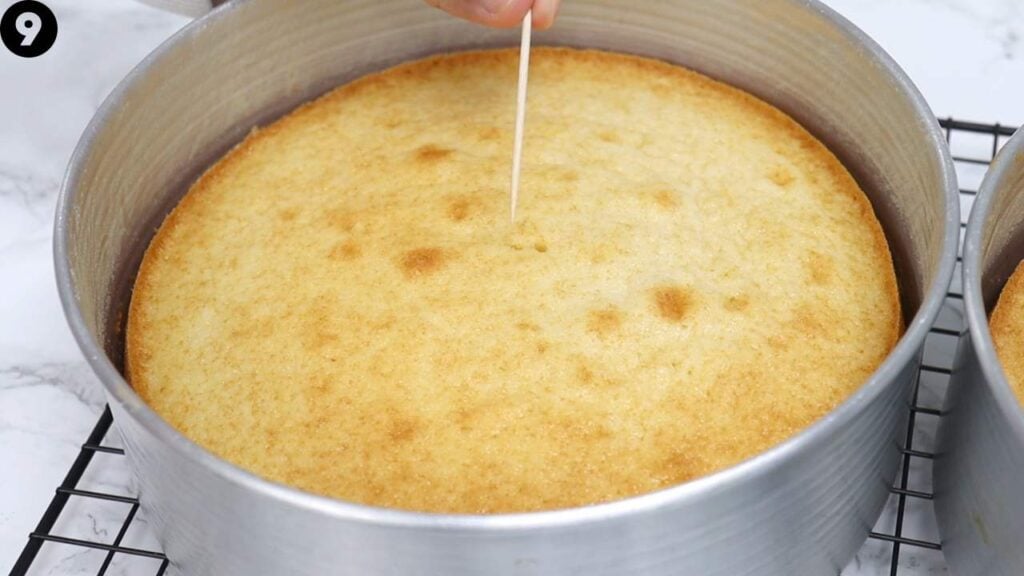
Distribute the batter evenly into the two 8 inch cake tins, and bake for 30 minutes or until a toothpick comes out clean.
Vanilla Buttercream Frosting
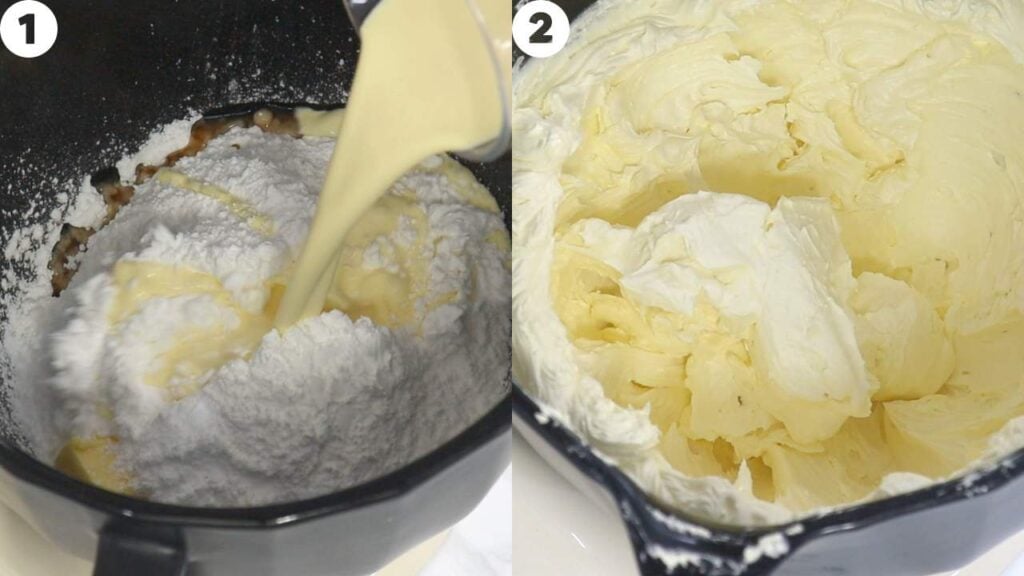
In the bowl of a stand mixer, add in the butter, icing sugar, vanilla and cream.
Using the paddle attachment, mix on the lowest speed until the ingredients are combined (about a minute), and then turn up the speed to a medium high and mix for a full 10 minutes. Scrape the bowl down half way through.
The frosting is now ready to use!
How to Decorate a White Cake
OPTIONAL: Begin by trimming off all the caramelised edges on the top, bottom and sides of the cake layers. This will give you that clean white slice at the end. Also level the tops if the cake layers have a slight dome on the top.
Place your first cake layer onto your cake stand, and spread out a generous amount of the frosting on top.

Place the next cake layer on top and cover the top and sides with more frosting. If you have a cake scraper, you can use it to smooth out the sides. I like to do a little bit of piping on the top (I used a 1M piping tip for this cake), and piped little swirls on the top.


Moist White Cake
Print Pin VideoIMPORTANT: For accuracy, I would recommend using the gram measurements provided, as those are the exact quantities I use. Cup measurements are given as estimates (based on US cup measurements) to make it easier for those who do not have a scale.
Ingredients
White Cake
- 2⅓ cups (300 g) flour - regular all purpose (see note 1 if you want to use cake flour)
- ¼ cup (25 g) cornflour - also known as cornstarch
- 2½ tsp baking powder
- ½ tsp salt - omit if using salted butter
- 1 cup (240 g) milk - room temperature
- 1 tsp white vinegar
- 6 large (225 g) egg whites - room temperature, size 7 eggs
- ½ cup (113 g) unsalted butter - room temperature
- ½ cup (105 g) unflavoured vegetable oil - I use canola
- 1¾ cups (350 g) white granulated sugar
- 2½ tsp vanilla essence/extract - use a clear version for a whiter cake
- 1 tsp almond essence/extract - use a clear version for a whiter cake
Vanilla Buttercream Frosting
- 1½ cups (340 g) unsalted butter - room temperature
- 3 cups (375 g) icing sugar - also known as powdered sugar/confectioners sugar
- 2 tsp vanilla essence/extract
- ½ cup (120 g) cream - room temperature heavy or whipping cream, minimum fat percentage of 34%
Instructions
White Cake
- Preheat oven to 160 °C (320°F) with the fan on (see note 4 if you don't have a fan function) and grease and/or line two 8 inch cake tins (I use my homemade cake release).
- In a bowl, sift together your flour, cornflour, baking powder and salt. Using a whisk or fork, mix until well combined. Set aside.
- Combine the milk and vinegar in a small bowl. Mix and set aside.
- Separate the yolks and whites from 6 large egg whites. You should end up with 225g of egg whites. Set aside for now.
- In another bowl, add in your butter, vegetable oil and sugar. Using an electric mixer (hand or stand mixer are both fine - see note 2), cream together for 3 minutes until light and creamy.
- Add in egg whites in 3 batches on a low-medium speed, mixing well in between each addition (about 10-15 seconds between each batch.
- Add in your vanilla flavouring, almond flavouring, and half of the milk/vinegar mixture and mix until well combined. Now set your mixer aside as the remainder of the batter will be finished by hand.
- Finish off by adding in half of your premixed dry ingredients to your wet mixture, and gently fold it in with a spatula until just combined. Then add in the remaining milk/vinegar mixture, and fold it in until just combined. Lastly, add in the remaining dry ingredients and gently fold it into the mixture until just combined. Do not overmix (see note 3).
- Distribute the batter evenly into the two 8 inch cake tins, and bake for 30 minutes or until a toothpick comes out clean.
- Once baked, allow the cake layers to cool in the cake tins for about 15-20 minutes, and then turn them out onto a wire rack to completely cool before frosting with the vanilla buttercream recipe below, or another frosting of your choice.
Vanilla Buttercream Frosting
- In the bowl of a stand mixer, add in the butter, icing sugar, vanilla and cream.
- Using the paddle attachment, mix on the lowest speed until the ingredients are combined (about a minute), and then turn up the speed to a medium high and mix for a full 10 minutes. Scrape the bowl down half way through.
- The frosting is now ready to use.
Assembly
- OPTIONAL: Begin by trimming off all the caramelised edges on the top, bottom and sides of the cake layers. This will give you that clean white slice at the end. Also level the tops if the cake layers have a slight dome on the top.
- Place your first cake layer onto your cake stand, and spread out a generous amount of the frosting on top.
- Place the next cake layer on top and cover the top and sides with more frosting. If you have a cake scraper, you can use it to smooth out the sides. I like to do a little bit of piping on the top (I used a 1M piping tip for this cake), and piped little swirls on the top.
Video

Notes
Nutrition
Nutritional information are estimates only as they are automatically calculated by a third party application. Actual values may differ based on brands and types of products used.












110 Comments
I love your recipes and the way they are built. I was wondering if I just added sprinkles to this would this be a good funfetti recipe?
Thanks so much Janelle! 😀 Yesss that would make a great funfetti cake! I’m actually releasing a video soon of a funfetti cake which is basically this cake with sprinkles with a few adjustments (reduced sugar and only vanilla, no almond extract) 🙂
Hi, I tried you red velvet recipe and loved it! Want to use this one for a birthday cake I’m making this weekend – how would I make this into a 6″ cake? I want the cake to be quite tall x
Hi Jasmine! So happy to hear you loved the recipe 😀 For a two layer 6 inch cake you want to use half the recipe, or for a very tall 6 inch cake you can use the whole recipe which will make four 6 inch cake layers 🙂 enjoy!
This was the first of your cakes I decided to try. It came out soft and moist and was delicious. It’s a very filling cake, so no one had more than one slice. But everyone loved it.
I absolutely love your site. And have tried. A few more recipes of yours. You’re incredible.
So so happy to hear you all enjoyed the cake Adele 😀 and I’m so glad that you’re loving the recipes – thank you for all your support!
Hi MK
I was just wondering if the mix would bake evenly using the 2x recipe method for an 11 inch tray bake pan (9inch deep pan).
Absolutely love this recipe btw, I previously baked it for a birthday and everyone thought it was amazing!!
Hi Mac! 🙂 Think I replied on another thread where you said the cake wasn’t baking through – let me know if you don’t see it and I can respond here 🙂
Hi MK,
I’m currently having some troubleshoot issues with the recipe for an 11 inch deep pan traybake.
I followed the 1x recipe method but the cake doesn’t seem to be baking all the way through. What would you suggest I do?
Hi Mac! 🙂 Hmm do you mean the cake is still raw? Is the batter quite high in the cake pan? It could be that there is just a bit too much batter in the 1 tin so the cake requires a longer baking time. If you notice that the cake isn’t as moist as you would have hoped once it’s baked, it could be that the cake tin is simply too small for a full batch and so the extra cooking time is drying out the edges of the cake. To fix this you can pour most of the batter into the 11 inch cake tin and then use the remaining batter to make some cupcakes 🙂
Hi! I was wondering if I can turn this into an orange cake? Or is your lemon cake recipe more suitable?
Hi Lucy! 🙂 You could probably turn this into an orange cake, but I do think the lemon cake would be better as the recipe is developed for the specific qualities of a lemon, but I would maybe reduce the sugar slightly as oranges are sweeter. Hope to share an orange cake recipe soon 🙂
I have tried many white cake recipes and this one is the best. So happy to have found your recipes. I followed the recipe exactly as written and used cake flour. Perfect tender crumb but sturdy enough to decorate. Look forward to try other recipes you post. Thank you mk.
Awesome!! So so happy to hear you enjoyed the white cake recipe Bonnie 😀
Can you use a 9×13 pan instead of round pans. Need cake for 20
Hi Debbie! Yes that should be fine 🙂 just make sure there isn’t too much batter in one cake tin.
Hi
Can I use a 9×13 pan instead of round cake pans? Need to make for party of 20
Hello MK thank you for your recipes.
Could I use buttermilk instead of the whole milk and vinegar?
Thank you
Hi Jen! 🙂 I haven’t tried this recipe with buttermilk myself but I imagine it should work fine! The only thing is the acidity level (1 tsp vinegar) per cup of milk is a little lower in this recipe compared to a regular homemade buttermilk substitute (which usually has 1 tbsp vinegar per 1 cup milk) but I still think it should work fine with buttermilk 🙂