

So I just thought that I wasn’t a huge coconut cake fan, BUT this recipe changed my mind. So much so that I would consider this coconut cake to be one of my new favourites – it’s that good! This recipe consists of super soft and moist coconut cake layers, topped with an incredibly delicious coconut cream cheese frosting. It’s finished off with shredded coconut added to the outside of the cake which adds amazing texture to the cake – YUM!

What makes this coconut cake recipe so great?
There’s a few different elements which makes this recipe truly stand out.
Firstly, my recipe not only uses coconut flavouring (you can use coconut extract or essence), but also coconut milk. This adds extra coconut flavor to the cake and contributes to the fluffy texture. This is because coconut milk adds moisture to the cake batter and it has a high fat content, which contributes to a super tender crumb.
Secondly, this cake recipe uses the creaming method when it comes to mixing the cake batter. This is when the butter and sugar is mixed together at the beginning for a few minutes. What this does is it creates air pockets in the mixture, which expand during baking, giving your cake a light and fluffy texture.
Lastly, the dry ingredients are slowly incorporated into the batter at the end by hand mixing with a spatula. This is to prevent overmixing of the batter as this can lead to a tough and dense cake.
How to make coconut cake
Begin by preheating your oven to 160 °C (320°F) with the fan on (if your oven doesn’t have a fan option, then you will need to increase the baking temperature to 175°C/350°F) and grease two 8 inch cake pans (I use my homemade cake release). You also want to line the bottoms with baking/parchment paper. The coconut cake layers do tend to stick to the bottom of the pan, so you need to line the bottom of the cake tins with baking paper just to make sure they come out in one piece!

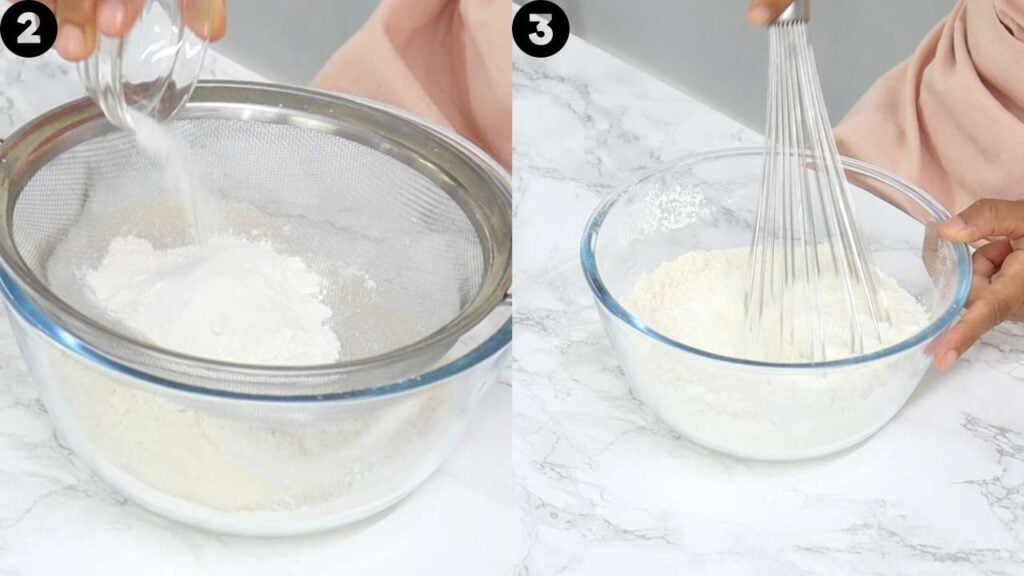
In a bowl, sift together your all purpose flour, cornstarch, baking powder and salt. Using a whisk or fork, mix until well combined. Set aside.
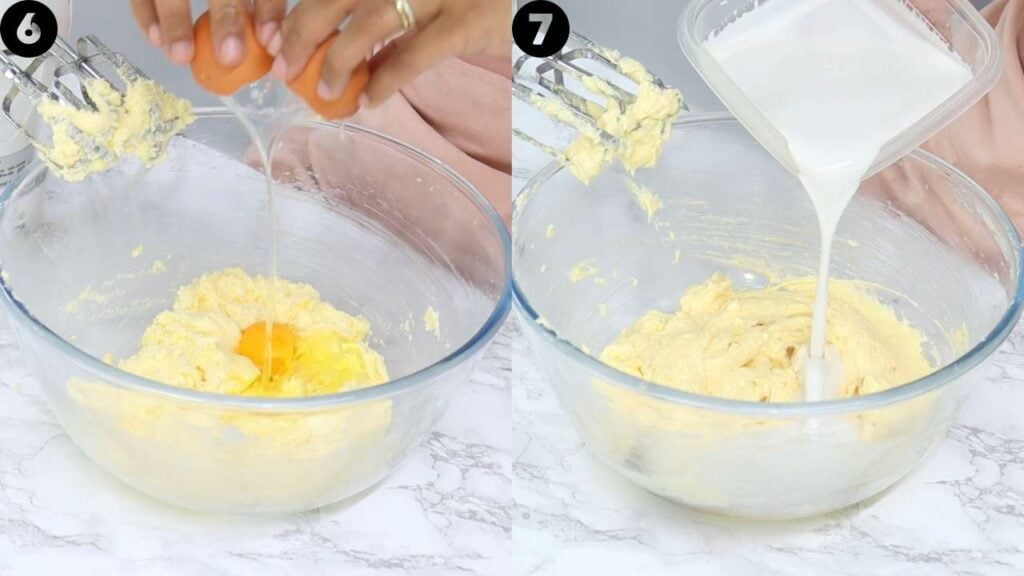
In another mixing bowl, add in your butter, vegetable oil and sugar. Using an electric mixer (hand or stand mixer are both fine), cream together for 2 minutes until lighter in colour.

Add in eggs one by one, mixing well in between each addition (about 10-15 seconds between eggs). Scrape down the bowl as needed.
Add in your vanilla extract/essence, coconut essence/extract and half a cup of the coconut milk, and mix until well combined. Now set your mixer aside as the remainder of the batter will be finished by hand.
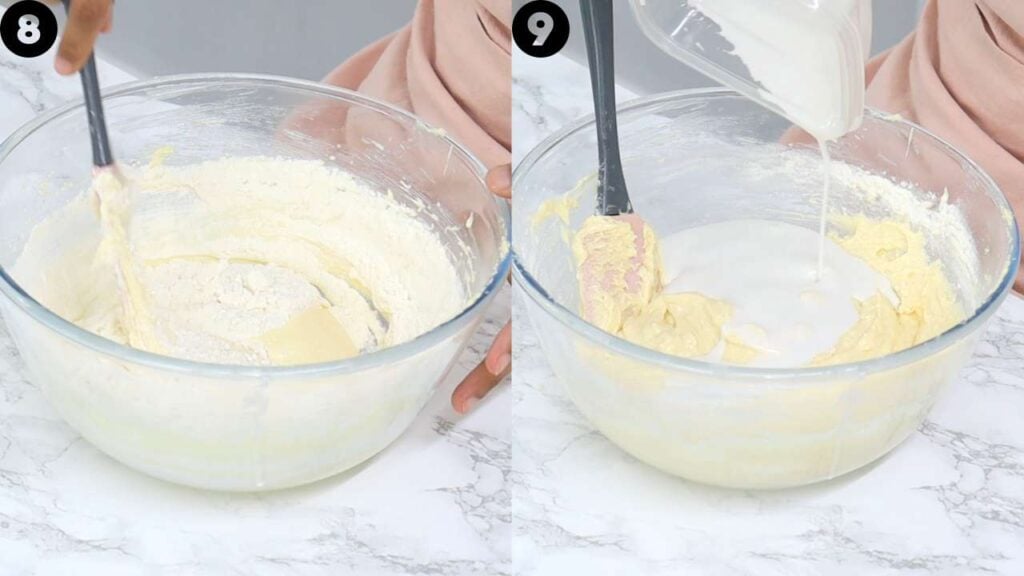
Add in half of your premixed dry ingredients to your wet mixture, and gently fold it in with a spatula until just combined. Then add in the remaining 3/4 cup of coconut milk, and fold it in until just combined. Lastly, add in the remaining dry ingredients and gently fold it into the mixture until just combined. Do not overmix (see note 6 on recipe card below).

Finish off by adding in the shredded coconut and gently fold with a spatula until just combined. Do not overmix the batter.
Pour batter evenly into the two 8 inch cake tins, and bake for 33 minutes or until a toothpick comes out clean.
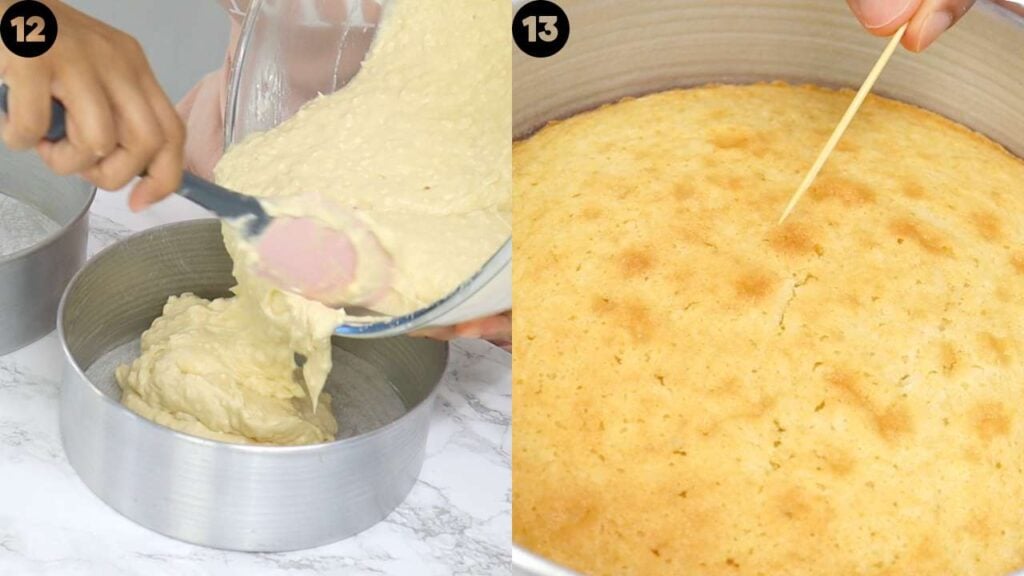
Once baked, allow the cake layers to cool in the cake tins for about 15-20 minutes, and then turn them out onto a wire rack to completely cool before frosting with the coconut cream cheese frosting recipe below.
How to make coconut cream cheese frosting
Cream your butter for a few minutes until it’s light and fluffy. Either use a hand mixer or stand mixer on a medium high speed. If using a stand mixer, use the paddle attachment.
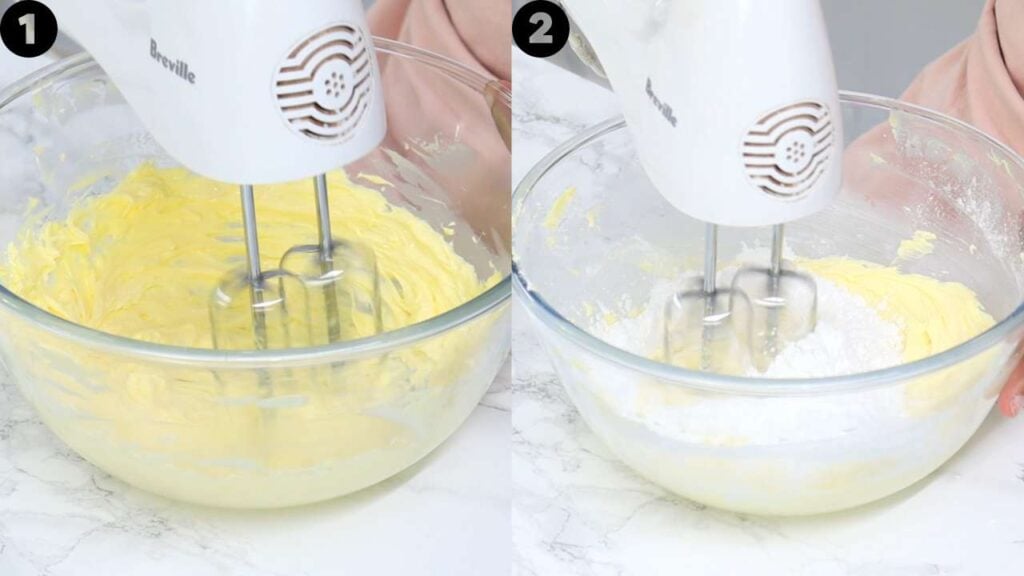
Add in the icing sugar in 3 batches while mixing on low. Ensure that each batch of icing sugar is mixed into the butter well before adding in the next batch.
Next add in your cold cream cheese, vanilla and coconut essence/extract. Mix just until the frosting is smooth. Avoid over-mixing.

How to decorate a coconut cake
There are so many great ways to decorate a coconut cake! Here is how I did mine 🙂
Firstly, I like to trim off the caramelized edges of the cake layers, but this is totally optional and not necessary. I purely did this for aesthetic purposes.
Once that’s done place a generous amount of frosting on your first cake layer and spread it out with an offset spatula or knife.

Place your next cake layer on top and spread out a generous amount of frosting on the top and sides. You can use a cake scraper to smooth out the sides (see video demonstration).
Cover the top and sides with the shredded coconut by gently pushing the coconut into the frosting.
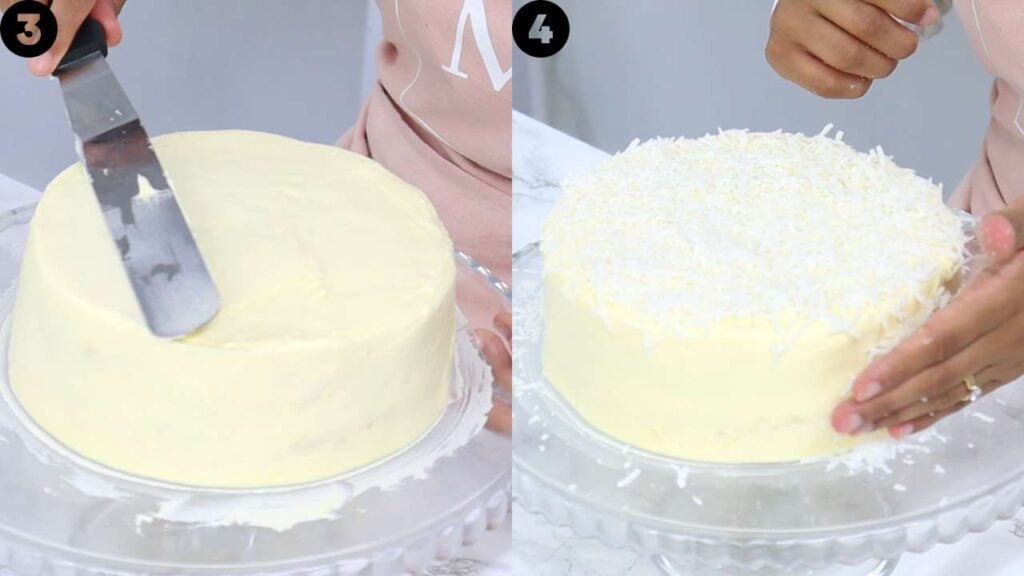
And that is it! Your coconut cake is ready to serve 🙂
Commonly Asked Questions
How do you store coconut cake?
This cake can be left out at room temperature for about half a day, but due to the cream cheese, it will need to be refrigerated after that/overnight. Place in an airtight container before putting it in the fridge to prevent the cake from drying out. For more tips on how to safely store a cake in the fridge, check out my blog post on 3 uncommon baking tips.
If you’re not using the cream cheese frosting, then the cake can be left at room temperature for a few days (be sure to wrap it in plastic wrap or place in an airtight container to keep it nice and fresh).
Can I turn this cake into a coconut sheet cake?
Yes, you can use this recipe to make a coconut sheet cake (a 9×13 inch cake pan will work best). You will just need to adjust the cooking time as needed, and will only need half the amount of frosting.
Should I use sweetened or unsweetened coconut for this recipe?
You want to use unsweetened coconut for this recipe. Sweetened coconut may make the cake too sweet!
Can I use desiccated coconut or coconut flakes?
You can use dessicated coconut or coconut flakes instead of shredded coconut, however dessicated coconut is much finer so may not provide the same texture that the latter two would.
How do you press coconut on a cake?
The easiest way I find to do this is just with my hands! Grab a palmful of shredded coconut (or whichever type of coconut you’re using), and place it on the side of the cake by gently pressing your palm into the cake. It’s also best if the frosting is a little soft so the coconut sticks easier.

Moist Coconut Cake
Print Pin VideoIMPORTANT: For accuracy, I would recommend using the gram measurements provided, as those are the exact quantities I use. Cup measurements are given as estimates (based on US cup measurements) to make it easier for those who do not have a scale.
Ingredients
Coconut Cake
- 2¼ cups (280 g) flour - regular, all purpose
- ¼ cup (30 g) cornstarch - also known as cornflour
- 1 tbsp baking powder
- ½ tsp salt - omit if using salted butter
- ½ cup (113 g) unsalted butter - room temp
- 5 tbsp (66 g) unflavoured vegetable oil - I use canola oil. In the video I say 3 tbsp (40g), but have since tried with 5 tbsp (66g) and recommend it (see note 9 for more info).
- 1⅔ cups (332 g) white granulated sugar
- 3 large eggs - room temperature
- 1½ tsps vanilla essence/extract
- 1 tsp coconut essence/extract - can substitute with 1/2 tsp almond essence/extract (see note 1)
- 1¼ cups (275 g) canned coconut milk
- 1 cup (80 g) shredded coconut - dried & unsweetened, also called threaded coconut
Coconut Cream Cheese Frosting
- 1 cup (225 g) unsalted butter - room temperature
- 4½ cups (570 g) icing sugar - also called powdered/confectioners sugar
- 1½ cups (335 g) cream cheese - cold, firm type (see note 2)
- 1½ tsps vanilla essence/extract
- 1 tsp coconut essence/extract - can substitute with 1/2 tsp almond essence/extract (see note 1)
- 1½ cups (120 g) shredded coconut - dried & unsweetened, for decorating (recommended for texture - see note 8). Also called threaded coconut
Instructions
Coconut Cake
- Preheat oven to 160 °C (320°F) with the fan on (see note 3 if you don't have a fan function) and grease the bottom and sides of two 8 inch cake tins (mine are 3 inches deep), and also line the bottom of the tin with baking/parchment paper (see note 4).
- In a bowl, sift together your flour, cornstarch, baking powder and salt. Using a whisk or fork, mix until well combined. Set aside.
- In another large bowl, add in your butter, vegetable oil and sugar. Using an electric mixer (hand or stand mixer are both fine - see note 5), cream together for 2 minutes until lighter in colour.
- Add in eggs one by one, mixing well in between each addition (about 10-15 seconds between eggs).
- Add in your vanilla, coconut essence/extract and half a cup of the coconut milk, and mix until well combined. Now set your mixer aside as the remainder of the batter will be finished by hand.
- Add in half of your premixed dry ingredients to your wet mixture, and gently fold it in with a spatula until just combined. Then add in the remaining 3/4 cup of coconut milk, and fold it in until just combined. Lastly, add in the remaining dry ingredients and gently fold it into the mixture until just combined. Do not overmix (see note 6).
- Finish off by adding in the shredded coconut and gently fold with a spatula until just combined. Do not overmix the batter.
- Distribute the batter evenly into the two 8 inch cake tins, and bake for 33 minutes or until a toothpick comes out clean.
- Once baked, allow the cake layers to cool in the cake tins for about 15-20 minutes, and then turn them out onto a wire rack to completely cool before frosting with the coconut cream cheese frosting recipe below.
Coconut Cream Cheese Frosting
- Cream your butter for a few minutes until it's light and fluffy. Either use a hand mixer or stand mixer on a medium high speed. If using a stand mixer, use the paddle attachment.
- Add in the icing sugar in 3 batches while mixing on low. Ensure that each batch of icing sugar is mixed into the butter well before adding in the next batch.
- Next add in your cold cream cheese, vanilla and coconut essence/extract. Mix just until the frosting is smooth. Avoid over-mixing (see note 7).
- Frost cooled cake layers with the frosting (assembly instructions below). Once sliced, place any leftovers in an airtight container to ensure the cake stays moist.
Assembly
- Trim off the caramelized edges of the cake layers if you wish (this is optional and not necessary).
- Place a generous amount of frosting on your first cake layer and spread it out with an offset spatula or knife.
- Place your next cake layer on top and spread out a generous amount of frosting on the top and sides. You can use a cake scraper to smooth out the sides (see video demonstration).
- Cover the top and sides with the shredded coconut by gently pushing the coconut into the frosting.
Video

Notes
Nutrition
Nutritional information are estimates only as they are automatically calculated by a third party application. Actual values may differ based on brands and types of products used.










272 Comments
Hi, do I need to adjust the recipe if I wanted to bake this as a loaf cake?
Hi Ruqaiyah! 🙂 I haven’t tried this recipe as a loaf cake myself and because it is quite a soft cake, I am not too sure it would rise well as a loaf cake. It may be okay if the loaf cake isn’t too tall 🙂
You would probabaly need to half the recipe for a single loaf. Hope that helps and would love to hear how it goes if you decide to try it out 🙂
This coconut cake was absolutely delish, not too difficult to make, and was the hit of the night. Thank you for sharing 🙂
Awesome! So so happy to hear everyone loved the recipe Ben 😀 really appreciate the wonderful feedback 🙂
I’m planning on making this cake in a couple of days. I’m going to be using cake flour. Do I use the same amount of cake flour as the all purpose + cornstarch?
Thank you!
Love your recipes!!! I live in NYC and American recipes are just way too sweet for me. Yours is a perfection!
Hi Eileen! 🙂 Aww so glad to hear you’re loving the recipes 😀
I haven’t tried using cake flour in this recipe myself, but yes I think it should be fine to substitute both the all purpose flour and cornstarch in the recipe with cake flour 🙂
If possible, I would recommend using the gram measurements for best results 🙂
Hope you enjoy the recipe Eileen!
I love the flavor of coconut but dont like to bite into coconut flakes. Can i leave out the flakes in this recipe?
Hi Cynthia! 🙂 The shredded coconut is an important part of the cake batter so I wouldn’t recommend leaving it out, but you could substitute it with desiccated coconut so the coconut pieces aren’t as noticeable 🙂
Hope that helps and hope you enjoy the recipe!
Hello! I’m gonna make this for my mom but I wanted to ask if adding food coloring to the icing does anything or is it ok? I want a pink coconut cake
Hi Ana! 🙂 You can totally add some gel food color to the frosting (not liquid as this will make the frosting loose). Hope that helps and hope you and your mum enjoy the recipe 😀
Hello
Can I make this into a sheet cake pan instead of a layered cake?
Ty 😊
Hi Anna! 🙂 Yes that shouldn’t be a problem at all, I would use a 9x13inch sheet pan and reduce the cook time slightly 🙂
Enjoy!
Hi I was wondering if I make cupcakes with this batter how many would this mix make?
Hi Dianne! 🙂 You would probably get about 24 cupcakes out of the batter 🙂
Just remember to reduce the cook time to about the 18 min mark for cupcakes. Hope you enjoy the recipe 😀
Hi MK,
I have been asked to make this coconut cake into a 4 layer, 10in birthday cake!!
What would your suggestions be regarding scaling up the recipe please?
I’m based in the UK.
Hi Beverley! 🙂 For a 4 layer 10 inch cake, you would probably need to make 4x the recipe, though I would recommend making two batches of 2x the recipe as opposed to one very big batch to ensure it doesn’t affect the cake batter too much 🙂
Hope that helps and much love from NZ to the UK 🙂
I love coconut so want to try this. Is the canned coconut milk full fat? What about the water in the can? Is this stirred in before using or drained off? Using only the cream part?
Hi Jody! 🙂 The coconut milk I use is full fat and you want to stir it before using it so the thinner liquid at the top is mixed well with the thicker parts in the can. Hope that helps and hope you enjoy the recipe 😀
Hi, what can I substitute for the eggs?
Hi Kara! 🙂 I unfortunately haven’t tried an egg substitute for this recipe myself so I’m not too sure sorry!