

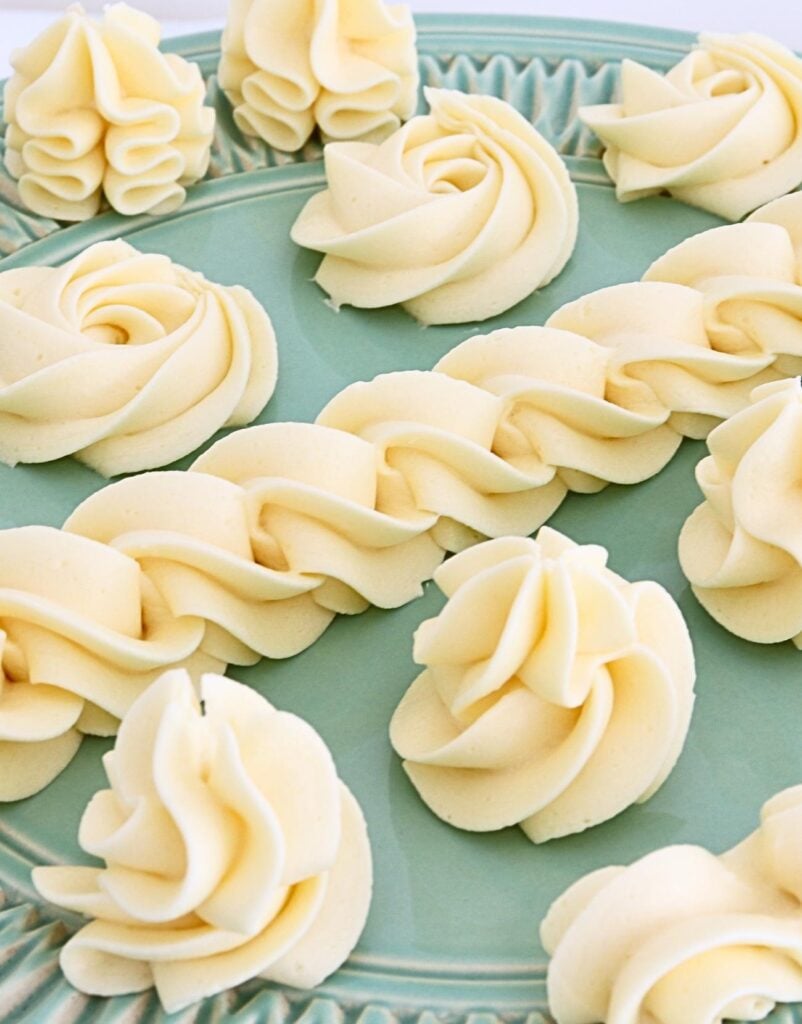
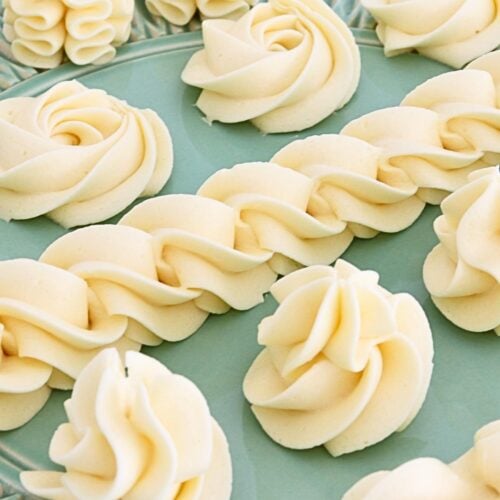
If you’ve never tried ermine frosting before, you’re in for a treat! It’s light, silky smooth, and much less sweet than traditional buttercream, making it perfect if you want a frosting that’s rich without being overpowering and surprisingly easy to make.
What is Ermine Frosting?
Ermine frosting (also known as boiled milk frosting, cooked flour frosting or flour buttercream) is a light, fluffy buttercream frosting made by cooking flour, sugar, and milk into a thick paste (roux) before whipping it with butter. It’s an old-fashioned recipe that is still commonly used today.
Don’t let the flour put you off! I promise it doesn’t taste floury at all. Instead, it creates an incredibly smooth, silky frosting that’s rich and buttery without being overly sweet (kind of like Swiss meringue buttercream, but a bit less stable). If you find traditional buttercream a little too sugary, this is definitely one to try.
Fun fact: The traditional frosting used for red velvet cake was ermine frosting (check out my traditional red velvet cake recipe!) before cream cheese frosting became more popular in the baking world today.
Why You’ll Love This Recipe
If you’re on the fence about trying ermine frosting, here are a few reasons why I think you’ll love it:
Silky smooth and fluffy – It has an incredibly light, airy texture that spreads and pipes beautifully.
Not overly sweet – Perfect if you prefer a frosting that’s balanced and lets the cake shine. I personally prefer the flavor of this frosting over many buttercreams!
Easy to make – It may sound fancy, but the process is surprisingly straightforward and I’ll guide you through every step.
Perfect for decorating – It pipes beautifully and holds its shape well while staying wonderfully soft and creamy. Unlike traditional buttercream, it doesn’t rely on large amounts of powdered sugar to achieve a stable, pipeable consistency. Great for frosting cakes and cupcakes!
Pairs with almost any cake – From chocolate and vanilla to red velvet and carrot cake, this frosting goes with just about everything.
How to Make Ermine Frosting
You can find the full list of ingredients for this ermine frosting recipe in the recipe card at the end of the blog post (for easy navigation, hit the ‘jump to recipe’ button at the top of the blog post). Here is just a quick visual breakdown of the recipe (recipe video is also provided in the recipe card below).
Place a saucepan over medium heat and add sugar and flour. Using a whisk or spatula, stir continuously for 2 minutes to gently toast the flour. Be careful not to let it burn—the color shouldn’t noticeably change.
Add ¾ cup (180 g) of whole milk to the pan and whisk until smooth. Once smooth, add a further ¾ cup (180 g) of milk and whisk again until fully combined and smooth with no lumps. You’ll be using a total of 1½ cups (360 g) of milk.
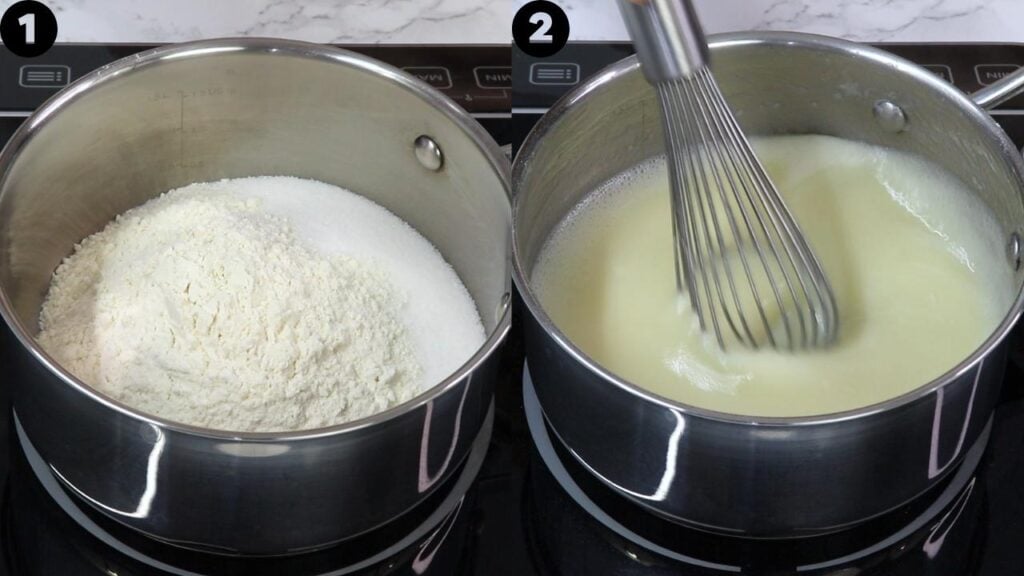
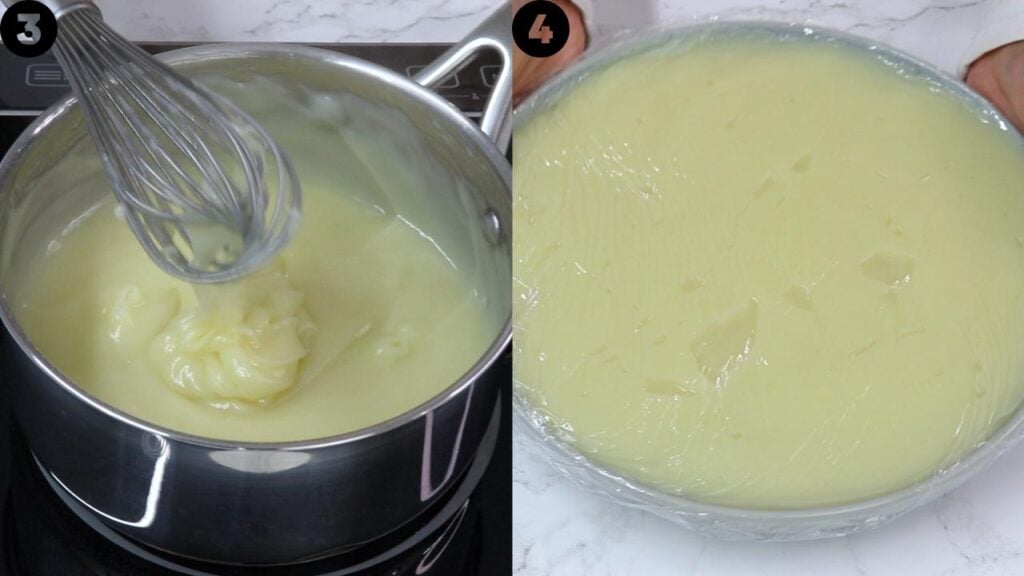
Continue stirring gently until the mixture begins to bubble. Once it starts bubbling, keep stirring for 1 more minute, or until it has thickened into a thick, pudding-like paste.
Allow the mixture to cool completely to room temperature. I like to spread it onto a plate, cover the surface directly with plastic wrap (so it’s touching the mixture to prevent a skin from forming), and place it in the freezer for about 30 minutes.
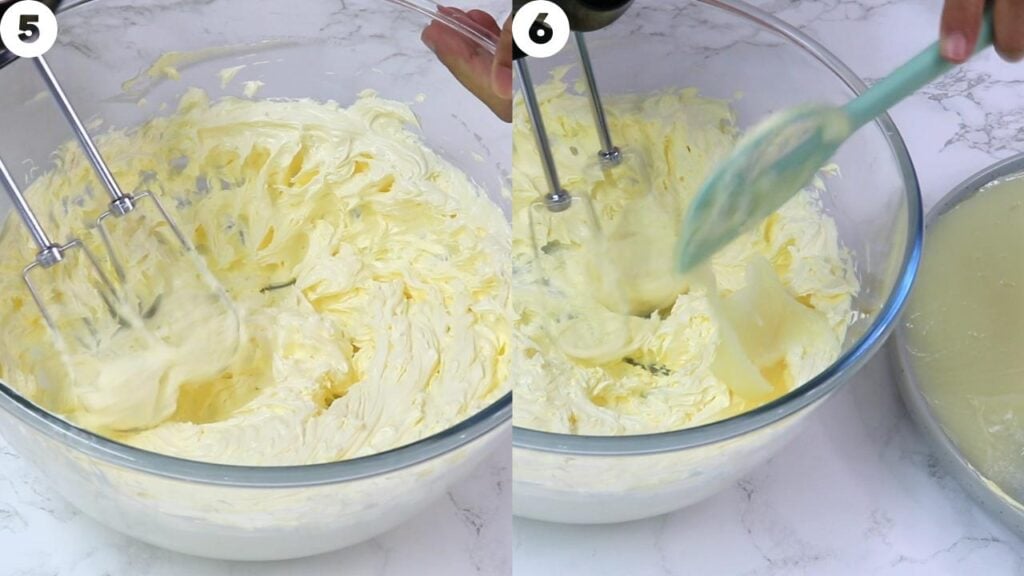
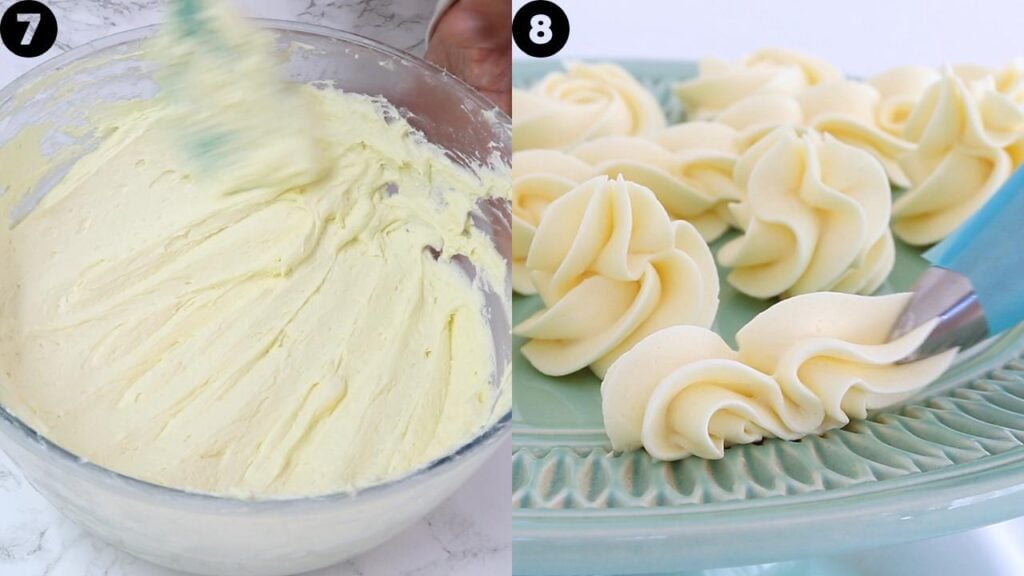
Once the frosting has cooled, in a large bowl add unsalted butter and using an electric mixer (hand or stand mixer) fitted with the whisk attachment, beat on medium-high speed for about 5 minutes until light and fluffy.
Add the cooled flour mixture 1 tablespoon at a time to the whipped butter, mixing well after each addition. Make sure the flour mixture is at room temperature (not warm or cold) as this can cause the frosting to curdle.
Finally, add the vanilla extract (or essense if using) and salt and mix until well combined. Your frosting is now ready to use!
How to Store
Store ermine frosting in an airtight container in the refrigerator for up to 5 days. Before using, let it come back to room temperature, then give it a quick whip with a hand or stand mixer to bring back its light and fluffy texture.
Ermine Frosting (Cooked Frosting)
Print Pin VideoIMPORTANT: For accuracy, I would recommend using the gram measurements provided, as those are the exact quantities I use. Cup measurements are given as estimates (based on US cup measurements) to make it easier for those who do not have a scale.
Ingredients
- 1½ cups (300 g) white granulated sugar
- ½ cup (68 g) all purpose flour
- 1½ cups (360 g) milk
- 1½ cups (340 g) unsalted butter - room temperature
- 1½ tsps vanilla extract/essence
- ⅛ tsp salt
Instructions
- Place a saucepan over medium heat and add the sugar and flour. Using a whisk or spatula, stir continuously for 2 minutes to gently toast the flour. Be careful not to let it burn—the color shouldn't noticeably change.
- Add ¾ cup (180 g) of the milk and whisk until smooth. Once smooth, add the remaining ¾ cup (180 g) of milk and whisk again until fully combined and smooth. You'll be using a total of 1½ cups (360 g) of milk.
- Continue stirring gently until the mixture begins to bubble. Once it starts bubbling, keep stirring for 1 more minute, or until it has thickened into a thick, pudding-like paste.
- Allow the mixture to cool completely to room temperature. I like to spread it onto a plate, cover the surface directly with plastic wrap (so it's touching the mixture to prevent a skin from forming), and place it in the freezer for about 30 minutes.
- Once the frosting has cooled, in a large bowl add the butter and using a hand or stand mixer fitted with the whisk attachment, beat on medium-high speed for about 5 minutes until light and fluffy.
- Add the cooled flour mixture 1 tablespoon at a time, mixing well after each addition. Make sure the flour mixture is at room temperature (not warm or cold) as this can cause the frosting to curdle (see note 1).
- Finally, add the vanilla and salt and mix until well combined. Your frosting is now ready to use!
Video

Notes
Nutrition
Nutritional information are estimates only as they are automatically calculated by a third party application. Actual values may differ based on brands and types of products used.


















1 Comment
I LOVE ermine frosting and your step-by-step instructions are always so helpful and clear. For me, the only drawback to it is that it’s difficult to flavor without changing the texture. Is there a good way to flavor it like caramel? My favorite frosting flavors are caramel, berry flavors (I assume you could use a bit of freeze-dried berry powder?), and of course, chocolate. Thank you for adding videos to your recipes. So helpful!