

There’s nothing quite like freshly baked flaky scones. Crisp and golden on the outside, soft and fluffy inside, and delicious with butter, jam, or cream. Simple and always a treat!

Why These Are My Favorite Scones!
I’ve baked a lot of scones over the years, but these are the ones I keep coming back to. They’re simple, comforting, and have the most amazing texture! Perfect with a cup of tea or even on their own. Here’s why I love them so much:
Flaky
I love how tall and flaky these scones turn out. The cold butter creates little pockets that puff up beautifully in the oven, giving you soft, tender layers inside with a golden, slightly crisp top.
Buttery
The buttery flavor is just unbeatable. Those little pieces of butter melt as they bake, making every bite rich and comforting without being heavy.
Easy to Make
These scones are seriously easy to whip up. With just a few simple ingredients and minimal equipment, you can have fresh, homemade scones on the table in no time.
Versatile
They’re perfect for breakfast, brunch, or afternoon tea. Eat them warm with butter, jam, or cream—or get creative with savory toppings.
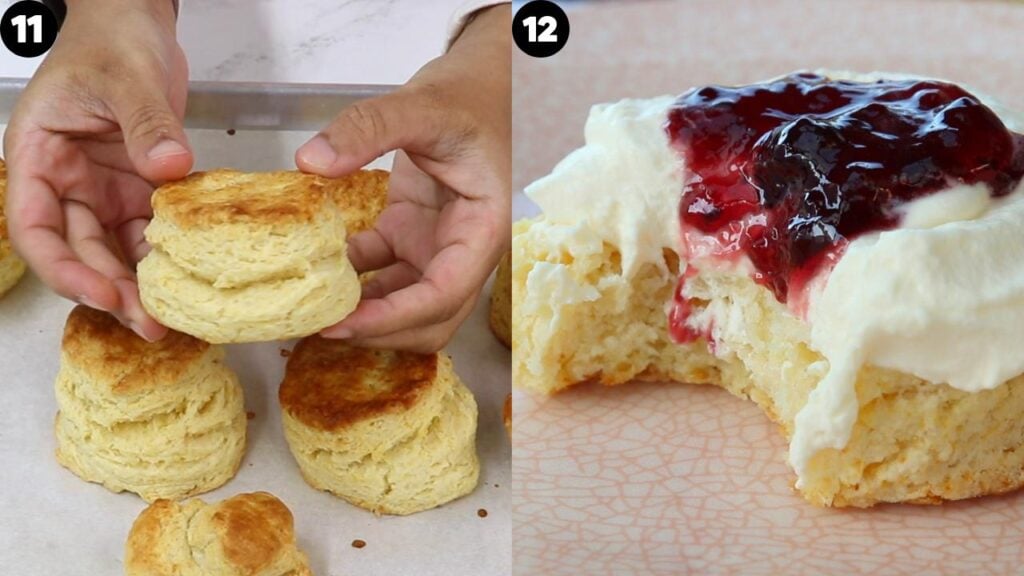
My favorite way? Split them in half and pile on the cream and jam (I love any berry jam like strawberry jam!)—it’s pure heaven every time!
My Top Tips for The Perfect Scone
Over the years I’ve learned a few tricks that make all the difference when it comes to baking scones. Follow these, and you’ll end up with better-than-bakery, tall, flaky, and delicious scones every time!
Keep Everything Cold
Cold butter and milk are the secret to light, flaky scones (same for pie crust and shortcake biscuits). If the butter softens too much while you’re making the dough, just pop the tray of cut scones into the freezer for 10 minutes before baking.
Don’t Overwork the Dough
Scones are all about being tender, so the less you handle the dough, the better. For tender scones, mix until it just comes together into a shaggy ball, and avoid kneading or pressing it too much.
Cut Straight Down
When cutting out your scones, always press the cutter straight down without twisting. Twisting seals the edges and stops them from rising properly.
Space Them Close Together
Place the scones close on the tray—about half an inch apart. This helps them rise up instead of spreading out, giving you taller, fluffier scones.
Brush the Tops
A quick brush of milk on top (an egg wash or heavy cream works well too) before baking gives the scones a gorgeous golden finish.
Want more breakfast or afternoon tea recipes? Check out my simple lemon blueberry muffins, cranberry orange bread and strawberry oatmeal bars recipes!
How to Make Scones
You can find the full list of ingredients in the recipe card at the end of the blog post (for easy navigation, hit the ‘jump to recipe’ button at the top of the blog post). Here is a quick visual breakdown of the recipe (recipe video is also provided in the recipe card below).
Preheat your oven to 220°C (425°F) conventional and line a large baking sheet with parchment paper. Set aside.
In a large bowl, whisk together the flour, baking powder, salt, and sugar until well combined.
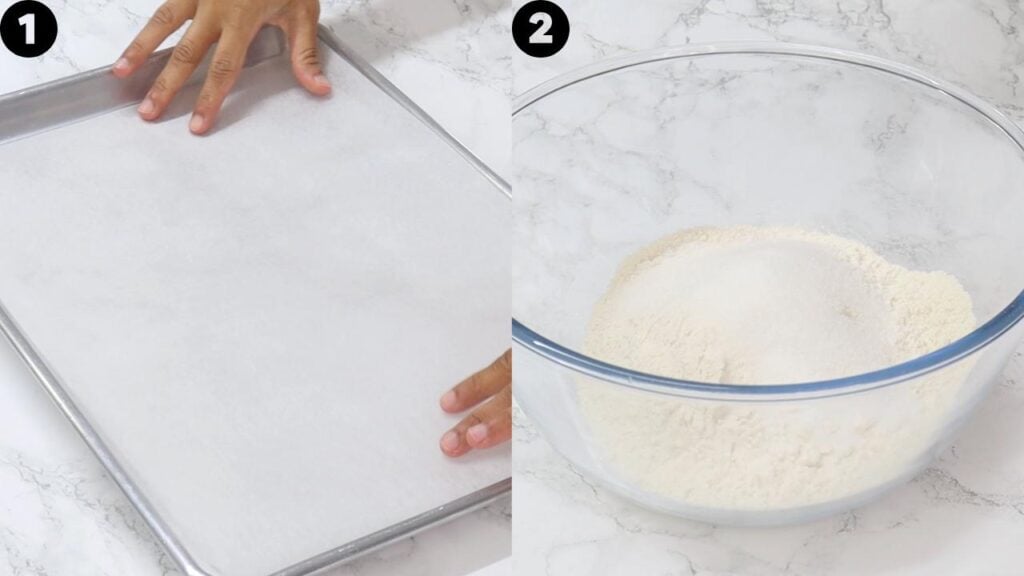
Add in cubed, cold unsalted butter to the dry ingredients. Using a pastry cutter or your fingers, work it into the flour mixture until the mixture looks like coarse crumbs with small pieces of butter throughout.
Pour in cold milk and gently mix with a fork (I like to fluff the mixture) until you have a shaggy dough. Be careful not to overmix.
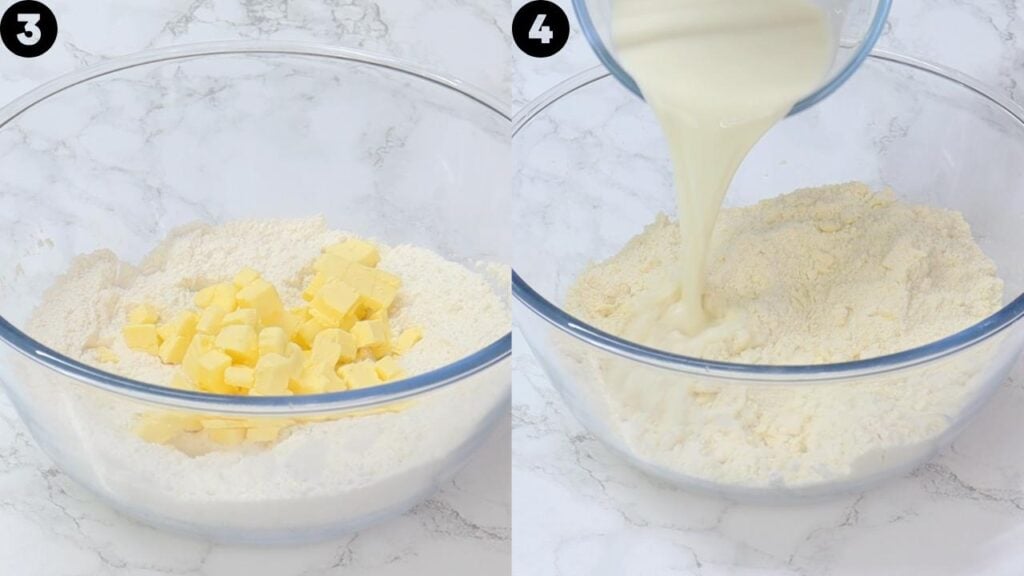
Bring the scone dough together into a ball, then turn it out onto a lightly floured surface. Be careful not to over-knead or over-mix. Gently press it into a rectangle about ¾-inch thick.
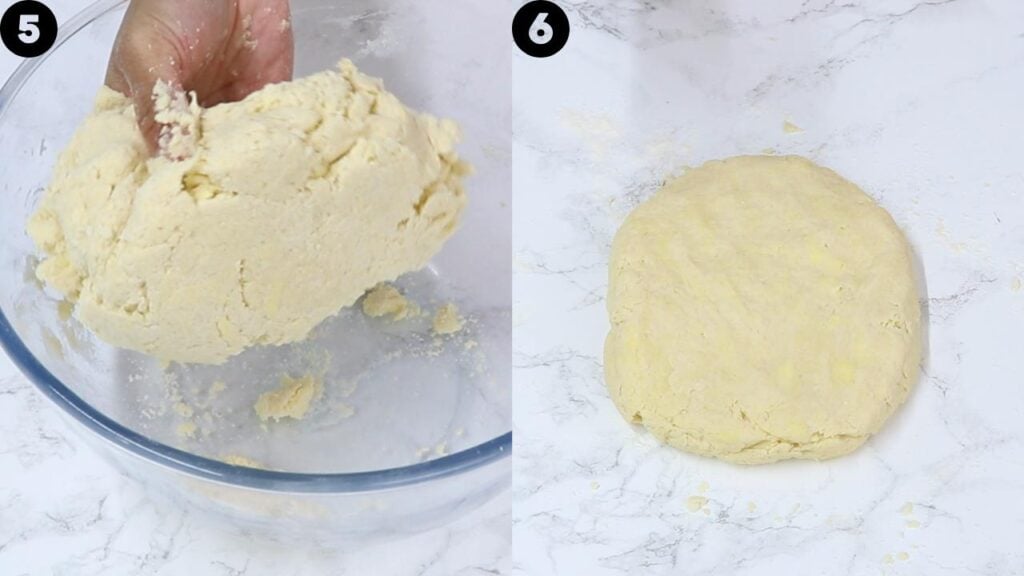
Dip a 2½-inch cookie cutter (or straight-edged glass) in flour, then cut out the scones by pressing straight down—don’t twist. Gather the scraps, reshape, and cut again until you have about 9 scones. You can also use a sharp knife to cut the scones into wedges (more common in the US).
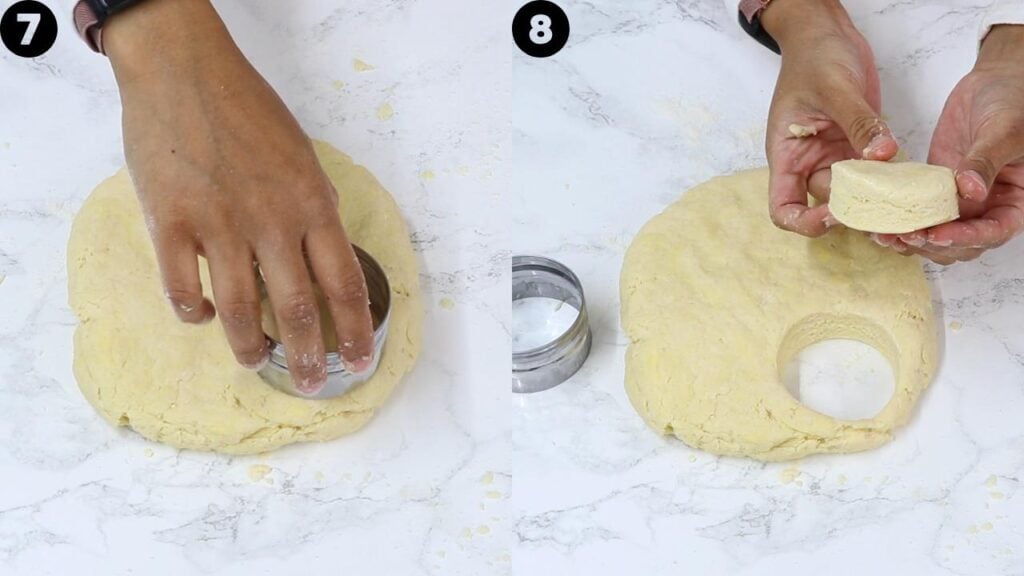
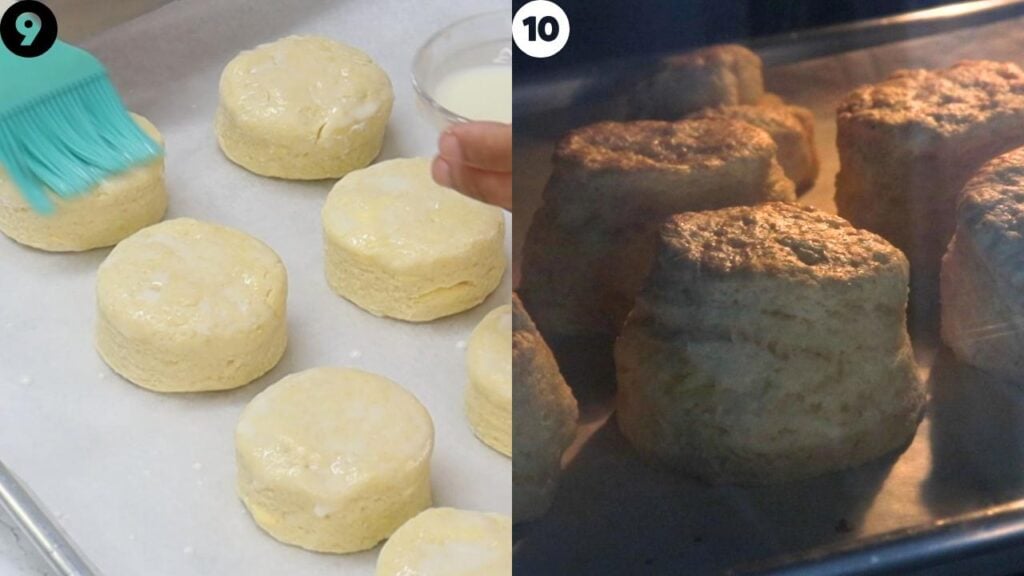
Place the scones onto the prepared tray, close together (about ½-inch apart). Brush the tops with milk for a golden finish.
Bake for 15 minutes, or until the tops are golden brown. If the butter has softened before baking and the dough feels very soft, chill the scones in the freezer for 10 minutes before baking.
Let the scones cool on the tray for 15 minutes before serving. For cream-filled scones, allow them to cool completely to room temperature so the cream doesn’t melt.
How to Store Scones
Scones are best enjoyed fresh on the day they’re baked, but you can store them in an airtight container at room temperature for up to 3 days. For longer storage, store in the fridge in an airtight container or freeze scones in a freezer-safe bag or container for up to 3 months. When you’re ready to enjoy them again, let them thaw at room temperature and warm them in the oven for a few minutes to bring back that just-baked texture.

Easy Scones Recipe (Buttery & Flaky!)
Print Pin VideoIMPORTANT: For accuracy, I would recommend using the gram measurements provided, as those are the exact quantities I use. Cup measurements are given as estimates (based on US cup measurements) to make it easier for those who do not have a scale.
Ingredients
- 3 cups (360 g) all-purpose flour
- 3½ tsps baking powder
- 1 tsp salt - omit if using salted butter
- 3 tbsps (38 g) white granulated sugar - sugar does not make the scones sweet, but can be omitted if making savory scones.
- ¾ cup (170 g) unsalted butter - cold and cubed into small ¼ inch cubes (see note 1).
- ¾ cup (180 g) whole milk - cold
Instructions
- Preheat your oven to 220°C (425°F) conventional (see note 2 if using a convection oven with a fan) and line a large baking tray with parchment paper. Set aside.
- In a large bowl, whisk together the flour, baking powder, salt, and sugar until well combined.
- Add in cold, cubed butter. Using a pastry cutter or your fingers, work it into the flour until the mixture looks like coarse crumbs with small pieces of butter throughout.
- Pour in cold milk and gently mix with a fork (I like to fluff the mixture) until you have a shaggy dough. Be careful not to overmix.
- Bring the dough together into a ball, then turn it out onto a lightly floured surface. Be careful not to over-knead or over-mix. Gently press it into a rectangle about ¾-inch thick.
- Dip a 2½-inch cookie cutter (or straight-edged glass) in flour, then cut out the scones by pressing straight down—don’t twist. Gather the scraps, reshape, and cut again until you have about 9 scones.
- Place the scones onto the prepared tray, close together (about ½-inch apart). Brush the tops with milk for a golden finish.
- Bake for 15 minutes, or until the tops are golden brown. If the butter has softened before baking and the dough feels very soft, chill the scones in the freezer for 10 minutes before baking (see note 3).
- Let the scones cool on the tray for 15 minutes before serving. For cream-filled scones, allow them to cool completely to room temperature so the cream doesn’t melt.
Video
Notes
Nutrition
Nutritional information are estimates only as they are automatically calculated by a third party application. Actual values may differ based on brands and types of products used.


















17 Comments
Added a few fresh blueberries. Yummy a pretty! Used a 2 and 1/2 in class to cut them out before baking. Made about 15.
Yay! So glad you loved them Doris 🙂
Can I add chopped pecans to this recipe?
Hi Pixie! I haven’t tried that myself, but I don’t see why not! 🙂
I did add pecans and they were amazing. Going to make savory using oregano and also some sweet ones with choc chips ! Thank you!
Made them for tea and went out briefly. They were gone by the time I returned and boy! Was I mad!!! I haven’t made scones in ages and I was so looking forward to having these for tea as I’d only had a bite from the 13th scone that went on the side as tray was full. Nonetheless this is the best recipe ever
Yay! So happy to hear everyone loved them Napho 😀
Your recipes are always great. Perfect scone recipe.
I have made other things using your recipes and they have always come out perfectly. Thank you
Chandra
Sydney, Australia
Perfect scones! Thank you so much for this recipe!
What would the adjustment be if using cake flour?
So delicious and scrumptious. These scones are so easy to make.
Will definitely make again. 😊
This looks delicious and easy. Will definitely make over the weekend. You said the scones could be eaten with a spread of cream and jam. Is it possible to provide the ingredients for the cream? Thank you.
Thanks Fraze! 🙂
For the cream, here is a simple, not to sweet version I like:
1 cup heavy cream (240g)
1 1/2 tbsp powdered sugar
1/2 tsp vanilla
Combine altogether in a bowl and whip until medium-stiff peaks.
Hope that helps 🙂
Delicious soft scones . Perfect guiding throughout thanks
Awesome! So glad you loved them Wilma 😀
Making these tomorrow. Cannot wait. Little tip, using a potato ricer to get the butter into smaller bits makes it easier to combine with the dry ingredients. Congratulations mk on your pregnancy. So happy for you 💓
Ohhh such a cool trick! Thanks Darcey, our little girl is here now and is bringing so much joy into our lives 🙂
Hope you love the scones!