

There are loads of websites and videos about common baking tips and mistakes, including a YouTube video I’ve done on this topic. But today I want to talk about some more uncommon baking tips that I feel aren’t talked about enough – yet they can have drastic impacts on your baking!
Read below to learn more, or check out my YouTube video if you prefer to watch! 🙂

Conventional vs. Convection Ovens

So if you’ve used one of my recipes before you’ll notice I say to preheat the oven with ‘the fan on’, but I use a much lower temperature of 160C as opposed to the more commonly used temperature of 180C. Understanding how ovens work will explain why 🙂
So conventional ovens use heating elements which are located on the bottom (and sometimes the top as well), to heat up the air inside in the oven which then cooks our food.
The only downside is that sometimes this method can cause hot spots in your oven and result in uneven cooking. However, as a home baker it’s not too much of a problem – just stick to baking your cakes in the middle of the oven, on the middle rack and you should be fine!
Convection ovens on the other hand use a fan to circulate the hot air and distribute it evenly throughout the oven. This allows for more even and consistent baking with a lower risk of hot spots or uneven browning. BUT, because convection ovens are fan assisted, your cakes will bake a lot faster (which has it’s own risks), so to prevent cakes from baking too quickly, you want to reduce the baking temperature by about 15-20 degrees C, which is why I recommend using a baking temperature of 160C when using a fan assisted oven.
Now many ovens offer both functions, so which should you use? Personally based on my own experience I would use the convection fan assisted setting because I feel like my cakes bake more evenly that way – again, just remember to drop the baking temperature otherwise you will overcook your cake.
I hope this little tip also helps explain why some of you may be noticing that your cakes are taking much longer to bake than mine, and it could just be that you’re using a conventional oven that doesn’t have a fan, in which case you need to bump up the temperature 🙂
How Fridges Affect Baked Goods
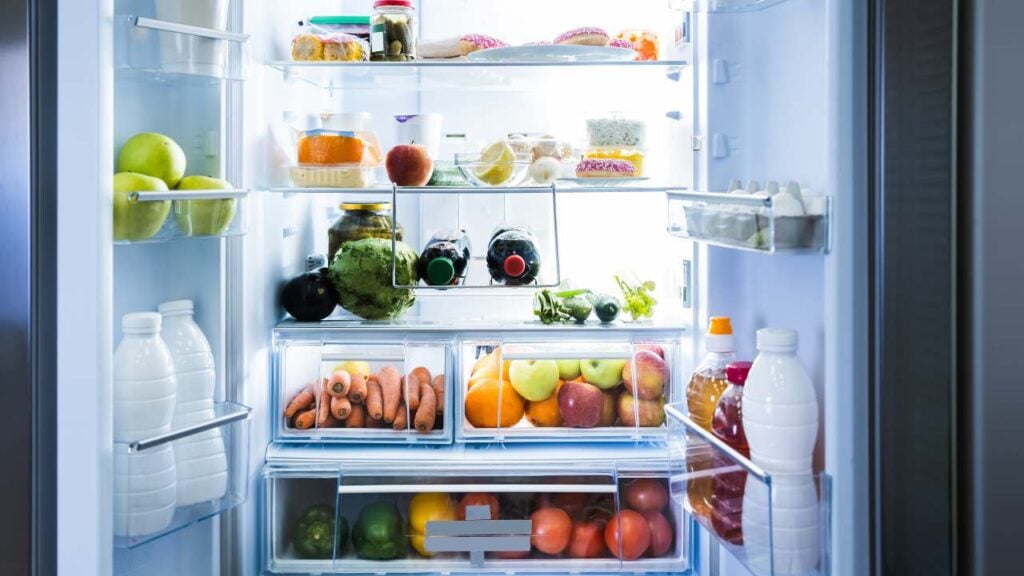
So long story short, fridges dry out cakes!
This is because they are designed to remove moisture from the air in order to keep food fresh. Now because of this, when cakes are stored in the fridge, the cool, dry air can cause the moisture in the cake to evaporate more quickly, leading to a dry, stale texture.
In addition to this, fridges can also cause the cake to absorb other flavors and odors from other foods in the fridge, which can affect the taste and quality of the cake.
So generally it’s recommended to store cakes at room temperature in a cool, dry place, preferably in an airtight container to prevent moisture loss. But, If you need to store a cake in the fridge, it’s recommended to wrap it tightly in plastic wrap or aluminum foil and place it in an airtight container to prevent moisture loss and absorption of other funky flavors. It’s also a good idea to let the cake come to room temperature before serving to help restore some of its moisture and flavor.
It is important to note that when it comes to frosted cakes, this is a different story because frosting actually acts as a barrier which prevents air from getting to the cake layers. So if you’ve decorated a cake and none of the cake layers are exposed, then it’s totally fine to place in the fridge. If a slice has been cut out of your cake leaving some of it exposed, you can cover that little exposed part with more buttercream or with some cling wrap.
How Brown vs. White Sugar Affects Baking

So when I was younger we rarely had white sugar in our house, so I would use brown sugar in EVERYTHING! But this can actually have unintended consequences on your cake.
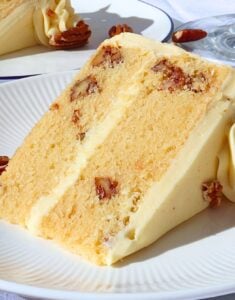
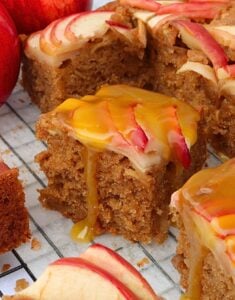
So firstly, lets talk about texture. Brown sugar is moist and contains molasses, which can add moisture and a slightly denser texture to baked goods. Examples of this are my spice cake and carrot cake recipes. White sugar is drier and can result in a lighter, fluffier texture when baking, which is why I use it in my vanilla cake.
Secondly is flavour. Brown sugar has a caramel-like flavor and can add a richer, more complex taste to baking. White sugar has a neutral flavor and can allow other flavors to shine.
Thirdly is the colour. Brown sugar is darker in color due to the molasses, which can give baked goods a deeper, darker color. White sugar will result in a lighter color when baking, so say if you’re making a white cake, you won’t want to use brown sugar.
Lastly, sugar is mostly considered a wet ingredient when baking, and this is really something I wish I knew earlier because it would have saved so many of my cake fails! So sugar is often considered a wet ingredient because it attracts and retains moisture, and when it’s mixed with liquid ingredients such as water, milk, or eggs, it dissolves and creates a syrup-like consistency that can help moisten and bind the other ingredients in the recipe.
This is really important to know when coming up with your own recipes because baking a moist cake has a delicate balance between the wet and dry ingredients so knowing what ingredients are considered wet or dry is really important.
















43 Comments
You’ve made my day. I’ve been using brown sugar for ever and that is about to change.
Valuable information indeed.
So glad to hear you found the information helpful Angie! Happy baking 🙂
Thank you for this. I have an oven that allows me to use a fan or not. I never use the fan when baking but will definitely try it and reduce the temperature. I did try your vanilla cake and it was really good.
Hi Jayne! 🙂 Yes definitely reduce the temp when using the fan then you’ll get the best of both a convection and conventional oven (hopefully!) 🙂 and so glad to hear you enjoyed the vanilla cake recipe 😀
Thank you so much for this!!
Should one always use the fan in the oven or do certain things prefer the conventional oven? Eg: I make my own granola so conventional or convection?
Hi Caroline! Good question 🙂 to be honest I just use the fan for everything haha but you will find people recommending conventional for things which require ‘gentler baking’ including cakes, breads etc., but I find that by reducing the temperature in a convection oven, you get the same benefits of a conventional oven but with the added benefit of more even baking. I could be wrong though as I’m not an expert and perhaps it’s just my oven haha but I would recommend experimenting and see how you go 🙂
Is plain flour better to make a apple crumble or self raising .I don’t want a hard crumble
Hi Valerie! Hmm good question! I think both can work it just depends on the recipe 🙂 unfortunately I don’t have a recipe yet to share but if you google it just look out for recipes that have good reviews 🙂
This is a great post and has really made me think! We only use brown sugar in my house too! So that’s what I use in my bakes, but I used white sugar the other day because I was following your recipe and it was soooo successful!! I will be buying more white sugar for certain recipes! Thank you for this!
Haha yep I used to do the same! With some recipes it may not be a HUGE difference, but with others it’s definitely worth using the white sugar, like my vanilla cake or sponge cakes 🙂
Thank you for sharing this valuable baking tips.
You’re so welcome Claudine! 🙂
These were pretty common sense things i didnt know that made me go…ok that makes sense. That was until the sugar. Did not know that and will change how I bake from now on.
Haha yep the sugar got me too when I first learned about it! Glad you found the information helpful Elle 🙂
Thank you! I never considered these tips before. Very practical and useful information
You’re welcome Maida! Glad you found it helpful 🙂
I really live your work and I would love to learn more from you, for my cake business Mk
You are so talented and I just love what you do…
Thank you so much Mwaka! So happy to hear you’re finding the content helpful 😀
I love this , there were definitely some things , I didn’t know earlier . Thank you
You’re welcome Priscilla! Glad you found the information helpful 🙂