

If you’re looking for a super creamy baked cheesecake recipe that is easy to make (with no water bath required), then this recipe is it! It’s rich, creamy, slightly tart and has the most irresistible biscuit base. I’d go so far as to say it’s the BEST cheesecake recipe I’ve tried!

Important tips for making the best cheesecake
No matter how easy a classic cheesecake recipe is, there are a few important tips to keep in mind to ensure you get the perfect baked cheesecake every time.
Use Room Temperature Ingredients: Ensure that your cream cheese, eggs, and other dairy ingredients are at room temperature. This helps to achieve a smooth, lump-free batter. It also helps prevent your cheesecake from cracking or sinking while baking and cooling.
Choose the Right Cream Cheese: Use high-quality cream cheese for a rich and creamy texture. Full-fat cream cheese works best for a super decadent cheesecake.
Prevent Overmixing: Mix the ingredients until just combined, and I would stick to using a low-medium speed on your electric mixer/stand mixer. Overmixing can incorporate too much air into the batter, leading to cracks on the surface of the cheesecake. Air is important when baking fluffy cakes like my vanilla cake or red velvet cake, but we don’t want too much of it in a cheesecake!
Prebake the Crust: In this recipe I have opted for prebaking the crust – I highly recommend this step! This helps maintain a crisp crust and prevents it from becoming soggy.
Avoid Overbaking: For this recipe (and most baked cheesecake recipes), you want a jiggly centre in the middle (particularly because this recipe uses sour cream which often gives you a runnier filling). To test if the cheesecake is done, touch the centre of the cheesecake gently with your finger tip, and no wet batter should stick to your finger. The cheesecake will continue to set as it cools. Overbaking can result in a dry or curdled texture, as opposed to a creamy one.
Don’t Check the Cheesecake too Early: I know it’s tempting, but don’t check the cheesecake until atleast 3/4s of the cooking time has passed, otherwise this can cause your cheesecake to sink.
Cool Gradually: Allow the cheesecake to cool gradually. Start by turning off the oven and allowing the cake to cool in the oven with the door closed (some recipes also suggest cracking the oven door slightly open), then let it cool on the counter before transferring it to the refrigerator.
Refrigerate Properly: Refrigerate the cheesecake for several hours or overnight before serving. This allows the flavors to meld and the texture to set.
Why doesn’t this cheesecake recipe use a water bath?
So the main reasons a water bath is used when baking cheesecakes is for even and gentle baking, controlled cooling when the cheesecake is done, and preventing the top from overbrowning.
With this recipe (and many cheesecake recipes), I find baking low and slow helps bypass the waterbath method altogether (so you don’t need to worry about handling a roasting pan full of boiling water). This recipes uses a low cooking temperature to ensure the cheesecake bakes slowly, and because of the low temperature, overbrowning is unlikely. Nonetheless, if you do find the top of your cheesecake beginning to brown and the centre hasn’t set yet, simply cover the top with some aluminium foil and continue baking.
When it comes to controlled cooling, this recipes does this by allowing the cheesecake to cool in the oven for 30 minutes (with the oven off), before transferring the cake to your counter to completely cool.
How to make Cheesecake
This recipe has a relatively quick prep time.
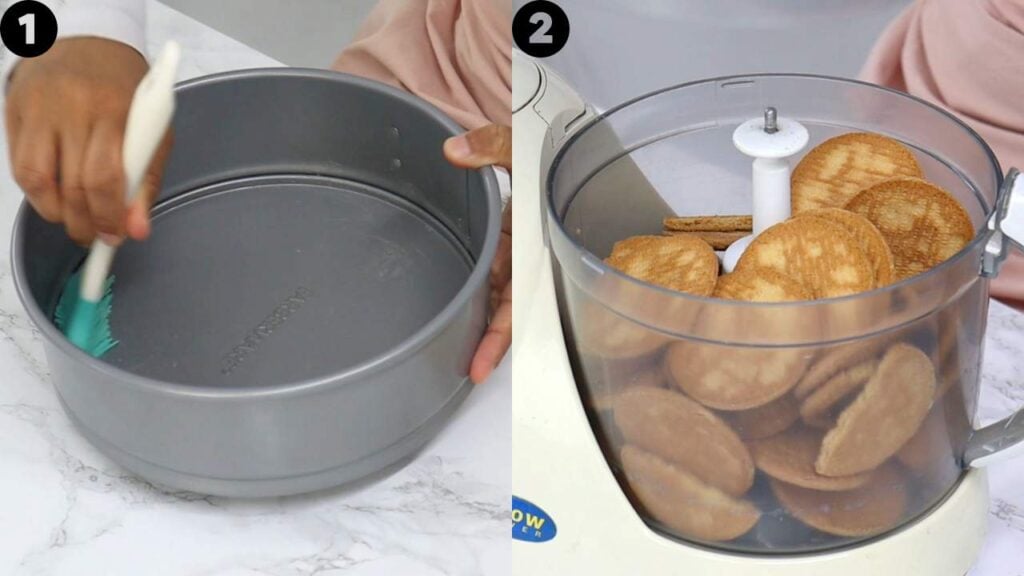
Begin by preheating your oven to 160 °C (320°F) with the fan on and lighty grease a 9 inch springform cake tin. I use my homemade cake release, but a little butter or oil will do the trick. If your oven doesn’t have a fan option, then you will need to increase the baking temperature to 175°C (350°F).
Place your chosen biscuits into a food processer (you can use graham crackers for a graham cracker crust, or any other plain sweet biscuit will work – I like to use superwine), and blend until they resemble fine crumbs. They shouldn’t be powdery though, so check them every now and then to make sure you aren’t over processing them.
Place the biscuit crumbs into a bowl and add in melted butter and sugar. Mix with a spoon until well combined (towards the end I like to just use my hands to make sure everything is mixed well).
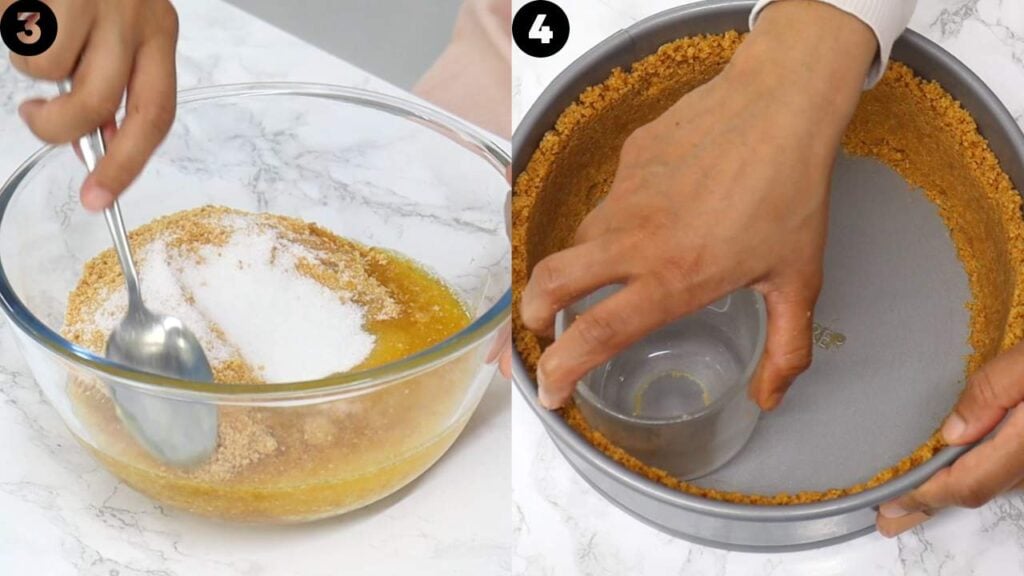
Pour the crumbs into the springform pan, and using your hands or the bottom of a cup, firmly press the crumbs up the sides of the cake pan and evenly on the bottom (see video demonstration for how I like to do this).
Bake the crust for 8 minutes. Once done set aside to cool.
Reduce the oven temperature to 140°C (285°F) with the fan on. If you don’t have a fan option (convection mode) then increase baking temperature to 160 °C (320°F)
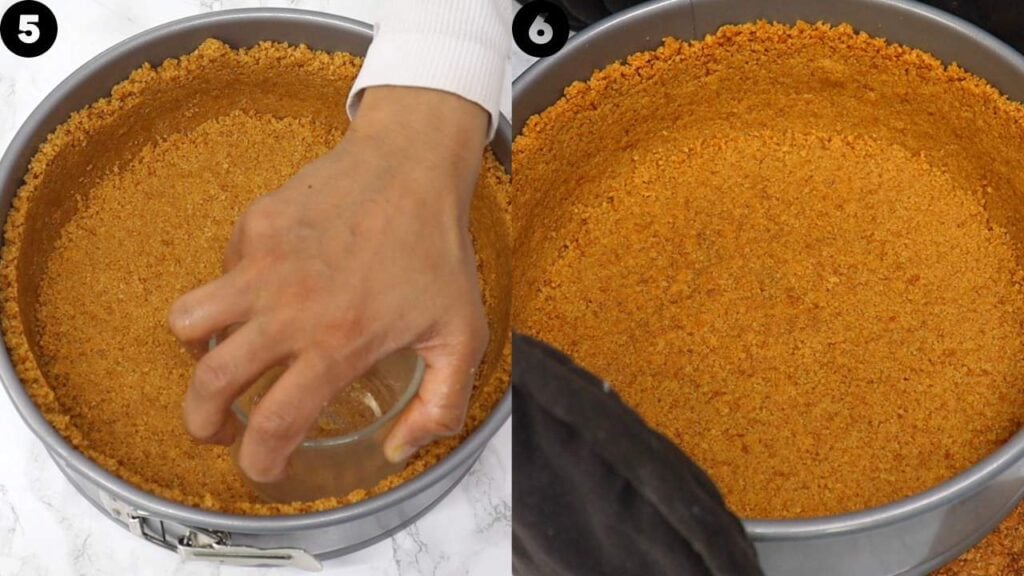
In a large bowl add in room temperature cream cheese, and using a hand mixer or stand mixer on a low-medium speed, mix just until it’s smooth. If using a stand mixer then you want to use the paddle attachment.
Next add in all purpose flour, and mix on a low-medium speed until just combined.
Next add in sugar, sour cream, vanilla, lemon juice and salt, and again mix on low-medium speed until just combined.
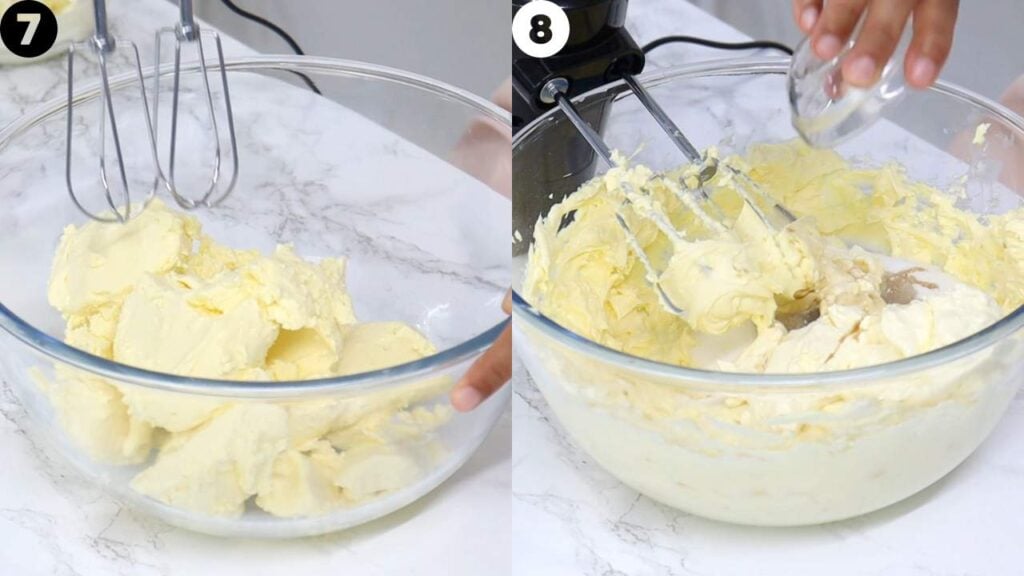
Finish off by adding in room temperature eggs one at a time, mixing each egg on a low speed until it’s almost combined before adding in the next. You want to make sure you’re using large eggs.
Pour the batter into the prebaked crust (it’s okay if the crust is still slightly warm), give the cake tin a little shake to distribute the batter evenly, and then drop the cake tin lightly on the counter to remove any large air bubbles. Also place the cheesecake onto a baking tray incase there are any leaks – it’ll save you from having to clean your oven!
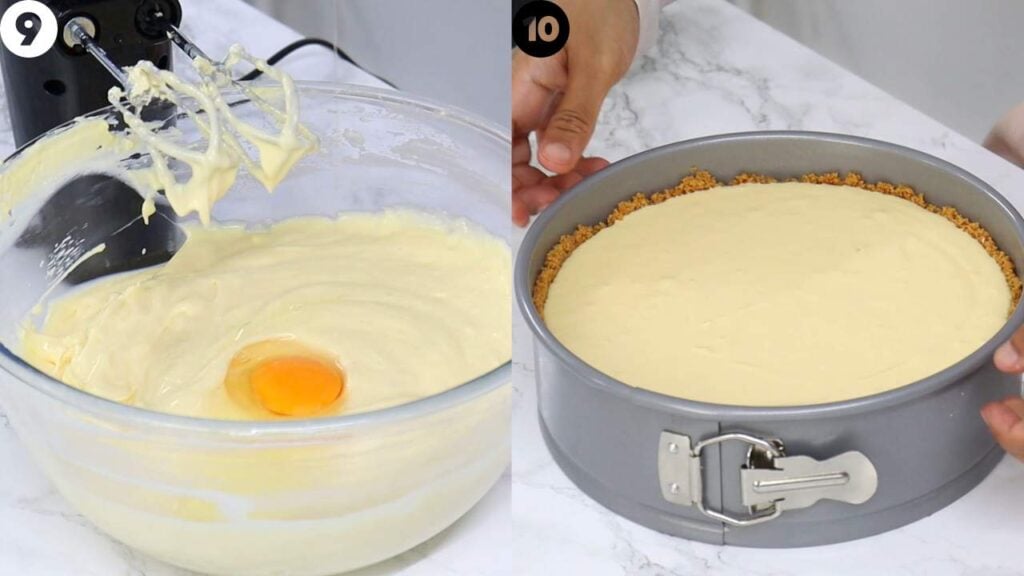
Bake for 75 minutes (use the middle rack of your oven), or until the top of the cheesecake is set. It will still be quite wobbly in the middle, so to check that it’s done, touch the centre gently with your finger tip, and no wet batter should stick to your finger. If you notice the top browning and the cheesecake isn’t ready, cover the top with aluminium foil and continue to bake until ready.
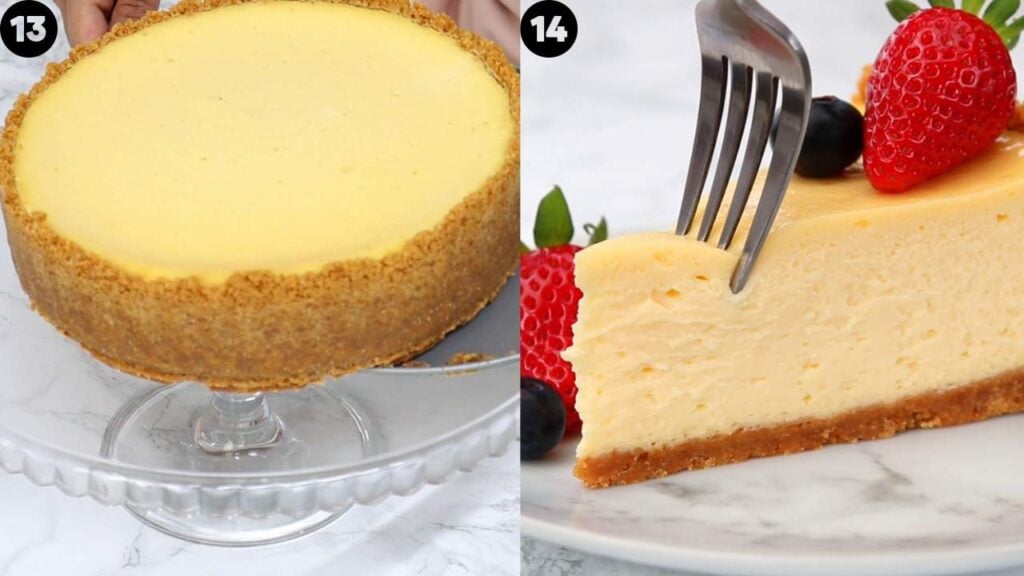
Let the cheesecake cool in the oven for 30 minutes with the oven door closed (make sure the oven is off), and then take it out and let it come to room temperature before covering the top with some cling wrap/aluminum foil and placing into the fridge to set. It needs to set for a minimum of 4 hours in the fridge, but for best results, allow it to set overnight.

Once ready, remove the sides of the springform pan and transfer the cheesecake to a serving platter/cake stand. Slice and enjoy!
Commonly Asked Questions
How do you store cheesecake?
Due to the dairy in cheesecake, it needs to be stored in the refrigerator. Cover with plastic wrap or aluminum foil to prevent drying out and absorbing odors and place in an airtight container, away from strong-smelling foods. When serving, slice while cold, and then let it soften a little (about 15 minutes) before serving.
What goes well with cheesecake?
Because this recipe is essentially a vanilla cheesecake, you can pair it with so many different things! Chocolate sauce, caramel sauce, fresh berries (strawberries are always a winner), and other fillings/toppings like my raspberry jam or lemon curd. Some people even use cherry pie filling as a topping!

Easy Cheesecake Recipe
Print Pin VideoIMPORTANT: For accuracy, I would recommend using the gram measurements provided, as those are the exact quantities I use. Cup measurements are given as estimates (based on US cup measurements) to make it easier for those who do not have a scale.
Ingredients
Cheesecake Crust
- 3 cups (360 g) plain sweet biscuits - you can use graham crackers, superwine, Arnott's marie biscuits etc. I used superwine biscuits (my preferred option)
- ¾ cup (170 g) unsalted butter - melted
- 3 tbsp (35 g) white granulated sugar
Cheesecake Filling
- 4 cups (905 g) cream cheese - 32 oz in the US. Needs to be room temperature.
- 2 tbsp (15 g) flour - plain, all purpose
- 1¼ cups (250 g) white granulated sugar
- ¾ cup (180 g) sour cream - room temperature
- 2 tsp vanilla extract/essence
- 1½ tsps fresh lemon juice - optional, but recommended
- ⅛ tsp salt
- 4 large eggs - room temperature
Instructions
Cheesecake Crust
- Preheat oven to 160 °C (320°F) with the fan on (see note 1 if you don't have a fan function) and lighty grease a 9 inch springform cake tin. I use my homemade cake release, but a little butter or oil will do the trick.
- Place the biscuits into a food processer, and blend until they resemble fine crumbs. They shouldn't be powdery though, so check them every now and then to make sure you aren't over processing them.
- Place the biscuit crumbs into a bowl and add in the melted butter and sugar. Mix with a spoon until well combined (towards the end I like to just use my hands to make sure everything is mixed well).
- Pour the crumbs into the springform pan, and using your hands or the bottom of a cup, firmly press the crumbs up the sides of the cake pan and evenly on the bottom (see note 2 for extra tips on how I like to do this).
- Bake the crust for 8 minutes. Once done set aside to cool.
Cheesecake Filling
- Reduce the oven temperature to 140°C (285°F) with the fan on (see note 3 if you don't have a fan function).
- In a large bowl add in the room temperature cream cheese, and using a hand or stand mixer on a low-medium speed, mix just until it's smooth (see note 5 about overmixing). If using a stand mixer then use the paddle attachment.
- Next add in the all purpose flour, and mix on a low-medium speed until just combined.
- Next add in the sugar, sour cream, vanilla, lemon juice and salt, and again mix on low-medium speed until just combined.
- Finish off by adding in the room temperature eggs one at a time, mixing each egg on a low speed until it's almost combined before adding in the next.
- Pour the batter into the prebaked crust (it's okay if the crust is still slightly warm), give the cake tin a little shake to distribute the batter evenly, and then drop the cake tin lightly on the counter to remove any large air bubbles. Also place the cheesecake onto a baking tray incase there are any leaks - it'll save you from having to clean your oven!
- Bake for 75 minutes (middle rack), or until the top of the cheesecake is set. It will still be quite wobbly in the middle, so to check that it's done, touch the centre gently with your finger tip, and no wet batter should stick to your finger. If you notice the top browning and the cheesecake isn't ready, cover the top with aluminium foil and continue to bake until ready.
- Let the cheesecake cool in the oven for 30 minutes with the oven door closed (make sure the oven is off), and then take it out and let it come to room temperature before covering the top with some cling wrap and placing into the fridge to set. It needs to set for a minimum of 4 hours in the fridge, but for best results, allow it to set overnight.
- Once ready, remove the sides of the springform pan and transfer the cheesecake to a serving platter/cake stand. Slice and enjoy! See note 6 for best way to cut a cheesecake.
Video
Notes
Nutrition
Nutritional information are estimates only as they are automatically calculated by a third party application. Actual values may differ based on brands and types of products used.














37 Comments
it was excellent – so happy it did not need water bath and still turned up beautifully as mentioned at this low temp
TQ for all the tips to enable the cake to be a success,
Awesome! So happy to hear you loved it Elaine 😀
Absolute delight!
5 Stars
Thanks so much Z! So happy to hear you loved the recipe 😀
Assalamualaikum, I have tried several of your recipes and all were hit. I will be making cheesecake for a friend who is allergic to egg. Could you please mention a substitute for egg and how much should I add for this recipe.
JazakAllah.
Wassalaam Homayra! So happy to hear you’ve been loving the recipes 😀 I haven’t tried an eggless cheesecake recipe myself so can’t recommend any substitutions at this stage sorry! Will keep an eggless cheesecake in mind for future videos 🙂
Hi MK, Thank you for another delicious recipe… I am enjoying watching your videos and learning how to bake. I made this cheesecake today and honestly couldn’t wait for it to cool, to have a taste! YUMMY!!! It is delicious! so smooth! And it didn’t crack at the top!
Thank you 🙂
You’re so welcome Shorna! So so happy to hear you loved the cheesecake and that you’re finding the videos helpful 😀 really appreciate the feedback 🙂
I do not have a spring form tin, can I use a normal cake tin?
Hi Celine! 🙂 You could use a regular tin, but then you would need to line the bottom with a long piece of parchment paper that comes up the sides of the cake tin (you can double up the parchment too to make sure all sides of the cake tin are covered) so you can lift the cheesecake up out of the tin once it’s done 🙂
hi, if i make 1/2x in a 9 inch pan, do i still bake for 75 mins and let cool for 30 mins or should the baking times change too?
Hi Fatima! If making 1/2x the recipe in a 9 inch baking pan then you want to keep the crust baking time the same, but reduce the baking time for the cheesecake. I would check the cheesecake around the 40 minutes mark and then do the finger test to see if the cheesecake is set in the middle (should still be jiggly though). Then leave it in the oven to cool for 30 minutes. Hope that helps 🙂
Will definitely try this cheesecake in the weekend. Will let you know what the family think. Cant wait
Awesome! Hope you enjoy it Ilona 🙂
👏 maravilloso la crema agria porque la puedo sustituir??.
Thank you! 🙂 I haven’t tried a substitute myself but you can try crème fraîche, regular yoghurt or heavy cream, though this will affect the taste and texture slightly but it should still be delicious 😀
Thanks
You’re welcome! Enjoy 🙂
I can taste it from here, now I must make it 😋. Thank you, from watching you I feel I too can be a master Baker 😊
Haha thanks Tebogo! Glad you’re gaining confidence from my videos 😀 hope you enjoy the recipe 🙂