

When I was younger, I used to think baking powder and baking soda were the same thing – boy was I wrong! Now when I look back, this lack of baking knowledge could probably explain more than half of my baking fails where I substituted one for the other, thinking I was doing no harm! Understanding the difference between baking powder vs baking soda is crucial for successful baking and achieving the desired results in your recipes. While both are leavening agents that help baked goods rise, they function in distinct ways.

What is baking powder and baking soda?
Both baking powder and baking soda are leavening agents that are commonly used in baking. They help baked goods rise, which in turn gives them a light and fluffy texture. However, they do have distinct characteristics and applications.
One of the most common questions I get asked, is can I use baking soda instead of baking powder or vice versa. This blog post will take you through the differences of the two and how to substitute them if you really need too!
Chemical properties of baking powder vs baking soda
Baking Soda: Baking soda is a pure chemical compound known as sodium bicarbonate. It is a base, which means it requires an acid to activate its leavening (rising) properties. When baking soda reacts with an acid, it produces carbon dioxide gas, causing the batter or dough to rise.
Baking Powder: Baking powder, on the other hand, is a combination of an acid (usually cream of tartar) and an alkaline substance (typically baking soda), along with a starch (like cornstarch) to prevent the baking powder from prematurely activating. Now what happens is when you mix baking powder with a liquid, it releases carbon dioxide, which helps with that rise that we want.
There is also double-acting baking powder, which is the type you find in most grocery stores and is probably what most home cooks use. Double acting baking powder releases gas in two stages – once during mixing where little bubbles start to form (although it’s not very noticeable), and then again during baking, where the heat from the oven activates the baking powder. This heat is what activates most of the leavening power from double-acting baking powder.
How does the chemical properties of baking powder vs baking soda affect how they work in baking?
Baking Soda: When it comes to baking soda, you need to have an acid in your batter like buttermilk, yogurt, cocoa powder, vinegar, brown sugar, molasses, sour cream or lemon juice to activate its leavening power. Without an acid, the required chemical reaction will not occur and your baked goods will end up short and dense. Baking soda that hasn’t been activated will also leave a metallic, or even soapy taste in your baking.
You also need to use the right amount of acid to baking soda. If you use too much baking soda and not enough acid to activate it, again it’ll leave that slightly metallic taste behind.
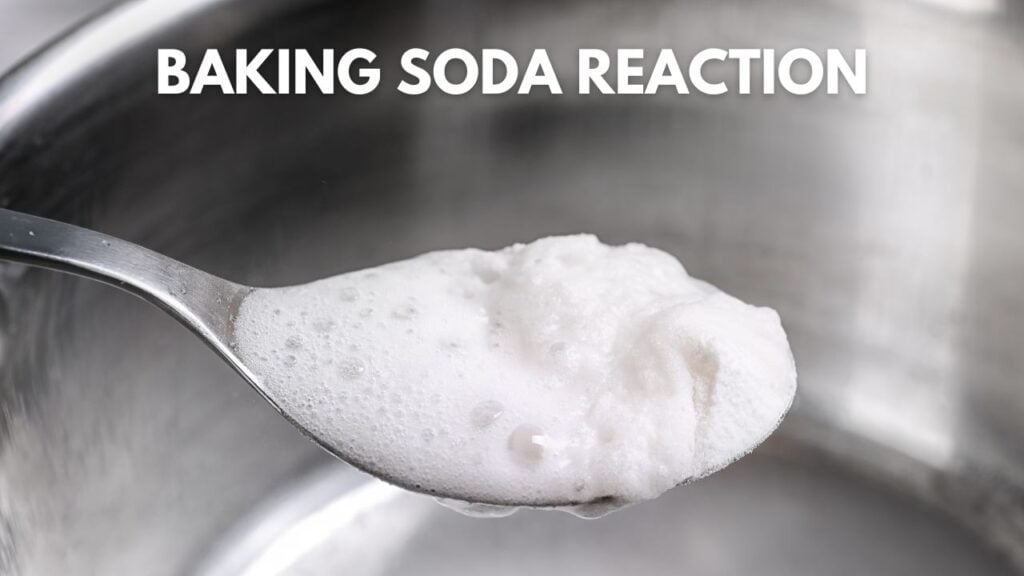
Baking Powder: Baking powder on the other hand contains it’s own acid, so the presence of liquid on it’s own, plus the heat in the oven while the batter is baking will activate it. This makes it a good option to use in recipes that don’t have any acidic ingredients.
Taste and texture of baking powder vs baking soda
Baking Soda: When it comes to baking soda, when used appropriately, it does leave a distinctive taste as well as darker colour in your baked goods. It’s very common to use baking soda in darker colored baked goods like chocolate cake or banana muffins. You do have to be careful though because as mentioned earlier, if you use too much, it’ll leave a metallic or soapy flavor behind.
Baking soda also helps with creating certain textures, for example it’s often used in chewy chocolate chip cookies (or biscuits) because it promotes the spread of cookies by raising the pH levels of the batter (and therefore reducing protein coagulation), and also helps with browning.
Baking powder: Baking powder on the other hand is more neutral-flavoured and won’t alter the taste of your baked good, as long as you don’t go overboard and use too much! If you do use a little too much, it can leave an almost bitter taste to your baked goods. Baking powder also won’t affect the colour of your baked batter, so its great to use in things where you want a very light colour like a white cake.

Difference in leavening power between baking powder vs baking soda
The last thing I wanted to touch on is the leavening powder of each of these substances. so it’s important to note that baking soda is stronger than baking powder, about 3-4 times as strong! This means for 1 teaspoon of baking soda, the equivalent would be around 3 tsp (or 1 tablespoon) of baking powder.
In general, I don’t recommend using either baking powder or baking soda as substitutes for one another, but if you are in a pickle then here are a few things to keep in mind:
Baking soda: If using baking soda when a recipe calls for baking powder, then you want to ensure that you have an acid in your mixture to activate the baking soda. You can also add an acid in your batter if it doesn’t have one. An acid I like to use in baking is white vinegar. Check out my article for why vinegar is used in baking – I know it sounds a bit weird but trust me, it works so well and gives you the fluffiest cakes!
Baking powder: Is substituting baking soda with baking power, then make sure you use more of it. So if your recipe uses say 1/2 tsp of baking soda, then as a good rule of thumb, you want to substitute that with around 1 and 1/2 tsps of baking powder. Just keep in mind that too much baking powder will leave a slightly bitter taste in your baked good, so I wouldn’t use anymore than 2 tsp of baking powder per 1 cup of flour.
In conclusion, understanding the distinctions between baking powder and baking soda is fundamental for successful baking. While both serve as leavening agents, they operate differently in recipes. Baking soda requires an acidic component to activate its leavening properties, while baking powder contains both an acid and a base, offering a more versatile option when additional browning and specific textures aren’t required.















38 Comments
Hi I want to make a soft fluffy fruit cake for Christmas without using water or rum how do I go about it Could u help me with a recipe thank u
Hi Victoria! I would recommend checking out my fruit cake recipe – here is the link: https://cakesbymk.com/recipe/easy-moist-fruit-cake/
Hope that helps and hope you enjoy the recipe 🙂
I added equal amounts of baking soda & baking powder by mistake to my banana bread. It rose higher but I really couldn’t taste the difference. It did ask for a tablespoon of milk. You think this helped it a bit??
Hi Liz! 🙂
So usually with baking soda, if there is enough of an acidic ingredient to activate it in a recipe then it shouldn’t leave a noticeable metallic or soapy taste. Milk is slightly acidic so it may have helped, but other ingredients like brown sugar also help so it seems like you had a good amount of acid in the batter to activate how much baking soda you put in 🙂
Does either one give a softer crumb/texture to a cake?
I’ve tried recipes where a box cake mix is used and found the chocolate version is heavenly… moist, flavorful with a soft light texture.
On the other hand, the yellow cake comes out dense with a coarser texture.
If baking powder or baking soda is added, will this give the yellow a texture like the chocolate? Neither of the recipes I currently have call for any additional baking soda or powder.
Thank you.
Hi Karen! 🙂
In my experience, one or the other doesn’t really make for a more softer texture, it’s more about the ingredients in the batter and if enough leavening is used.
Adding a little baking powder or baking soda could help with making the yellow cake lighter, however baking soda can only be used if there is an acidic ingredient in the batter to help activate it. I sometimes find too many eggs can also result in a more firm texture (as opposed to soft), and not enough liquid in the batter as well, so maybe adding in a little more milk might help to achieve that lighter/softer texture too 🙂
Hi,
Just a question- I want to substitute black cocoa powder for cocoa powder in a recipe and it only asks for lemon juice. Should anything be altered to make the recipe work?
Hi Moon! 🙂
It really depends on the recipe itself. If baking soda is used in the recipe, then cocoa powder along with the lemon juice will be what activates the baking soda, however with black cocoa being a bit more alkaline, you may need to add more of an acidic ingredient for the same results 🙂
So what liquids does well with baking powder & soda
Hi Mukisa! 🙂 So baking powder will work well with most liquids, however baking soda will only work well with recipes that have an acidic element in them, like lemon juice, buttermilk, yoghurt, cocoa powder, etc 🙂
Hope that helps!
Thank you for sharing! I baked a cake with baking soda today and was quite disappointed with the outcome. I immediately knew it was the baking soda because this is the first time I’m baking with it. I really appreciate your explanation.
No problem Kenny! Glad the info helped 🙂
I love your explanation. Thank you for sharing your knowledge. This certainly is very helpful. 🙂
Thanks Martha! Glad to hear you found the information helpful 🙂
Omg thank you so much I’ve been making this mistake and asking why my recipes always have metallic soapy teast . Thanks for this wonderful messenge😊❤
You’re so welcome Najjemba! So happy to hear you found the information helpful 😀